


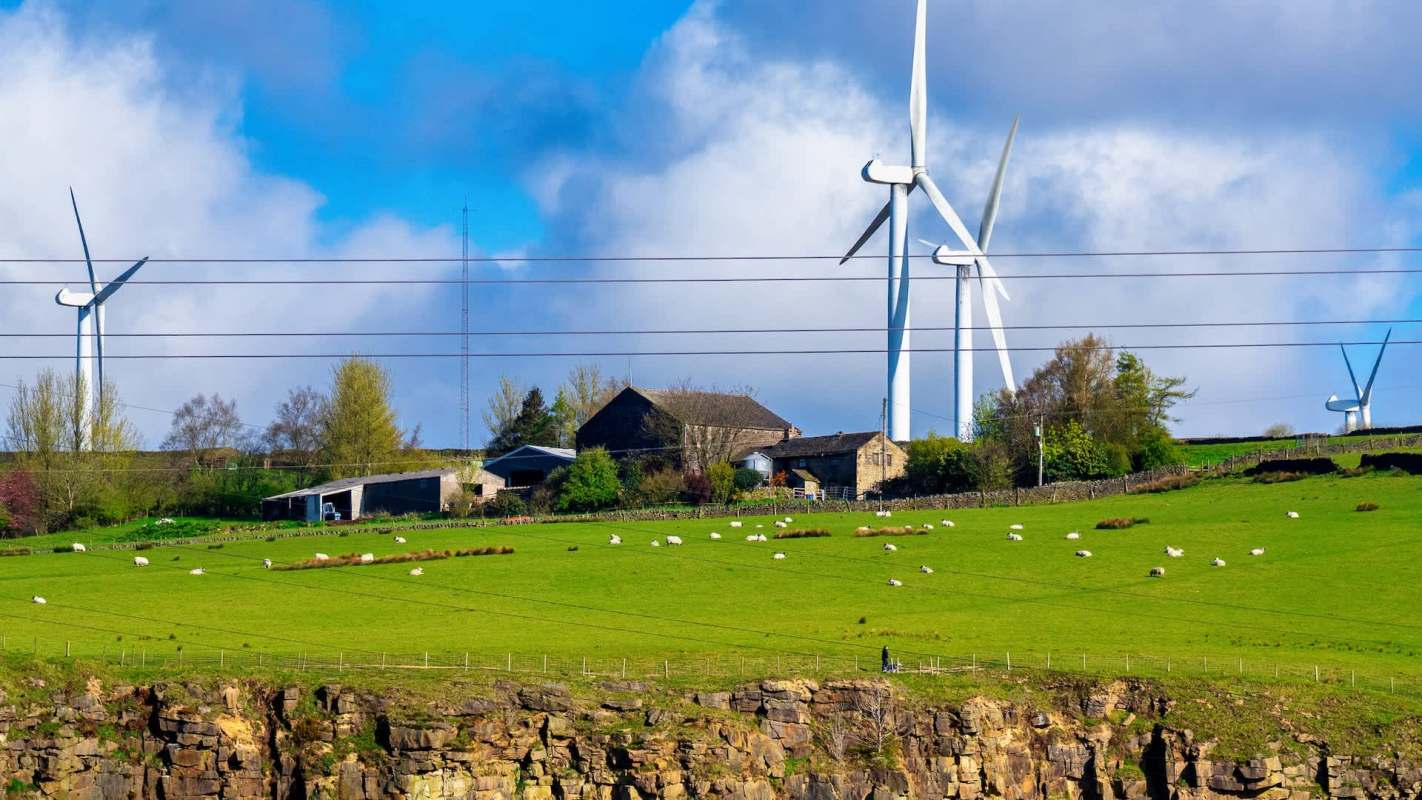
Britain pays wind farms to cut output, while usable wind power goes ungenerated because the grid can't move electricity where it is needed.
Households ultimately bear the balancing costs of these grid bottlenecks, which require other power stations, often gas plants, to increase generation.
Here's what to know
National Energy System Operator curtailed 1,789 gigawatt-hours of wind generation over a 30-day period, according to Electricity Live shared on Reddit. Net payments issued to wind farms for reducing output totaled £51.5 million ($69.4 million).
That unused electricity accounted for one-fifth of the potential generation from Britain's grid-scale wind farms. Including estimated output from smaller wind farms on local networks brings that share down to 17% of all potential wind generation.
Scottish wind farms accounted for over 99% of the curtailed wind power, according to the Reddit figures. The transmission lines to England reach capacity on windy days, limiting how much of Scotland's surplus wind electricity can be carried south.
The tightest bottleneck is the B6 boundary, where several transmission lines cross between Scotland and England.
TCD Picks » Quince Spotlight
💡These best-sellers from Quince deliver affordable, sustainable luxury for all




More background
According to the Reddit discussion, NESO includes accepted curtailment payments in its balancing costs. Suppliers cover those expenses through a 'Balancing Services Use of System' charge. That fee is then passed to household bills.
Seagreen, an offshore project in Scottish waters, had the largest curtailed volume at 352 gigawatt-hours. That was equivalent to 199 hours of full-output operation, with a net curtailment cost of £5.4 million ($7.3 million).
Moray West held back 266 gigawatt-hours, equivalent to 310 hours at full output, while Moray East curtailed 246 gigawatt-hours.
What's being done?
According to the Reddit explanation, NESO addresses the mismatch through the Balancing Mechanism. Wind farms submit prices to reduce output, and the operator accepts bids to keep the electricity system balanced.
The transmission bottleneck remains even when NESO balances the system by calling on other power stations, often gas plants in England. The Scottish wind generation is constrained by the existing power grid rather than the wind's actual output potential.
A day's net curtailment cost can be negative, according to the Reddit source. For certain wind farms operating under a Contract for Difference, not generating electricity means forfeiting their subsidy; those farms pay NESO to reduce output rather than being paid.
The largest single-day curtailment during the reported period occurred on October 27, when NESO turned down 169 gigawatt-hours of wind generation, costing £6.7 million net ($9 million), according to the figures.
Where can I learn more?
Grid bottlenecks affect rooftop solar owners, too, and storage offers ways to manage surplus renewable power. These stories cover EU grid priorities, U.K. solar restrictions and export delays, inverter controls, and home battery earnings.
• Brussels is weighing grids and storage over mandates in its post-2030 renewable energy reset.
• A U.K. homeowner's roof fits 23 solar panels, but grid rules cap output at 4 kilowatts.
• A solar owner used almost no grid electricity, but export delays prevented payment for surplus power.
• A solar owner's gateway nudges the inverter offline to manage excess generation off-grid.
• Home battery owners say virtual power plants added more than £150 ($202) in export income.

Get TCD's free newsletters for easy tips, smart advice, and a chance to earn $5,000 toward home upgrades. To see more stories like this one, change your Google preferences here.






