


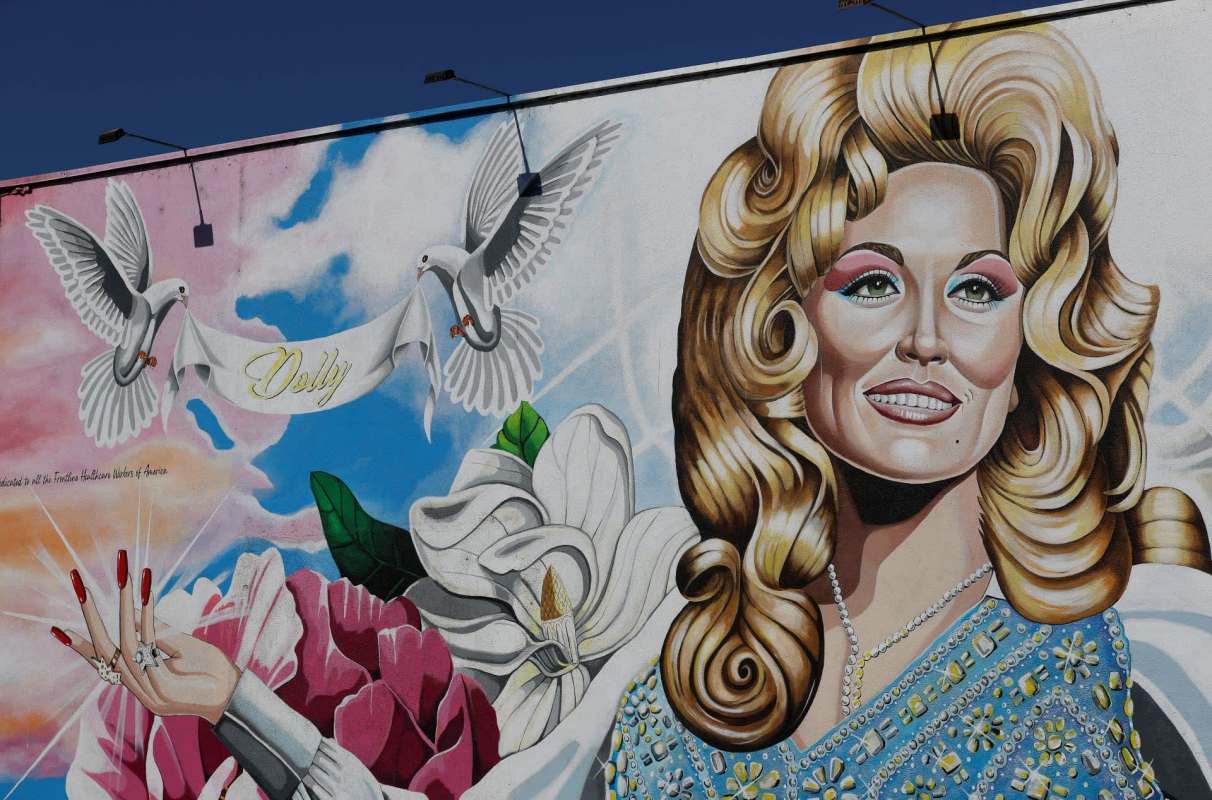
When a cartoon showing the recently departed country icon Dolly Parton and actor Tim Curry entering heaven together went viral, New Yorker cartoonist Brendan Loper started getting messages from people asking whether the cartoon was his work.
It was not. But the viral image still carried a version of his signature: "BLOPER."
Here's what to know
According to Nieman Lab, someone other than Loper used ChatGPT to create and share the cartoon online, even though it appeared to have his name in the corner.
Already resigned to the fact that his work, along with that of countless others, is being used to train AI models in what many argue is a theft of intellectual property, Loper found the use of his apparent signature to be a step too far.
Because friends, family, and fans already associate "BLOPER" with his published cartoons, the forged tag made the image look legitimate.
The Parton cartoon was not the only case of an AI-generated cartoon being misattributed to Loper. The cartoonist has been alerted to at least one other AI-produced image using his name.
TCD Picks » Quince Spotlight
💡These best-sellers from Quince deliver affordable, sustainable luxury for all




A marker of authenticity
Loper is hardly unique in facing the apparent AI-driven theft of what essentially amounts to his brand's mark.
Nieman Lab also found similar fake signatures on work imitating several other New Yorker cartoonists, including Harry Bliss, Emily Flake, Joe Dator, Pat Byrnes, Peter Vey, and Jason Adam Katzenstein.
In an online environment where images can be copied and reposted far from their original source, a signature can function as an artist's clearest proof of authorship.
"The signature for me is the certificate of authenticity," Loper told Nieman Lab. "I only put it on work that I'm putting on the internet that I feel needs to be recognized as from my hand. If I put my name on it, it's official, it's mine. It really is a brand. It's the mark that I made."
What's being done?
By speaking out, Loper has helped raise attention to the issue of intellectual property rights and the misuse of signatures and other brand marks.
Similarly, by documenting numerous instances of similar AI practices, Nieman Lab has affirmed the systemic nature of the problem and made it harder for AI companies to dismiss it as a one-off glitch.
Some individuals and organizations who feel that AI companies have stolen or otherwise misused their intellectual property have attempted to use the legal system to hold the companies accountable and to curb the practice.
One such example was Getty Images' lawsuit against Stability AI. As Futurism detailed, although that suit was largely unsuccessful, it did yield one ruling that could be beneficial to future claimants.
While widely rejecting Getty Images' assertion that Stability AI had violated its intellectual property by training its AI on Getty's vast library of photos and videos, the judge did find that the AI's recurring use of Getty Images' watermark in AI-generated images did constitute a violation of trademark law.
Due in large part to the combination of public outrage and legal action, AI companies and online platforms have faced growing pressure to stop generators from reproducing artists' names, signatures, watermarks, and other identifying marks — including Loper's fake "BLOPER" signature.
For Loper, the harm extends beyond copyright questions or online confusion.
"I'm not a territorial person, but my name is my name," he said, according to Futurism. "It felt very much like a violation of my personhood."
Where can I learn more?
AI concerns extend beyond the theft of intellectual property, reaching into strain on energy and water supplies, environmental harm, and encroachment on community spaces.
• Across the U.S., copyright complaints against tech companies threaten to reshape the AI industry's future.
• Creative professionals reported a shrinking chance of securing compensation for AI's use of their work.
• The U.S. Supreme Court refused a case to copyright AI-generated material.
• Across the music industry, artists are absorbing staggering losses to AI slop as fakes spread.

Get TCD's free newsletters for easy tips, smart advice, and a chance to earn $5,000 toward home upgrades. To see more stories like this one, change your Google preferences here.






