


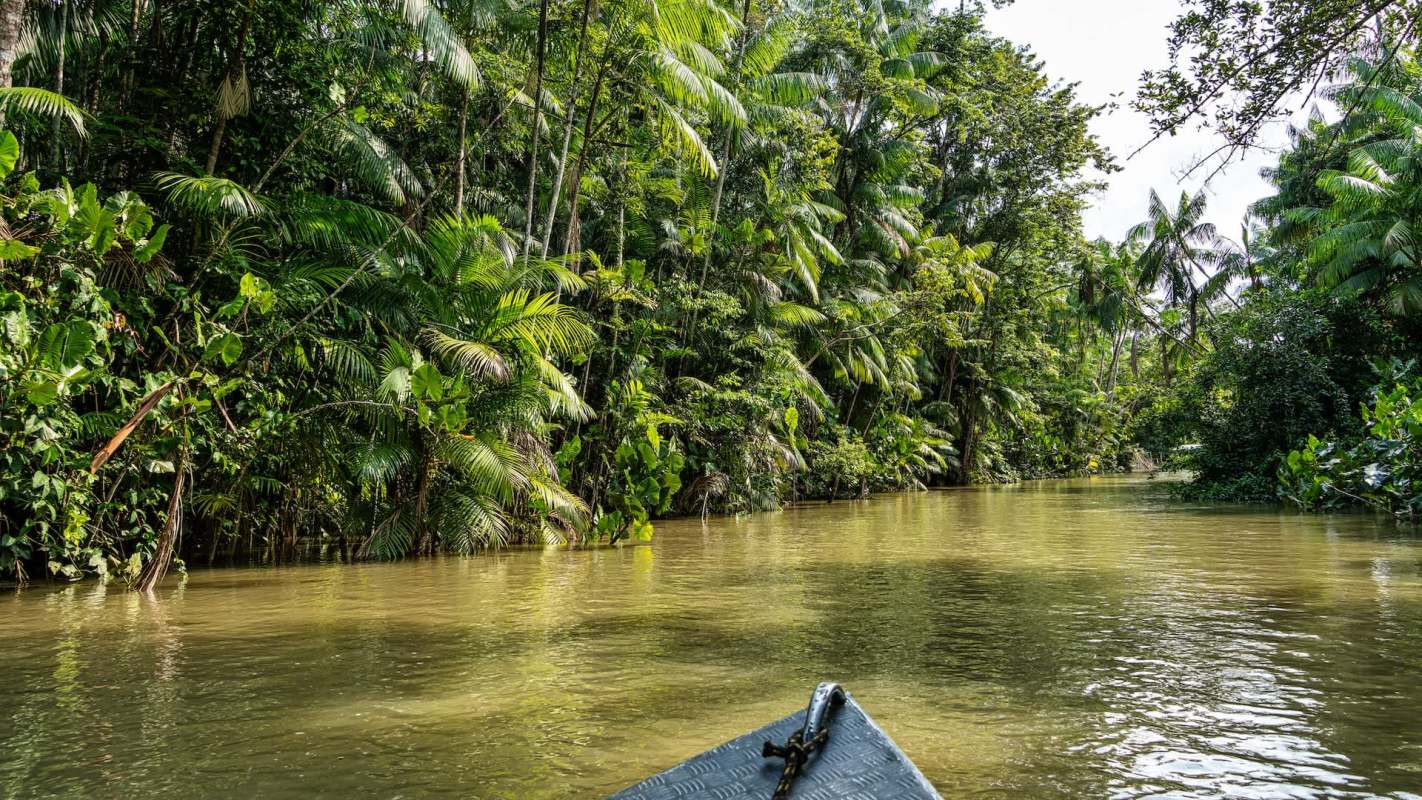
Tropical landscapes are constantly changing over time. Climate has repeatedly redrawn the boundaries between forests, savannas, and other ecosystems. New research indicates that warmer weather could produce a shift of similar magnitude not over millennia, but within decades.
What's happening?
A team at Brazil's Federal University of Minas Gerais Remote Sensing Center examined how tropical vegetation changed over the last 3.3 million years, then compared that record with projections for 2050.
Their results, published in the Journal of Biogeography and reported in The Conversation, suggest that human-caused warming could bring vegetation impacts comparable to those associated with about 3 million years of Earth's history.
The study drew on satellite observations, paleoclimate evidence, and machine-learning methods to trace forests, savannas, and deserts across 11 broad intervals. It found that tropical forests were at their most limited about 3.2 million years ago, when the planet was around 7.2 degrees Fahrenheit (4 degrees Celsius) warmer than it is today. At that time, the Amazon occupied less than half of its current area, while the Atlantic Forest shrank to below 5% of its potential extent.
The researchers also found that roughly 22% of tropical regions kept the same climate and vegetation throughout the full time span, creating refuges where biodiversity built up over millions of years. Under the highest-emissions scenario, tropical temperatures could climb 3.6 to 7.2 degrees Fahrenheit (2 to 4 degrees Celsius) by 2050, and the Amazon could warm by as much as 7.2 degrees Fahrenheit (4 degrees Celsius).
Why does it matter?
Tropical ecosystems help regulate rainfall, store vast amounts of carbon, and support communities that rely on forests and stable weather for food, water, livelihoods, and relief from extreme heat.
TCD Picks » Quince Spotlight
💡These best-sellers from Quince deliver affordable, sustainable luxury for all




If forests give way to more open vegetation, the consequences would extend well beyond biodiversity loss. It could disrupt farming, strain water supplies, and intensify climate disruption that already reaches households around the world through rising food prices, supply chain shocks, and more severe weather.
What especially concerns researchers is how quickly the projected shift could happen. Earlier tropical reorganizations unfolded over very long periods, giving species time to move or adapt. Today, that same level of upheaval could be compressed into a single human lifetime.
That danger may be particularly acute in places that stayed remarkably consistent for millions of years, including parts of the Malay Archipelago, because many species there evolved under that long-lasting climatic stability.
What's being done?
By combining remote sensing, climate history, and machine learning, researchers are building a clearer picture of which tropical regions remained the most stable over time and which may now be nearest to abrupt transformation.
That information could help governments, conservation planners, and local communities prioritize protection in places where biodiversity is richest, and risks are rising fastest.
Cutting down on the carbon pollution driving rapid warming remains the large-scale solution. The study's most severe projections are tied to the highest air pollution pathway, meaning policy choices made now still have the potential to shape how much damage unfolds by midcentury.
As the researchers put it, "Transformations that took millions of years may now occur within decades." And for species shaped by long periods of stability, "The stability that protected them may become their vulnerability."

Get TCD's free newsletters for easy tips, smart advice, and a chance to earn $5,000 toward home upgrades. To see more stories like this one, change your Google preferences here.






