


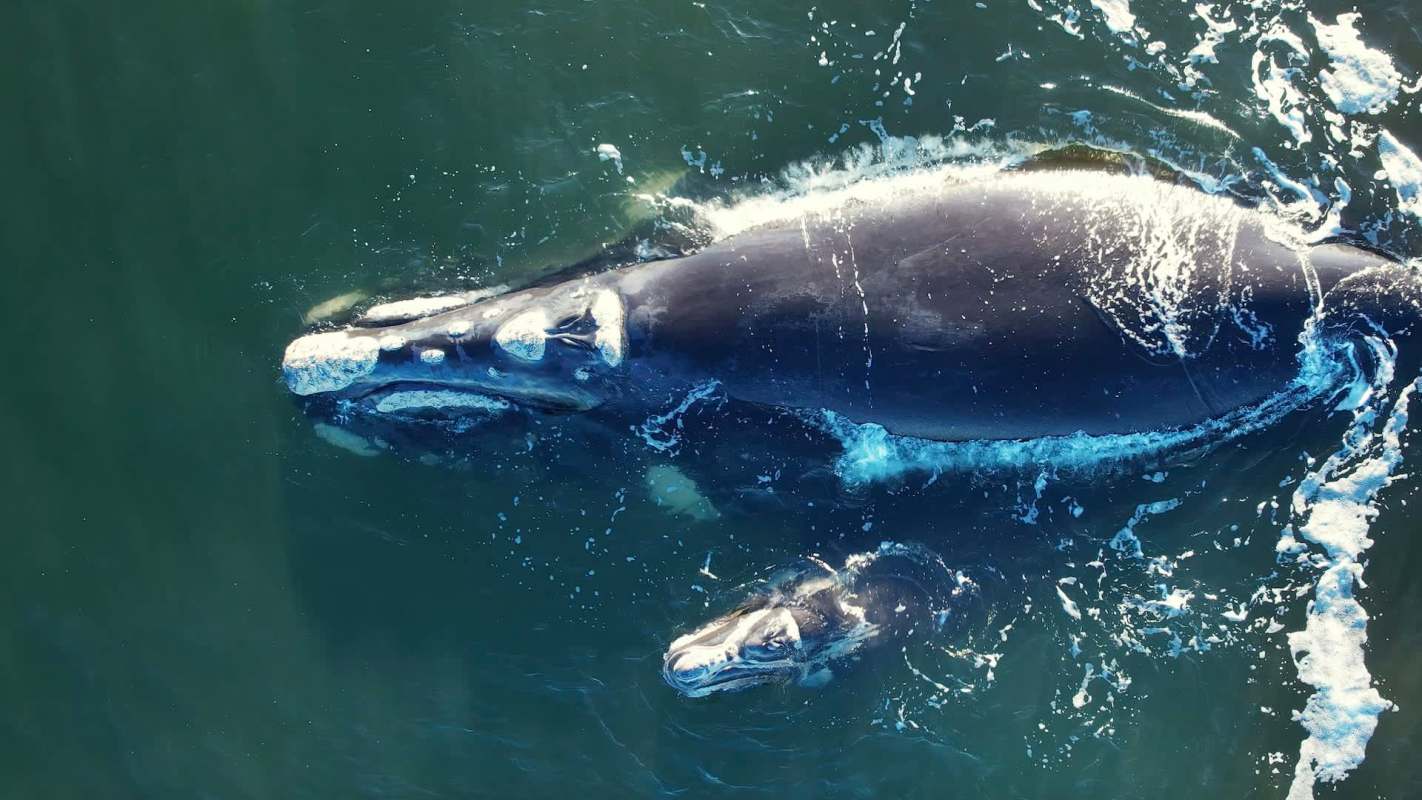
A bowhead whale swimming beneath Arctic ice in 2026 could, in theory, be older than the United States' Civil War.
Scientists base that startling possibility on two very different kinds of evidence — chemical signals in the eye and over 100-year-old weapon debris found in whales — which is why bowheads are regarded as the longest-lived mammals known to science.
Here's what to know
The case for the bowhead whale's exceptional longevity comes from more than one source, according to SpaceDaily. Researchers have used chemical dating of eye lens tissue and also examined old stone points and 19th-century bomb lance remnants recovered from harvested whales; taken together, those clues indicate that some animals live well beyond 100 years and may even exceed 200.
One of the best-known studies, published in 1999 by Craig George and colleagues at Alaska's North Slope Borough, focused on the eye lens. Their technique, called aspartic acid racemization, treats the lens as a chemical clock because certain proteins form early in life and remain stable, allowing age to be inferred from the molecular changes that accumulate over time.
That research produced estimates of more than 100 years for four male bowheads, and the oldest estimate was 211 years, although the margin of error was substantial. Even with that uncertainty, the results made a two-century lifespan a serious scientific possibility.
NOAA Fisheries still describes the species' lifespan as "unknown but possibly over 200 years," and no living whale has been followed from birth for anywhere near that length of time.
TCD Picks » Quince Spotlight
💡These best-sellers from Quince deliver affordable, sustainable luxury for all




More background
Among whales, bowheads are specialists in polar waters. They inhabit Arctic and subarctic areas, including the Bering, Chukchi, and Beaufort seas; can reach about 60 feet in length and weigh almost 100 tons; and are equipped for icy conditions with enormous arched skulls that can help them break breathing holes through sea ice.
Earlier estimates were much lower for many years, with scientists assuming bowheads lived for around 60 or 70 years, similar to other large whales. Part of the difficulty was that bowheads do not have teeth that preserve a durable age record, and their baleen wears down rather than storing a permanent timeline.
A whale that can live across multiple human generations has more time to accumulate the effects of environmental change, hunting pressure, ship traffic, and shifting food webs.
What's being done?
Scientists are continuing to refine age estimation methods so they can better understand how long bowheads live and how their populations are doing over time. Improved lab techniques can help narrow uncertainties in the chemical dating process, while physical evidence from harvested whales provides an important reality check.
Wildlife agencies also monitor bowhead populations and the Arctic ecosystems they rely on. Animals that live for many decades may not show the full effects of environmental disruption right away.
Habitat protection includes close attention to the impacts of warming seas, sea ice loss, industrial activity, and ocean noise in northern waters.
While there is still some uncertainty surrounding the bowhead whale, it may indeed be among the oldest mammals on Earth.

Get TCD's free newsletters for easy tips, smart advice, and a chance to earn $5,000 toward home upgrades. To see more stories like this one, change your Google preferences here.







