


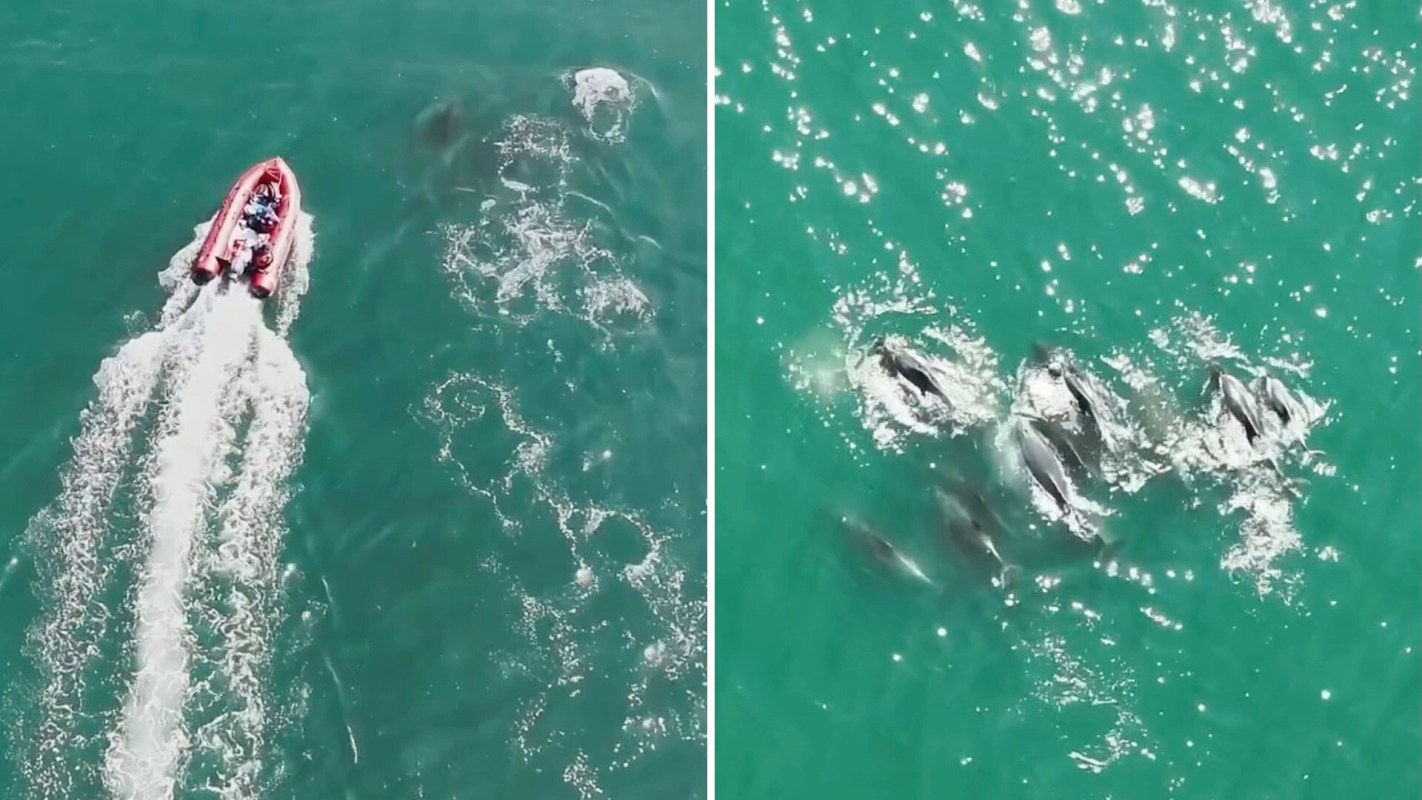
In mid-July, rescuers responded to nearly 30 stranded bottlenose dolphins along Cape Cod, Massachusetts. After efforts to guide some of the pod back into deeper waters, tracking data has offered a hopeful update: the surviving dolphins from the separated groups have successfully reunited.
What happened?
According to a report from the NY Post, on Monday, July 13, officials from the International Fund for Animal Welfare were led to Brewster, a quiet bayside town on Cape Cod, where nearly 30 bottlenose dolphins were found stranded along beaches.
While some dolphins managed to refloat as the tide came in, several died before rescue crews were able to reach them, the outlet reported.
As emergency response teams inspected the area, they found 19 live animals scattered in three different sites along a 9-mile stretch of coast, the NY Post reported.
IFAW said, as reported by the NY Post, Cape Cod's geography makes that part of the shoreline especially dangerous for marine mammals: "The area … is a globally recognized hotspot for mass stranding events due to the extreme tidal fluctuations and the shallow flats of Cape Cod's unique geography."
The outlet noted that, before the surviving animals returned to safety, responders attached satellite tags to two dolphins. Later tracking showed the previously separated groups coming back together, and by Wednesday the tagged dolphins were about two miles northwest of Sandy Neck Beach in Barnstable, moving in deeper water with a reunited pod of about 22 dolphins.
TCD Picks » Quince Spotlight
💡These best-sellers from Quince deliver affordable, sustainable luxury for all




What's being done?
Experts are continuing to use satellite tracking to follow the surviving dolphins, giving the International Fund for Animal Welfare a better sense of whether the pod remains stable after the rescue.
The rescue was carried out under a federal stranding agreement between the organization and the National Marine Fisheries Service under the Marine Mammal Protection Act.
The officials told the NY Post that animals who experience a stranding require specialized care. If people encounter a stranded marine animal, it is best to contact local wildlife officials.
"Similar to a person involved in a car accident, dolphins can become injured and exhausted during a stranding event and should never be pushed or dragged back into the water. Members of the public who encounter a stranded or distressed marine mammal should keep a safe distance and contact trained rescue experts through our IFAW Stranding Hotline."

Get TCD's free newsletters for easy tips, smart advice, and a chance to earn $5,000 toward home upgrades. To see more stories like this one, change your Google preferences here.






