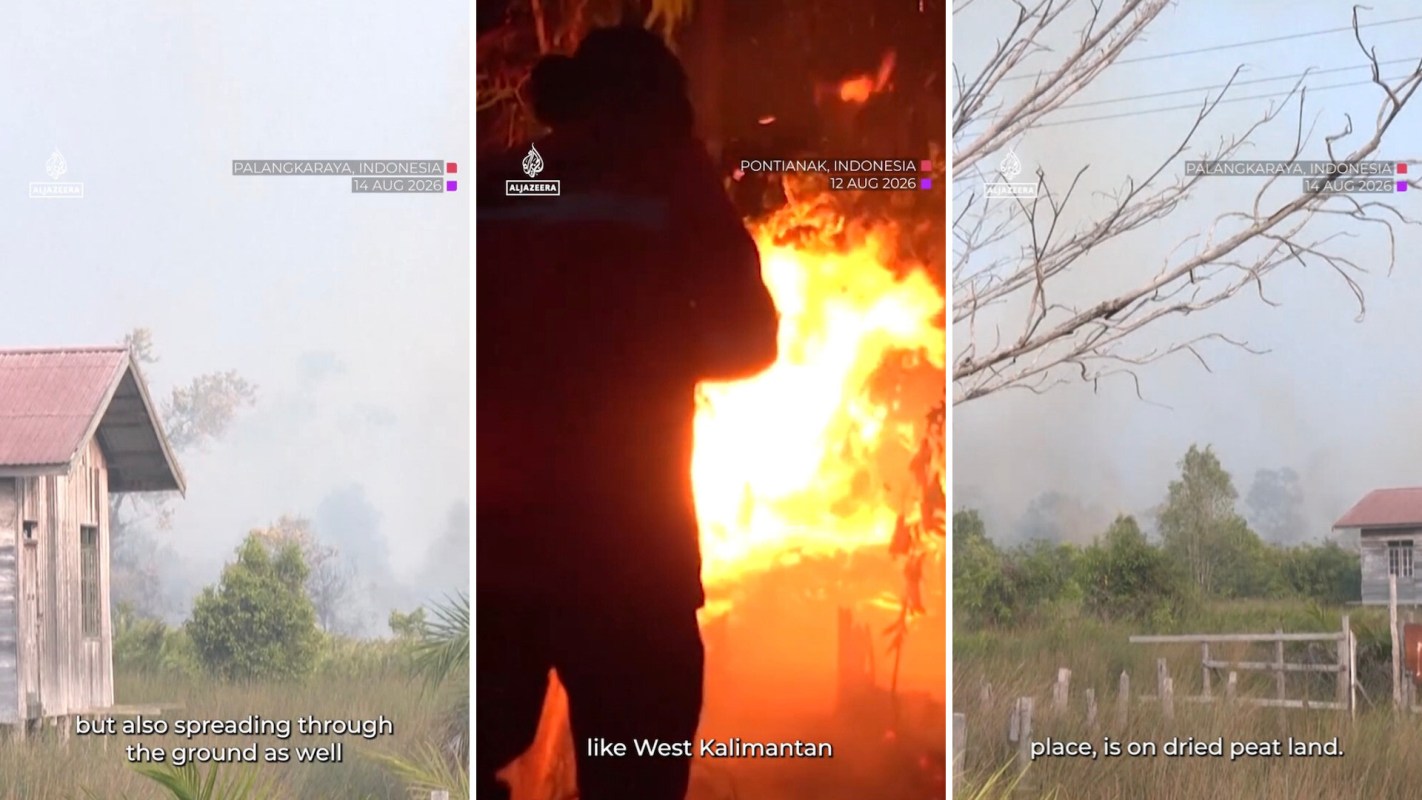
In recent weeks, a blanket of smoke has been hanging over the Indonesian island of Borneo.
Wildfires burning across the country have left many residents struggling to breathe, as efforts to contain the blazes have been hindered by scarce water supplies and by peat continuing to burn beneath the surface.
Here's what to know
Referring to satellite imagery, Al Jazeera reporter Jessica Washington said in a short video posted on social media in late August that fires were visible on "almost every major populated island of Indonesia," with especially severe conditions in West Kalimantan and South Sumatra.
@aljazeeraenglish Locals on #Indonesia's Borneo Island are struggling to breathe as the smoke from #wildfires is turning the air toxic. . Al Jazeera's Jessica Washington reports from Borneo on how conditions are complicating efforts to stop the fires. . #News ♬ original sound - Al Jazeera English
In the outlet's video caption, Al Jazeera wrote, "Locals on Indonesia's Borneo island are struggling to breathe as the smoke from wildfires is turning the air toxic."
While President Prabowo Subianto hopes the crisis will be over within the next couple of weeks, Washington reported that crews on the ground have been dealing with two major hurdles.
One is limited water availability in areas such as West Kalimantan. The other is that flames are moving through dried peatland. Because peat can continue burning underground, fires can keep advancing out of sight and become much more difficult to fully extinguish.
TCD Picks » Quince Spotlight
💡These best-sellers from Quince deliver affordable, sustainable luxury for all




Viewers responding to Washington's video expressed deep frustration with the recurring haze.
One commenter wrote, "They never stop ... every year we have to bear the haze, and people are getting sick!!!"
More background
The effects can reach far beyond the fire line as smoke spreads. Toxic smoke can worsen asthma and other conditions, reduce visibility, and force people to stay indoors for extended periods.
For families, that can mean impacts to well-being, missed work, interrupted schooling, and more strain on household budgets as daily life becomes harder to manage. At the level of infrastructure, widespread fire and smoke can strain health systems, disrupt transportation, alter employment and earnings, and add extra pressure on communities and habitats.
Another commenter wrote, "I feel sad for [orangutans] and wildlife in Borneo."
What's being done?
Firefighters have been working to suppress the blazes, though low water supplies have continued to complicate that response.
Washington also reported that authorities have tried cloud seeding to trigger rain, but "there isn't much cloud cover at all," which limits the usefulness of that tactic.
Protecting and restoring peatlands can reduce fire risk, since drained and dried peat becomes highly flammable and can keep feeding fires from below the surface. Better water management, stronger land-use enforcement, and earlier fire detection can also help reduce the scale of future disasters.
"People are having difficulty breathing," Washington said in the video at the end of last month. "They've experienced those difficulties already for weeks, and it's difficult to see when this crisis will end."

Get TCD's free newsletters for easy tips, smart advice, and a chance to earn $5,000 toward home upgrades. To see more stories like this one, change your Google preferences here.