


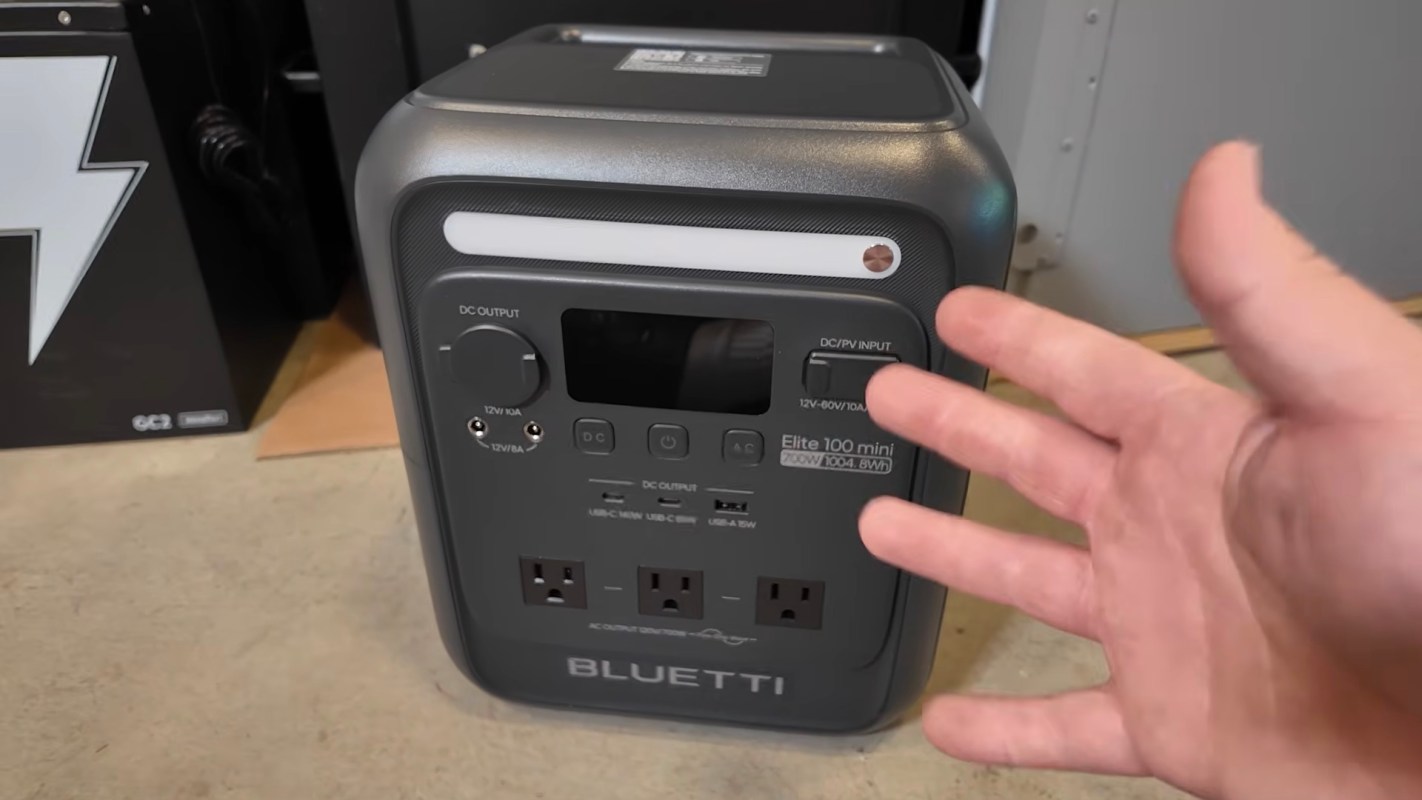
A compact backup battery from Bluetti just passed a test that could matter to plenty of home users: keeping a high-powered computer running when the grid suddenly goes down.
The Bluetti Elite 100 Mini powered a triple-monitor 4K gaming setup and stayed on through a live unplugging test.
Separate load checks in the same review also showed its upper limit, with the unit shutting down at 900 watts.
Here's what to know
The unit featured in a hands-on YouTube review by There's A Trick For That (@theresatrickforthat) combines a 1,004-watt-hour battery with a 700-watt inverter.
After putting it through a range of practical tests, the reviewer called it "the tiniest, lightest-weight, 1 kWh portable power station I have tested on the channel yet."
On the electrical side, the reviewer said the output showed a "perfect pure sine wave," and turbo charging from a wall outlet reached around 700 watts.
TCD Picks » Quince Spotlight
💡These best-sellers from Quince deliver affordable, sustainable luxury for all




Capacity testing delivered 903 usable watt-hours from the advertised 1,004 watt-hours, which they said works out to roughly 90% efficiency and is above average.
For the UPS-style demonstration, the creator had the power station supporting a gaming workstation drawing roughly 600 watts before disconnecting wall power: "Check that out. Still running, no problem."
More background
Backup power is no longer a niche purchase for many households. For people working from home, keeping a desktop, modem, or medical device running during an outage can help prevent stress, lost time, and costly disruptions.
Longevity is part of the appeal too. The reviewer said the Elite 100 Mini uses lithium iron phosphate battery chemistry and should retain about 80% of its original capacity after roughly 6,000 cycles, which suggests years of regular use.
Weighing a little over 24 pounds, the unit can move between a desk, a vehicle, or a campsite. That mobility could help some buyers avoid paying for both a dedicated UPS and a separate portable battery.
Still, the device comes with tradeoffs.
One commenter wrote, "Cute little thing, useful for that single device backup you showed and yeah 700W inverter could be a challenge to navigate."
What can be done?
If the main goal is to keep the internet, lights, laptops, or a single desktop running during a blackout, a compact unit like this could be a practical option, with portability as an added benefit.
Shoppers who want to run heavier equipment, multiple loads at once, or kitchen appliances may need to put more emphasis on inverter size than battery capacity alone. The reviewer suggested the extra bulk of a larger inverter can be worth it.
There is also a case for choosing a single battery that can cover home backup needs while still traveling easily. That kind of flexibility may help reduce clutter, especially for people with limited storage space.
Commenters also pointed to transfer speed.
As one user put it, "So, it's critical to consider your use case."
The reviewer said, "This blows all the other UPSs out of the water that are dedicated for that."
Another commenter offered a more measured reminder: "The use as a UPS is definitely an excellent feature."
Where can I learn more?
Each story touches on the same questions that came up in the Elite 100 Mini test: how much power a portable station can deliver, how safely it stores energy, and how long it may hold up with regular use.
They also show the different directions backup power is heading, from sturdier home-ready units to battery chemistries beyond standard lithium-ion.
• Bluetti says its next-gen battery tech could better protect appliances during outages.
• At ORNL, engineers advanced battery safety and energy storage for longer-running electronics.
• Scientists optimized the battery performance of aqueous zinc-ion cells to cut costs.
• Researchers flip the script on fast-charging zinc-ion batteries with longer-lasting performance.
That extra context can help if you're deciding between a small UPS-style battery and a larger or more future-focused one. Looking across these developments also makes it easier to figure out what matters most for your setup, whether that's portability, inverter headroom, or battery chemistry.

Get TCD's free newsletters for easy tips, smart advice, and a chance to earn $5,000 toward home upgrades. To see more stories like this one, change your Google preferences here.






