


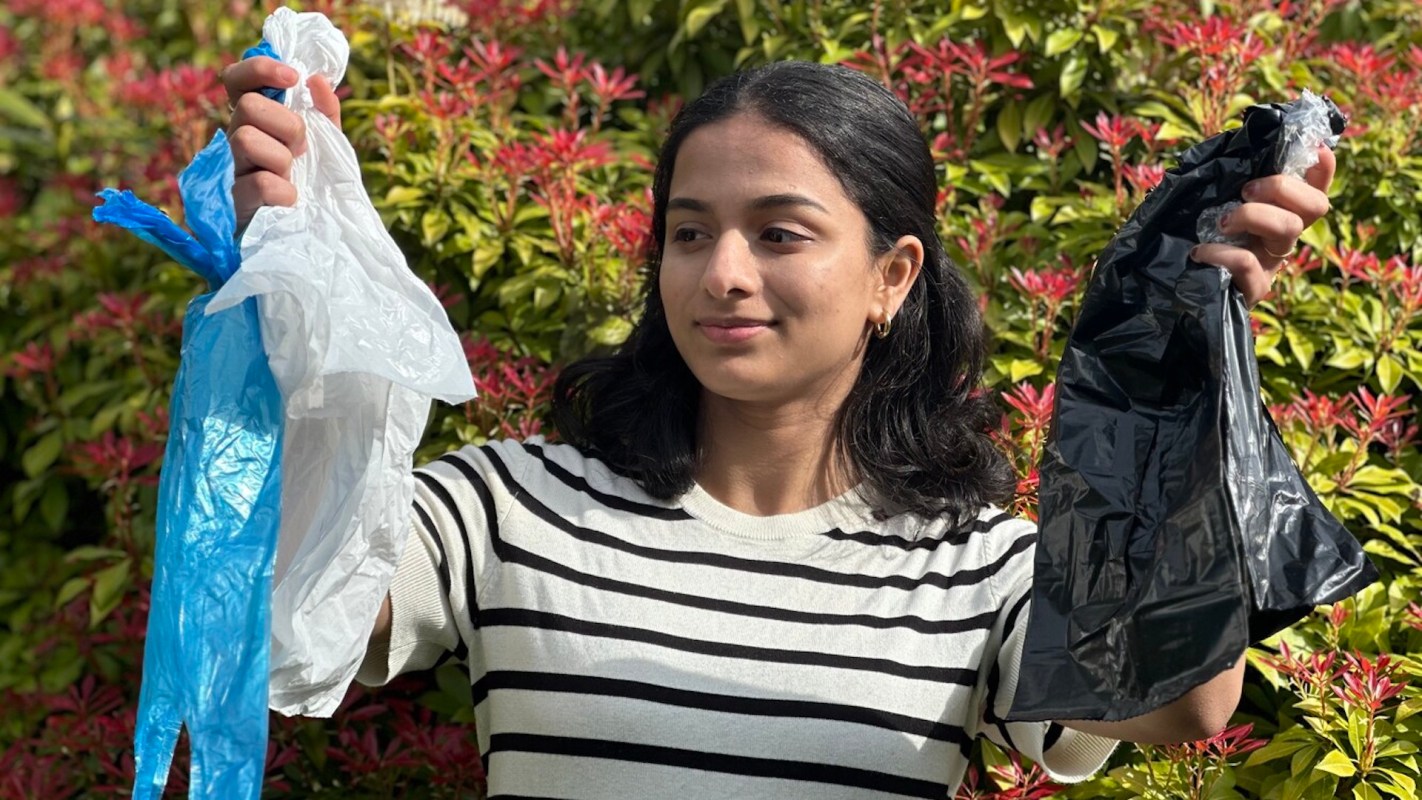
Scientists keep finding microplastics in more and more places, including soil, waterways, and even the air. In that context, a teenager in Ireland has created a material meant to biodegrade while also aiding the breakdown of plastic pollution already in the environment.
According to Discover Magazine, Arya Satheesh, an 18-year-old from Letterkenny, Ireland, was recently named the European winner of the Earth Prize for Eco Purge, a plant-based plastic engineered to release enzymes aimed at degrading microplastics.
What's happening?
A project on monitoring water quality led Satheesh to Eco Purge after it showed her how pervasive microplastics had become.
She set out to make a biodegradable substitute for conventional plastic that would also help address pollution already present in the environment.
As the material naturally decomposes, it's designed to release enzymes it carries. Discover Magazine reported that those enzymes can help break down other microplastics in soil, fresh water, and salt water, giving the material a dual role as both a replacement and a cleanup tool.
Discover Magazine reported that Satheesh's European regional victory in The Earth Prize came with $12,500, which she plans to use to continue developing the prototype.
TCD Picks » Quince Spotlight
💡These best-sellers from Quince deliver affordable, sustainable luxury for all




She has also worked with researchers in Ireland and hopes the material can eventually be used in products including packaging and compost bags.
Why does it matter?
More and more people are growing concerned about microplastics because, once they spread through ecosystems, their small size and persistence make them difficult to remove.
They show up in forms such as fibers, fragments, foams, films, and microbeads, and everyday products and waste can introduce them into water and soil.
United States Geological Survey data cited by Discover Magazine shows how large the problem is: Studies found microplastics in about eight gallons of Great Lakes tributary water on average, along with 1,285 particles per square foot of river sediment and 112,000 particles per square mile of Great Lakes water.
Discover Magazine also noted that a USGS team working with the State University of New York at Fredonia found that fibers accounted for an average of 71% of the microplastics detected in rivers flowing into the Great Lakes.
Those fibers can originate from widely used products including synthetic clothing, wipes, nets, and diapers.
Because microplastics are both widespread and hard to control once released, interest is rising in solutions that can reduce new plastic use while also helping break down pollution that's already there.
Eco Purge is part of a wider effort to use biology against plastic waste. Satheesh summed up her goal simply: "I wanted to create something that could help tackle that problem directly."

Get TCD's free newsletters for easy tips, smart advice, and a chance to earn $5,000 toward home upgrades. To see more stories like this one, change your Google preferences here.






