


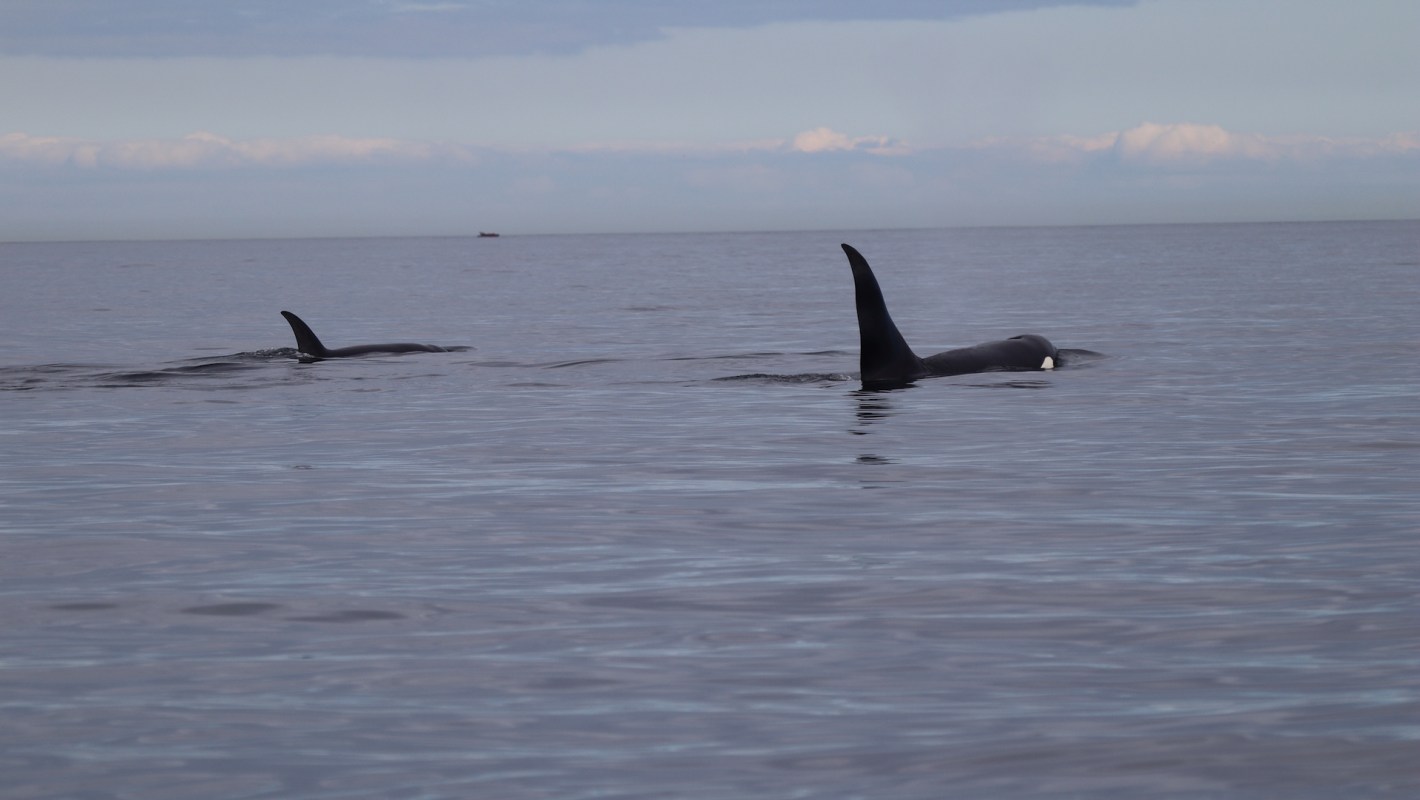
In the Salish Sea, Bigg's killer whales are showing up in notable numbers, while southern resident orcas did not appear in inland waters during July, indicating the region's marine ecosystem is changing.
Here's what to know
According to KUOW, the Orca Behavior Institute recorded its highest July total yet for Bigg's killer whale sightings in the Salish Sea, while inland waters had no southern resident sightings that month.
Among the encounters KUOW highlighted were seven Bigg's killer whales, mostly from the T36 pod, breaching near Bella Bella Beach in Gig Harbor, and a visit into Shilshole Bay by the Ballard Locks that officials said had not happened so close to the spillway dam.
Deborah Giles, a killer whale scientist with the SeaDoc Society, told KUOW that the trend likely stems from a mix of heightened public awareness and a real increase in how often these whales use the area.
"I do think there's an aspect of observer awareness," Giles said. "There is no denying at all that this type of killer whale has become more abundant in the inland waters of the Salish Sea in the last 20 years or so."
More background
When Giles started studying whales in the region in 2005, sightings of Bigg's killer whales — the mammal-eating orcas formerly known as transients — were rare enough that researchers would pause their work to watch them.
TCD Picks » Quince Spotlight
💡These best-sellers from Quince deliver affordable, sustainable luxury for all




Bigg's killer whales have been seen every day, reinforcing Giles's view that they and southern residents have "absolutely changed places as far as habitat use of inland waters."
Food supply appears to be the clearest reason. Bigg's killer whales hunt pinnipeds such as seals and sea lions, which are plentiful in the region, while southern residents rely on salmon, a food source Giles said is much less predictable.
Orcas are closely tied to the region's identity and tourism. The absence of southern residents points to ongoing ecosystem pressures linked to salmon recovery and local waters.
What can be done?
For people hoping to spot an orca responsibly, Giles recommended following whale sighting updates through social media groups including The Orca Network and local Puget Sound or San Juan Island whale-sighting communities, as KUOW reported.
She also pointed to the Edmonds Marina area as a strong shore-watching location, especially in the fall, when southern residents have historically used the area heavily. For many families, that can offer a lower-cost, lower-impact alternative to going out on a boat.
Understanding which whales are being seen, where they are feeding, and how those patterns are changing can help inform habitat protection, salmon recovery, and responsible viewing practices.
"If the long-term studies had started now, we would absolutely be calling the so-called 'transients,' or Bigg's killer whale, 'the residents,' because they are seen here so much more," Giles said.

Get TCD's free newsletters for easy tips, smart advice, and a chance to earn $5,000 toward home upgrades. To see more stories like this one, change your Google preferences here.






