


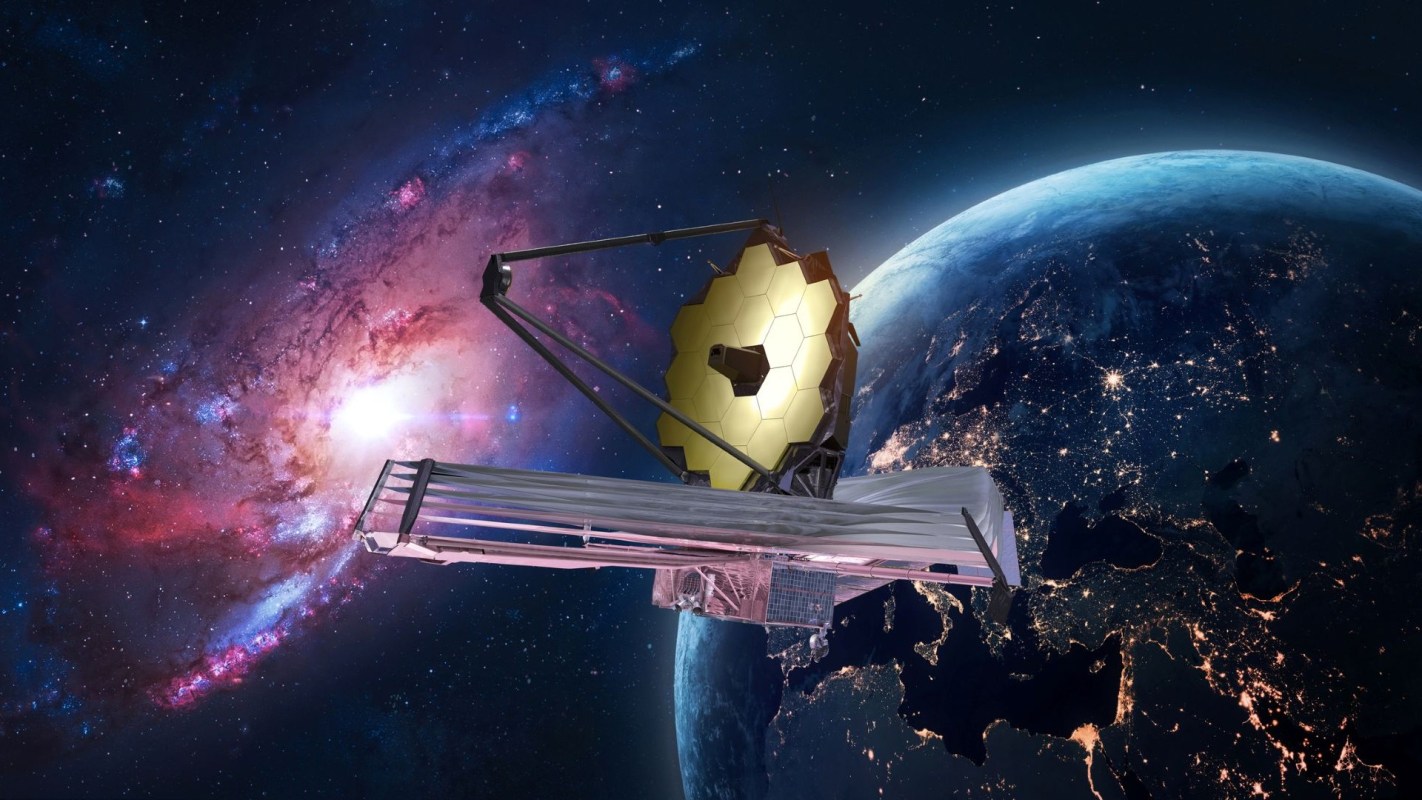
NASA's James Webb Space Telescope has uncovered a giant planet hiding in plain sight, and it did so without relying on a traditional direct image of the world itself.
Instead, Webb identified the planet by reading the chemistry of its atmosphere, adding a powerful new tool to the search for distant worlds that are otherwise overwhelmed by the glare of their stars.
What happened?
The newly identified planet, Beta Pictoris d, was found in the young, nearby Beta Pictoris system, long regarded as one of the galaxy's most closely examined planetary neighborhoods.
Before this result, astronomers already knew Beta Pictoris for its striking debris disk and for the giant planets Beta Pictoris b and Beta Pictoris c.
According to the Space Telescope Science Institute, Webb recognized the planet from the chemical signature of its atmosphere instead of first cleanly separating the planet from the star's light.
Few systems meet that mark: with d, Beta Pictoris is one of just two in which three planets have been obtained through imaging, and the result suggests that more worlds could emerge even when they are faint, packed close to their stars, or heavily washed out by starlight.
TCD Picks » Quince Spotlight
💡These best-sellers from Quince deliver affordable, sustainable luxury for all




Beta Pictoris has played a role in research on how planetary systems form ever since its debris disk was discovered in 1983.
Why does it matter?
Because Webb located the planet through atmospheric evidence rather than an obvious direct view, the discovery indicates that some worlds buried in bright star systems may still be detectable.
Similar advances can support better satellite monitoring, sharper environmental tracking, and stronger data tools that make forecasting and research more accurate.
Learning how planets form around other stars helps researchers better understand the history of our own solar system. That, in turn, can refine models used to study everything from planetary climates to the conditions that might allow a world to support life.
Webb has already turned its instruments on the weather of other distant gas giants, tracking clouds that form and vanish on a scorching world hundreds of light-years away, giving scientists a growing toolkit for comparing atmospheres across many star systems.
What's being done?
Webb's infrared instruments give astronomers a way to isolate faint atmospheric signals even when a star dominates the scene, opening studies of systems that once seemed too bright or too crowded to analyze.
If astronomers can reliably use atmospheric fingerprints to identify hidden planets, they may be able to survey more star systems more quickly and build a clearer picture of how common different kinds of worlds really are.
NASA and partner institutions regularly release images, explainers, and classroom resources that help students, families, and lifelong learners stay connected to fast-moving science and technology.
Major observatories push innovation in detectors, computing, and remote sensing, fields that can ultimately improve communications, environmental monitoring, and other tools people use in daily life.
"This discovery adds another piece to an already fascinating planetary system," said Aidan Gibbs, lead author of the study and a postdoctoral researcher at the University of California, San Diego, per the Space Telescope Science Institute.
"Beta Pictoris has long served as a laboratory for understanding how planetary systems form and evolve, and now we have another planet helping us tell that story."

Get TCD's free newsletters for easy tips, smart advice, and a chance to earn $5,000 toward home upgrades. To see more stories like this one, change your Google preferences here.






