


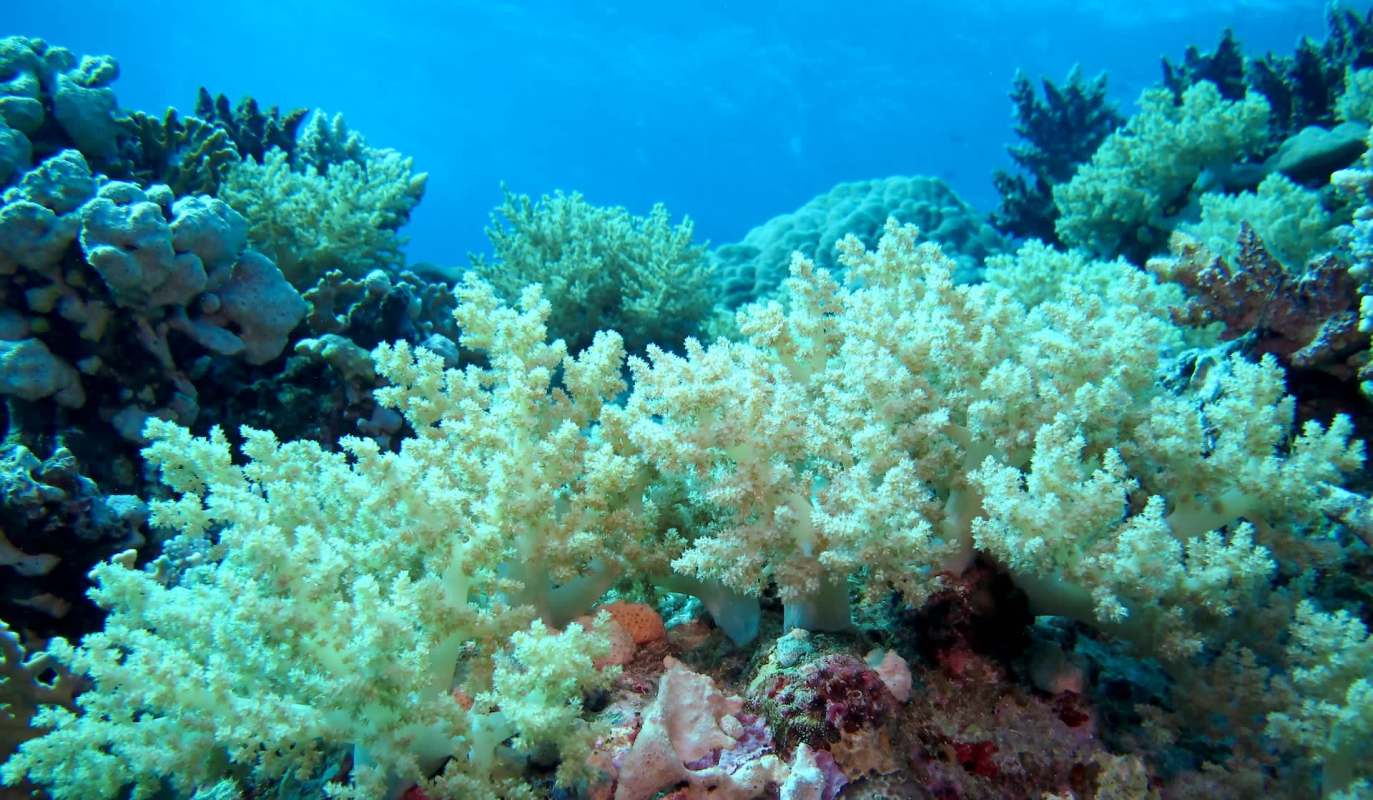
A coral reef off the coast of Benin that scientists had long assumed was dead has been found alive — and full of marine life.
What happened?
Using those old records to guide the search, the team scanned 7.1 miles (11.5 kilometers) of seabed with sonar and identified two signals that appeared promising, according to Phys.org.
The search started with records from the 1960s that pointed to a possible deep-water reef more than 164 feet (50 meters) below the surface.
Those earlier surveys had noted the formation, but researchers at the time believed it was probably dead.
Footage gathered afterward with an underwater drone and the Deep Sea Camera System suggested the site is a healthy mesophotic coral ecosystem — a deeper, lower-light coral habitat that may exist in separate patches rather than as one continuous reef.
In the images, researchers saw eight fish species and eight coral types using the habitat, including golden African snappers, blackbar soldierfish, Guinean angelfish, West African goatfish, the Monrovia doctorfish, three-banded butterflyfish, and two damselfish species.
TCD Picks » Quince Spotlight
💡These best-sellers from Quince deliver affordable, sustainable luxury for all




Lead author Gérard Zinzindohoué of the Institut de Recherches Halieutiques et Océanologiques du Bénin, whose study appeared in Frontiers in Marine Science, described the moment this way: "That was a big moment for us, because suddenly we could actually see the seafloor."
Why does it matter?
Because healthy coral ecosystems provide fish with shelter and feeding grounds, they can have major effects on biodiversity, local fisheries, and coastal communities that rely on ocean resources.
Large parts of West Africa's marine environment are still understudied.
As Zinzindohoué said, "To our knowledge, this is the first confirmed record of a living mesophotic coral ecosystem on the Gulf of Guinea continental shelf."
The discovery also points to what may still be absent from maps and conservation planning.
When reef systems exist but have not been documented, governments and communities can miss them when making decisions about fishing, development, and habitat protection.
The team has not directly sampled the corals yet, so the species identifications still need to be confirmed. Researchers also do not yet know whether the corals were dead in the 1960s and later recovered.
What's being done?
Researchers say the find marks the start of the exploration, not its conclusion.
Historical reports indicate the reef system may stretch about 25 miles (40 kilometers) parallel to the coast, although only a small part has been surveyed so far.
The next phase involves more fieldwork, including diving and coral sampling.
That work could confirm which species are present, offer a better sense of the reef's overall health, and show whether nearby rocky areas hold additional living coral patches.
The discovery also highlights how better technology can support conservation work.
Tools such as sonar mapping and deep-sea camera systems are allowing researchers to locate ecosystems that were once effectively invisible, which could improve marine management and strengthen protection for fisheries and wildlife.
Zinzindohoué said, "For me, the most exciting part is understanding the reef's history and what it can tell us about how the ocean in this region has changed over time. It feels like we have only just started to read an archive that has been there for a very long time."

Get TCD's free newsletters for easy tips, smart advice, and a chance to earn $5,000 toward home upgrades. To see more stories like this one, change your Google preferences here.






