


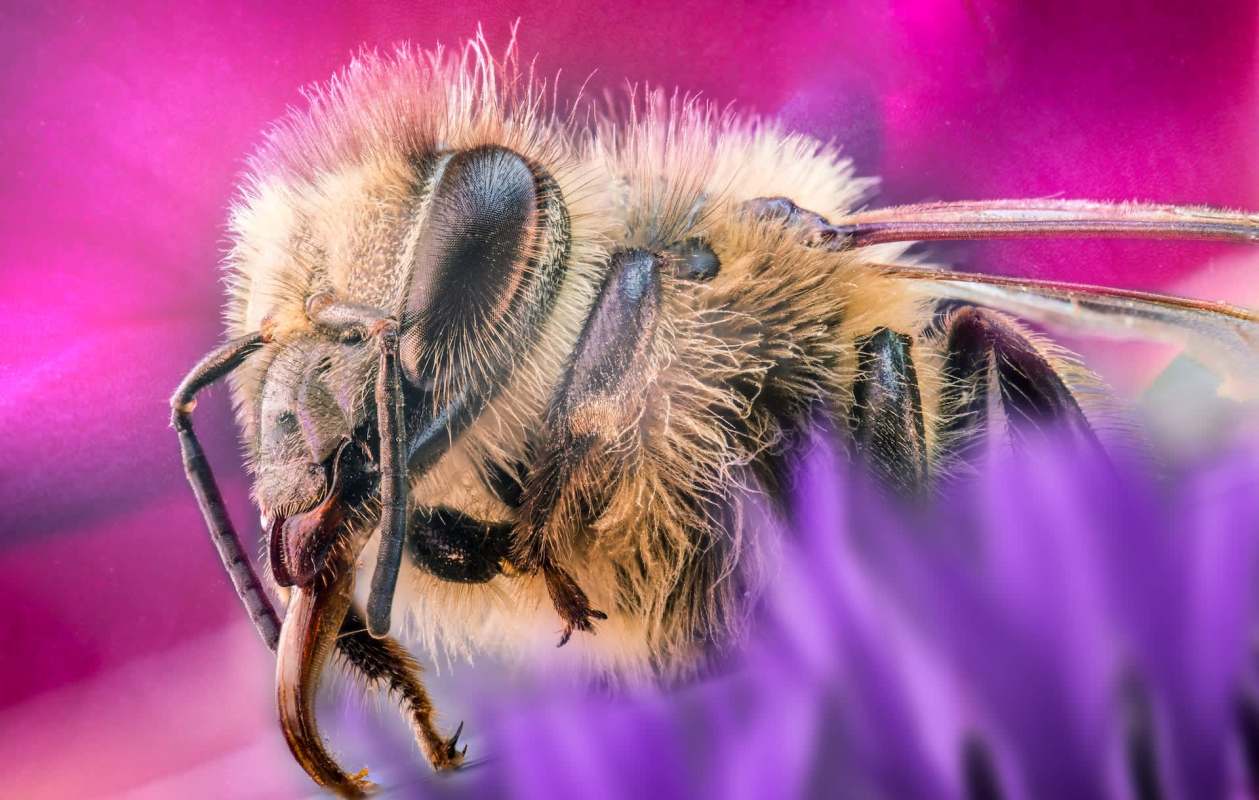
A bumblebee that seems to smack its lips after a sip of sugar water may signal something meaningful.
According to The Conversation, the insect's mouthpart movements differ in ways that may indicate whether it favors or rejects a taste.
What happened?
In a study published in the journal Proceedings of the National Academy of Sciences, scientists reported that bumblebees repeatedly moved their tongue-like glossa after drinking sugar water, but behaved very differently when given dilute salt water.
Using individual bees and tiny pipette droplets, researchers at Southern Medical University in Guangzhou, China, tracked how the insects' mouthparts behaved after tasting each solution.
Sweet liquid offered to a single bumblebee was followed by repeated glossa extensions and retractions into open air, "almost as if smacking her lips."
Dilute salt water prompted the opposite response: the bees moved away, shook their heads, and cleaned the glossa.
TCD Picks » Quince Spotlight
💡These best-sellers from Quince deliver affordable, sustainable luxury for all




That pattern changed when the bee's physical condition changed. After the researchers briefly warmed it to 104 degrees Fahrenheit so it became dehydrated, the insect stopped rejecting the salty solution, drank it eagerly, and then showed the same glossa movements usually seen after sugar.
Further tests altered the neurochemistry of bees. Some compounds made them more reactive to sugar, while others specifically increased the glossa motions that happened after drinking, suggesting the behavior reflected a bee's internal state rather than a simple reflex.
Why does it matter?
Bees are among the world's most important pollinators, helping sustain ecosystems and many of the crops people rely on every day. Learning more about how they experience the world could eventually shape how scientists, farmers, and policymakers think about insect welfare and habitat protection.
The study also adds to a growing body of evidence suggesting insects may have more complex inner lives than many people assume. If bees can display behaviors tied to preference, discomfort, or changing needs, this could influence future research on stress, pesticide exposure, and environmental conditions affecting pollinator health.
Healthy pollinator populations are closely tied to food security and resilient local agriculture. Better understanding what helps bees thrive could support gardens, farms, and landscapes that are both more productive and more biodiversity-friendly.
Overall, the results challenge the idea that insects function only as automatic biological systems — a shift that could encourage more thoughtful conservation decisions.
What's being done?
By linking subtle mouthpart movements to a bee's condition, the study gives scientists a new tool for investigating insect behavior. That could make it easier to run more precise experiments on how heat, thirst, chemicals, and nutrition affect bees.
It also creates opportunities to improve pollinator protection in practical ways. Researchers may be able to use these behavioral markers to better assess whether certain environments or substances are helping bees — or putting them under stress.
The researchers wrote, "The bee's responses gave us a read on her subjective inner physiological state."
They added that insects may be "more than mere reflex machines."

Get TCD's free newsletters for easy tips, smart advice, and a chance to earn $5,000 toward home upgrades. To see more stories like this one, change your Google preferences here.






