


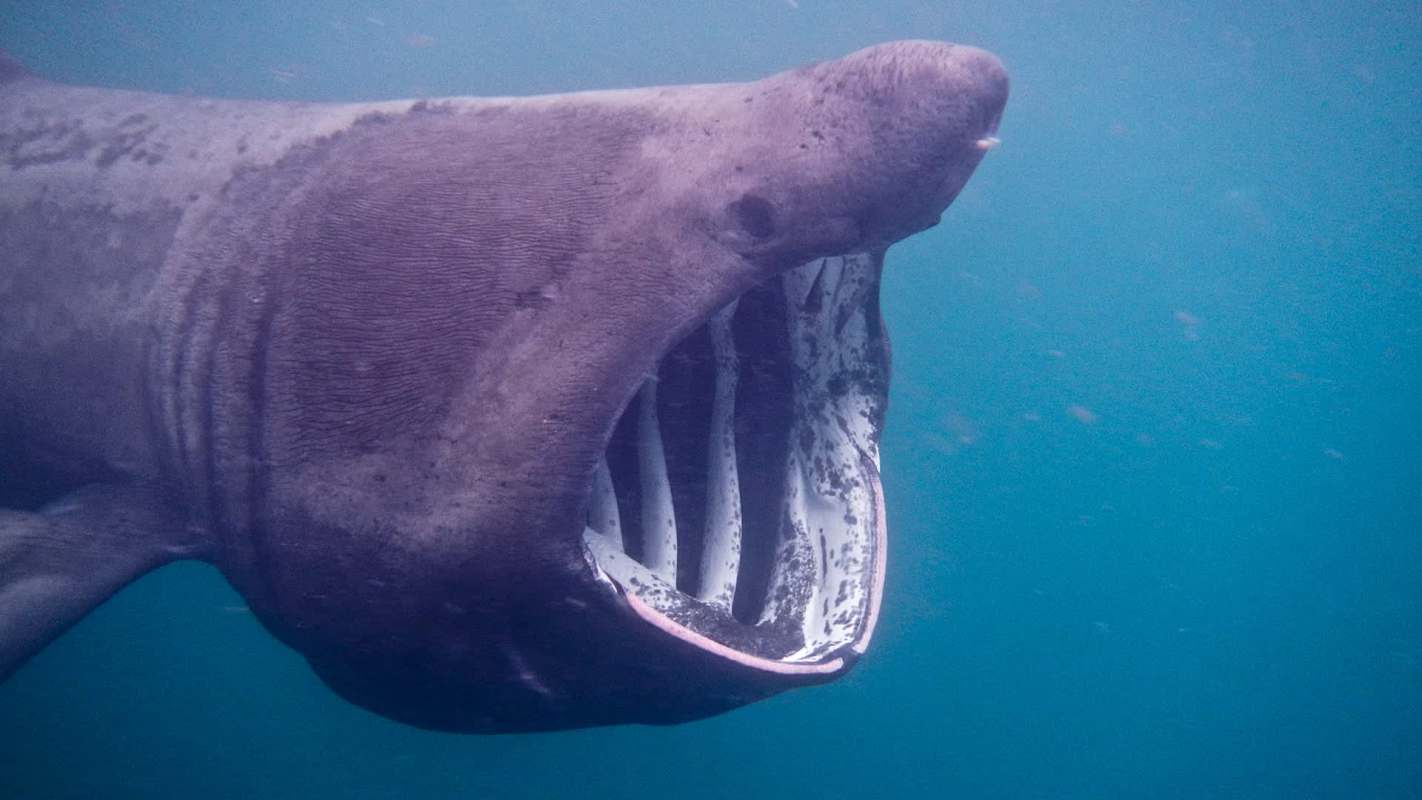
A study of basking sharks found skin so abrasive it tore through researchers' gloves, and scientists think that unusual surface may be part of what lets the giant fish flare its mouth open when feeding.
Researchers have said the same anatomy may point to new ways of making products that need to resist damage while still bending easily.
What's happening?
According to Earth.com, basking sharks do not have the usual shark skin pattern of small scales aligned toward the tail. Instead, their bodies are covered with oversized, fang-like scales packed into clusters.
Mike Schindler, a Ph.D. student in Mason Dean's lab at City University of Hong Kong, led the research. The team first realized how unusual the skin was from the way it felt.
"When we touched the basking shark's skin with gloves, they quickly ripped apart," Schindler said, per Earth.com.
These scales, called dermal denticles, reach roughly 0.02 inches across — huge for a shark — and seem to face in many different directions. Instead of forming one even layer, the denticles are grouped into dense "paver block" sections, with bare skin folds in between.
TCD Picks » Quince Spotlight
💡These best-sellers from Quince deliver affordable, sustainable luxury for all




While filter feeding, basking sharks — an endangered species that can exceed 30 feet in length — need to dramatically widen their mouths and throats, and those exposed folds may help them do it. A shark can take in 100,000 gallons of water through its mouth in an hour as it strains out tiny prey.
Why does it matter?
The results suggest shark skin is not always shaped mainly by the need to reduce drag. In many species, scientists have treated denticles as a surface feature that helps streamline movement through the water.
That explanation fits basking sharks less well because they are slow swimmers. Their skin appears better suited to repeated expansion, especially around a mouth that can open to about 3 feet wide, where the surrounding tissue must keep stretching and tightening during feeding.
By concentrating denticles in patches and leaving bare folds between them, the skin may stay protected without blocking those areas from expanding.
This could matter well beyond shark research. Engineers have long struggled to create materials that are both protective and flexible, including products such as medical bandages, clothing, and athletic gear.
The study also adds to evidence that animals can evolve highly specialized traits around the way they survive. In basking sharks, their enormous size and filter-feeding behavior may have been matched by skin that evolved to support those same demands.
What's being done?
To study the sharks, researchers combined physical specimens from beached animals with digital scans and museum samples, allowing them to learn more about a species that is rare and difficult to examine.
They also compared the denticles with fossil relatives and found signs that this skin pattern may have evolved alongside filter feeding.
That kind of biomimicry research could eventually influence products people use every day. Engineers are often searching for surfaces that remain rigid in one direction while stretching in another, and the basking shark may offer a natural blueprint.
Endangered species do not just matter for ecosystems — they may also contain design solutions humans have yet to imagine.

Get TCD's free newsletters for easy tips, smart advice, and a chance to earn $5,000 toward home upgrades. To see more stories like this one, change your Google preferences here.






