


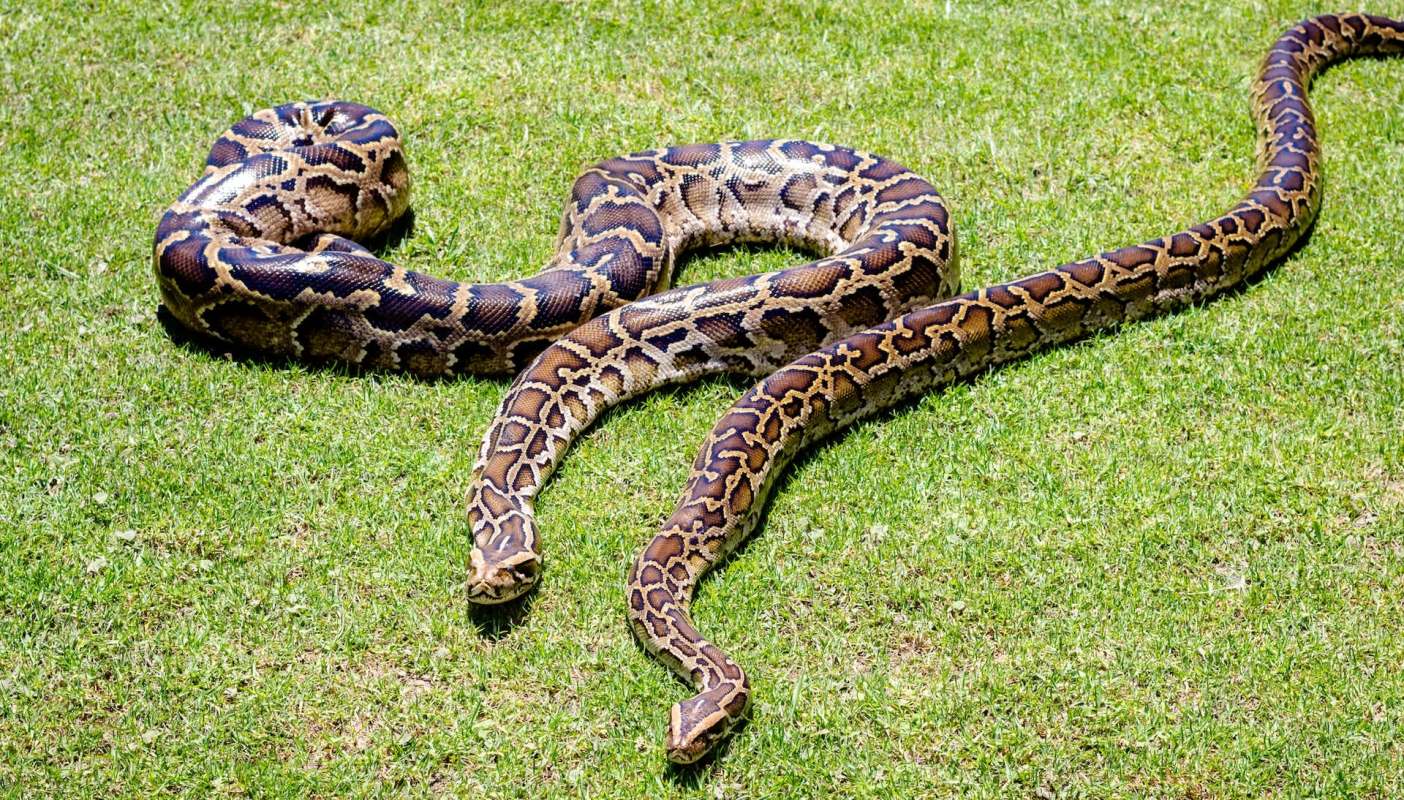
In a baffling case documented in Bangladesh, researchers observed a smaller Burmese python consume a larger reticulated python alive over the course of about two hours, an exceptionally rare event between two giant snakes.
What happened?
Researchers described the incident in a 2024 study published in Reptiles & Amphibians after it took place at Akiz Wildlife Farm in Bangladesh. As A-Z Animals reported, the team believes it may be the first recorded example of a Burmese python pursuing and eating a reticulated python.
That result was especially surprising because reticulated pythons are generally larger and more aggressive than Burmese pythons. Even so, the 10-foot Burmese python coiled around the bigger snake, overpowered it, and swallowed it in about two hours.
Ashikur Rahman Shome, a co-author of the study and a wildlife ecologist at Dhaka University, said the setting made the attack even harder to explain.
"There are a number of chickens at the site," Shome told LiveScience. "They make a better meal."
Researchers believe territorial competition may have played a role. While both species are native to Southeast Asia, they do not usually spend much time in the same habitats. Burmese pythons generally prefer grasslands, forests, and marshes, while reticulated pythons are more often associated with wetter rainforest areas near streams and rivers.
TCD Picks » Quince Spotlight
💡These best-sellers from Quince deliver affordable, sustainable luxury for all




Why does it matter?
The case offers a rare glimpse of how animals may behave when habitat boundaries blur and species that normally remain apart are pushed into closer contact.
The incident happened on a wildlife farm, not in an untouched forest, and human-managed landscapes can create unusual overlap between species by concentrating food, shelter, and travel corridors in one place.
When that happens, animals may compete in ways scientists do not often get to observe in the wild.
If development, farming, and habitat disruption increase competition among large predators, it can affect where they hunt, how they interact, and how often people encounter them.
Events like this can help researchers better understand how wildlife adapts, or struggles to adapt, as human activity reshapes ecosystems.
What's being done?
For now, scientists are still trying to figure out exactly why the Burmese python prevailed. The documented encounter gives researchers a case study to compare with what is already known about both species' size, temperament, and territorial behavior.
Tracking how often these snakes meet and under what conditions could help clarify whether this was a one-off event or part of a pattern that has simply gone unnoticed.

Get TCD's free newsletters for easy tips, smart advice, and a chance to earn $5,000 toward home upgrades. To see more stories like this one, change your Google preferences here.






