


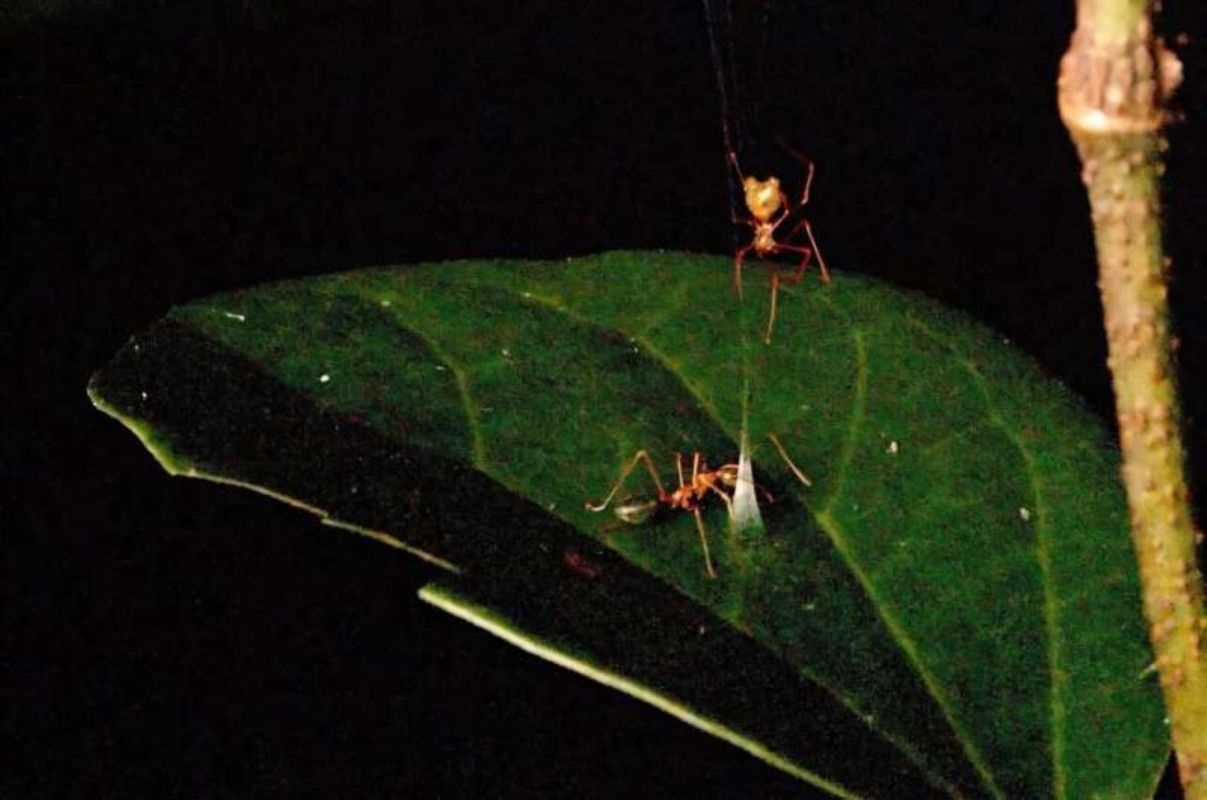
A tiny spider from Australia's rainforests is going viral because its hunting method resembles an ancient Roman weapon more than a typical arachnid tactic.
Instead of waiting for prey to stumble into its web, it uses a spring-loaded trap to launch ants into it.
What happened?
The spider was found in the remote rainforests of Far North Queensland, and its nickname comes from the ballista, an ancient Roman, spring-powered weapon used to fire stones, as ABC News — Australian Broadcasting Corporation News — described it. In this version, the thing being launched is the prey.
(Click here if the embedded video does not appear.)
Building the trap takes time. The nocturnal spider can spend up to four hours creating a cone near the ground from about 60 vertical tension lines, reinforced with extra silk, after first securing an anchor to a leaf, a branch, or sometimes the forest floor; once that is done, it climbs upward and waits.
As if the setup wasn't unique enough, it hunts only one species: the aggressive green tree ant, Oecophylla smaragdina.
TCD Picks » Quince Spotlight
💡These best-sellers from Quince deliver affordable, sustainable luxury for all




Researchers think the setup uses pheromones to draw the ant in and induce an attack. When the ant attacks the silk cone and bites it loose from the anchor point, the stored tension releases and sends the ant more than 11 inches upward into the spider's main web at over 4,200 feet per second squared.
Once in the web, the ant is wrapped in silk and eaten. The spider has not yet been formally named, but it belongs to the genus Propostira.
Why does it matter?
Because green tree ants are highly territorial and aggressive, they are a dangerous prey choice for a small predator.
"Ants have a range of chemical defences, including the ability to sting in some species, and they use alarm signals to rapidly recruit hundreds and even thousands of other ants as backup," Prof. Ajay Narendra of Australia's Macquarie University told ABC
Scientists think the mechanism lets the spider deal with these risky ants individually while staying away from active ant trails and nests.
What are people saying?
Online reaction blended awe, admiration, and a little alarm. The original poster's description of a spider that "catapults passing prey into its waiting web" helped set the tone in the thread.
Commenters were especially struck by the trap's ingenuity.
One person wrote, "Launching prey upwards seems like a smart lazy move."
Another added, "Fascinating!"
One person was not surprised at all by the spider's homeland: "Of course it's in Australia."

Get TCD's free newsletters for easy tips, smart advice, and a chance to earn $5,000 toward home upgrades. To see more stories like this one, change your Google preferences here.






