


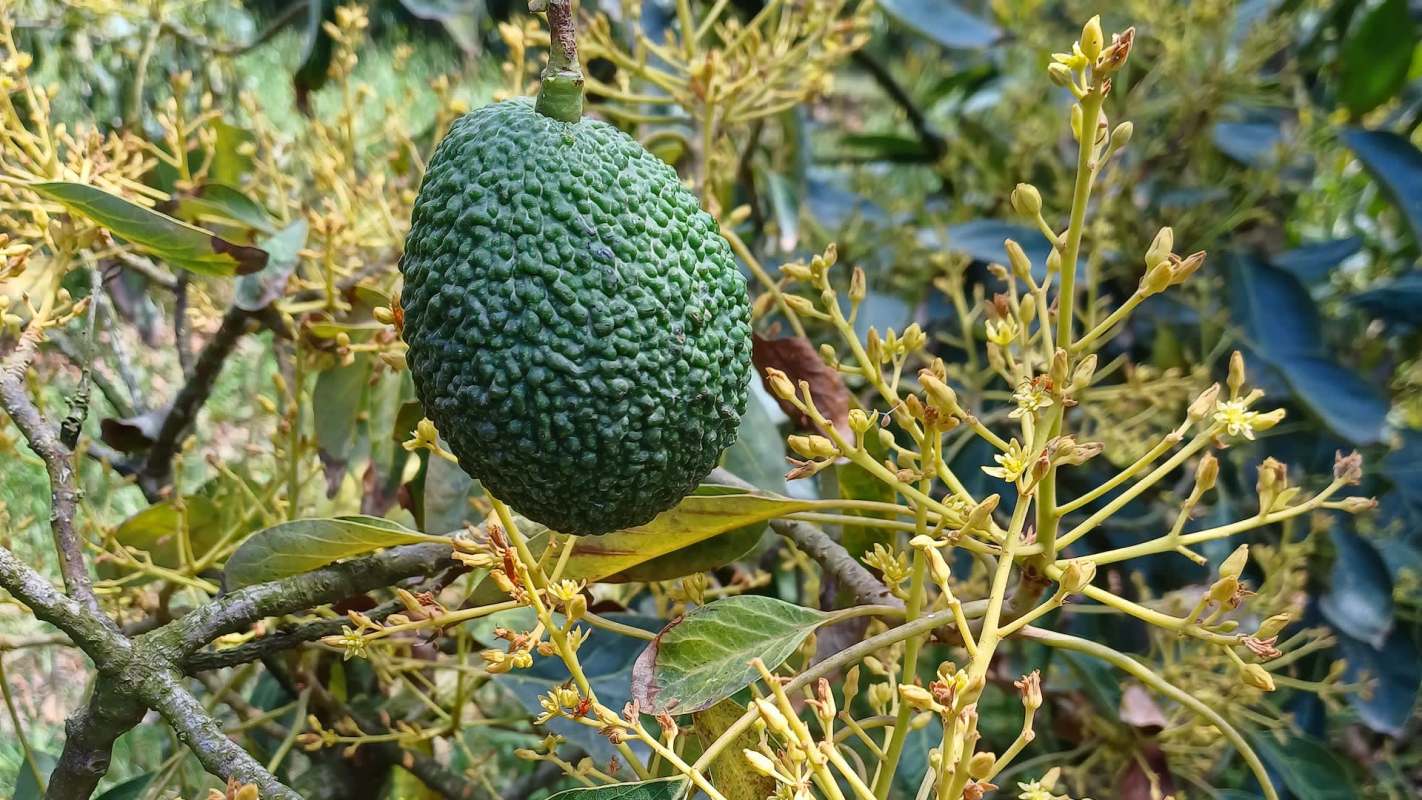
Before a young avocado tree ever produces its first flowers, breeders may now be able to predict whether it will follow the A or B type blooming schedule. Researchers at two University of California campuses identified its corresponding gene, according to a UC Riverside press release.
What happened?
A research team led by researchers at the University of California Davis — with contributions from scientists at the University of California Riverside — identified SDMYB, which is a gene linked to an avocado pollination trait. The findings were published in the Proceedings of the National Academy of Sciences.
Growers usually need both A and B type avocado trees in the same orchard because the two types of flower patterns behave on different timetables that complement each other.
The UC Riverside team contributed by monitoring hundreds of genetically diverse avocado trees and recording when thousands of flowers opened and closed, often hour by hour, because temperature changes can shift the schedule.
Before this discovery, breeders generally had to wait about five to 10 years for a seedling to mature before they could tell which flower type it had.
"This gives us a shortcut we've never had before," said Eric Focht, staff research associate in UC Riverside's Department of Botany and Plant Sciences and a co-author of the study.
TCD Picks » Quince Spotlight
💡These best-sellers from Quince deliver affordable, sustainable luxury for all




Jeffrey Groh, first author of the study, also said, "Our study provides a genetic explanation for a century-old mystery of avocado pollination."
How is this helpful?
If flower type can be identified through DNA almost right away, breeders can sort seedlings much earlier instead of spending years and valuable orchard space on trees that may not suit a breeding program.
That could make orchards more efficient and support the development of more commercially useful avocados. Even though B-type trees produce less valuable fruit, many California growers dedicate about 10% of an orchard to B-type pollinizer trees. That's because they help nearby A-type trees like Hass produce more fruit.
Improved pollination and stronger varieties can support steadier avocado supplies and potentially reduce some of the inefficiencies that drive up production costs.
The development also matters for people trying to eat more produce. Avocados have become a popular ingredient in plant-forward meals. And according to Harvard's Nutrition Source, they can help people hit their fiber goals and get vitamins in their diets.
What's being done?
Researchers said breeders can begin using this genetic marker now, even if gene editing to change flower type is still a long way off.
Breeders are especially interested in using the finding to create more high-quality B-type avocados. The press release noted that Luna is a marketable B-type developed through UC Riverside's breeding program.
Focht concluded, "People have wondered about this trait since avocado breeding began in California. Now we finally understand the genetics behind it, and we can use that knowledge to build the next generation of avocados."

Get TCD's free newsletters for easy tips, smart advice, and a chance to earn $5,000 toward home upgrades. To see more stories like this one, change your Google preferences here.






