


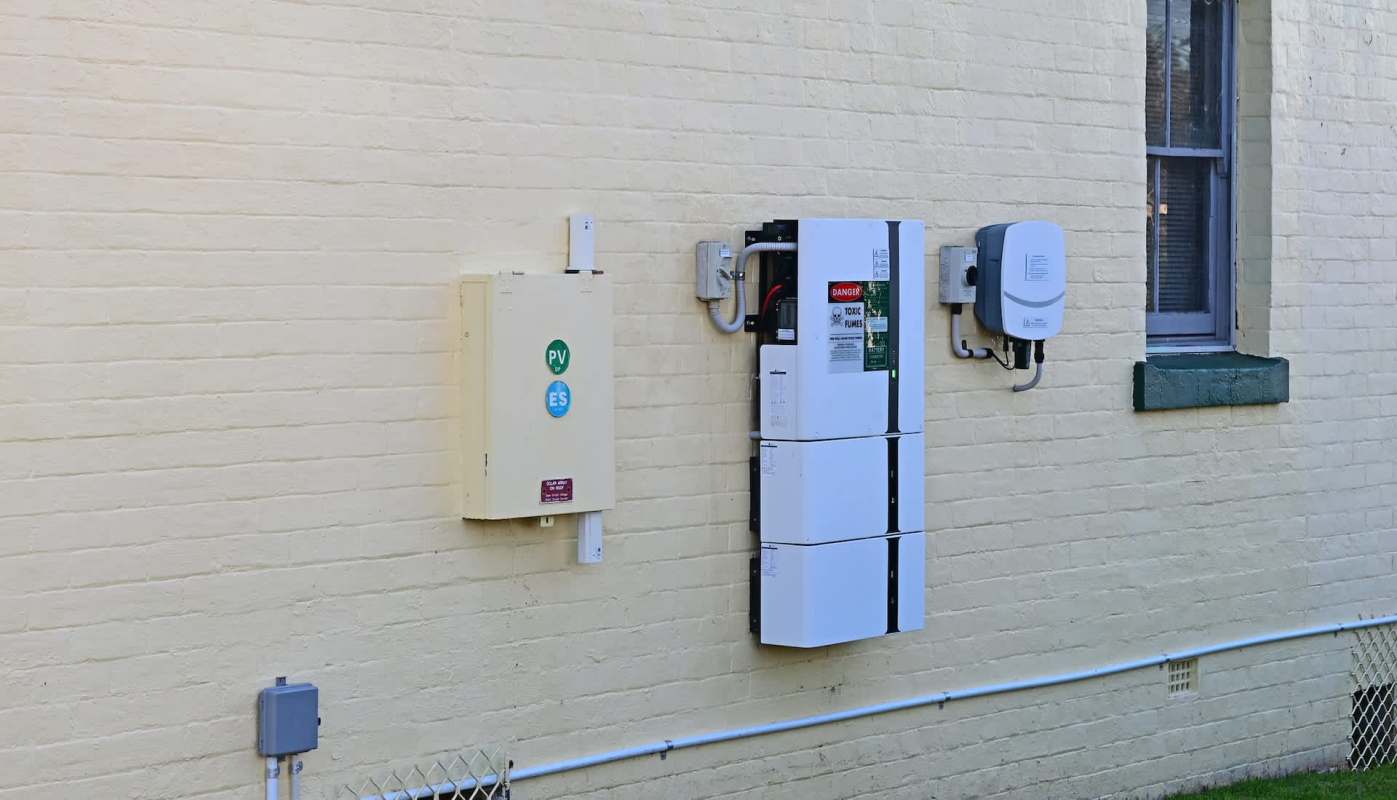
Should homeowners be worried that charging from solar panels and the grid at the same time could overheat a battery's cells?
An Australian homeowner raised that concern after installing solar and an 18-kilowatt-hour battery and qualifying for a three-hour free power offer.
Here's what to know
The homeowner's post on Reddit's r/SigenergyAustralia asked about proper settings and the safety of charging with solar and grid power simultaneously.
"Is it considered safe to import power from the grid and from solar at the same time? Should there be concerns about the battery cells getting too hot? Is there anything else I might need to change?" they wrote.
The homeowner had programmed a time-of-use schedule for grid charging from 11 a.m. to 2 p.m., when their plan made electricity free.
One commenter noted the equipment's charging specifications.
"It's perfectly fine. Bat10.0 modules are rated at a charge rate of 4.6kw each. So you have two, which gives you a charge rate of 9.2kw," they explained.
Another added: "Your system won't charge more than the batteries can handle. Don't stress."
Crushed by your bills? See instant solar savings from vetted installers in just a few clicks With energy prices through the roof, there's never been a better time to go solar — and EasyHome can help you find the best prices from the best installers in your area. EasyHome takes the guesswork and headaches out of energy upgrades by showing you estimated savings from a network of vetted local partners. To get started, just enter your ZIP and share a few details about your home — seeing your estimate is really that easy. |

For homeowners exploring similar equipment, EnergySage offers a resource for researching battery products and comparing competitive installation estimates.
EnergySage partners with electrification company Qmerit with the goal of helping homeowners find the best available battery storage pricing.
More background
The homeowner wanted to avoid buying grid power at peak prices by storing electricity during the three-hour free window.
The battery's 18-kilowatt-hour capacity describes how much energy it can store, while the commenter's 9.2-kilowatt figure describes its charging throughput.
"Totally fine," one commenter said. "If there was *ANY* and I mean *ANY* concern, then the regulator will have made it mandatory."
Beyond potential savings, a battery can provide backup power during an outage. Paired with solar panels, storage can also help households become more energy independent and support off-grid use.
What can be done?
Solar energy systems have become smart and allow users to configure them in the best ways for their situations. The posters' configuration prioritized the household's own energy by running in self-consumption mode outside the free-power window.
One commenter explained that the pictured setup could charge the battery with solar electricity without converting it to alternating current because it was DC-coupled.
For readers seeking backup rather than a whole-home installation, Pila is a plug-and-play battery alternative with a substantially lower price point than whole-home backup systems.
"It's totally fine. The excess solar helps charge your battery faster," another commenter wrote.
Where can I learn more?
Other homeowners are using solar and batteries to make the most of time-based electricity offers.
• A Queensland household uses free midday electricity to build bill credit with solar and batteries.
• An Australian electrician's $10,500 battery installation turned a $250 power bill into $14 credit.
• After receiving 26 hours of free electricity, a U.K. solar owner questioned battery-cycling payoffs.
• A U.K. solar owner learned that charging at 7p could beat using daytime solar.
• In Texas, a Powerwall owner estimated free nights could outperform Tesla's $800 credit by $717.

Get TCD's free newsletters for easy tips, smart advice, and a chance to earn $5,000 toward home upgrades. To see more stories like this one, change your Google preferences here.






