


Australia's green and golden bell frog has been hiding a dazzling secret in plain sight.
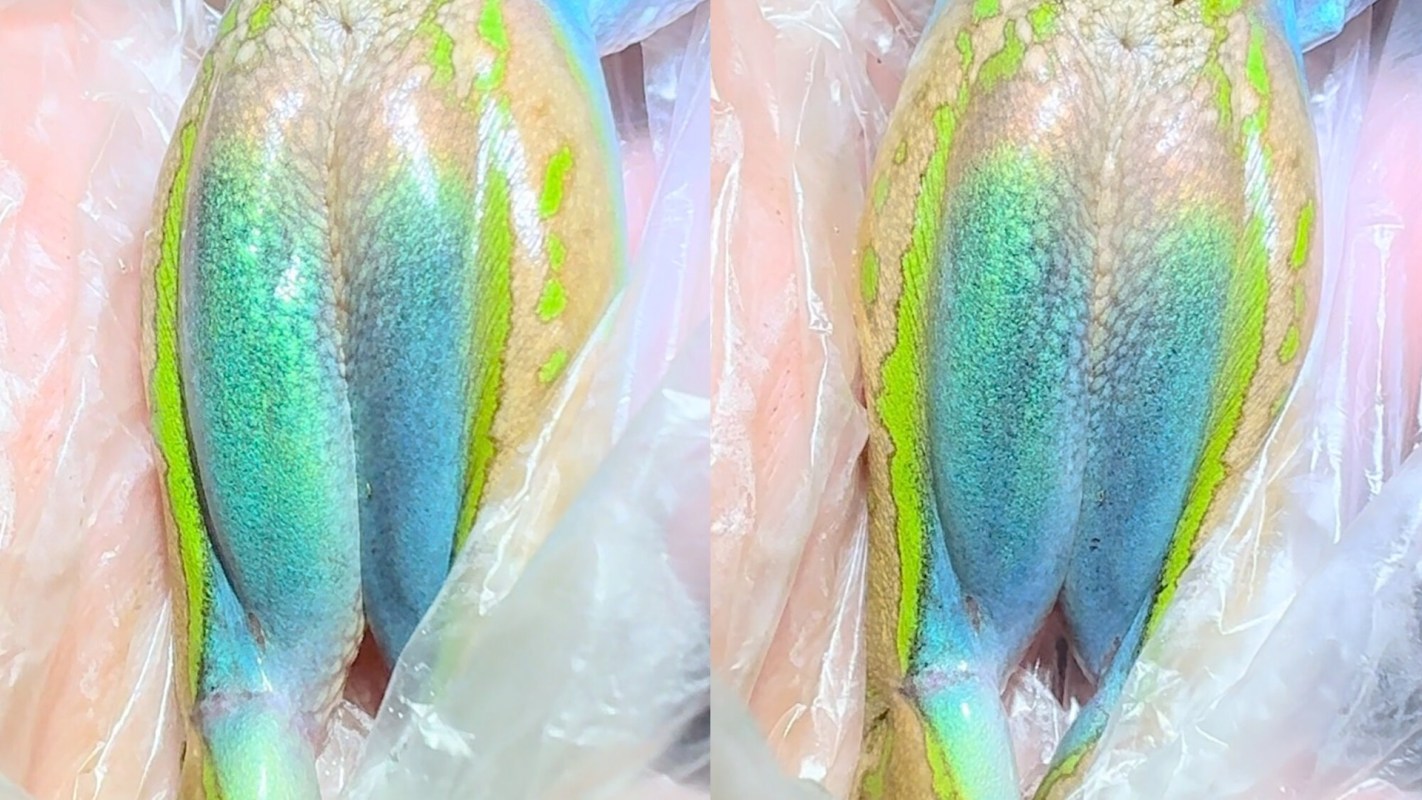
Scientists discovered the skin on its inner thighs shifts from blue to green depending on how the light hits it.
For an endangered species already considered iconic, the finding adds another striking reason to pay attention to how much biodiversity can still surprise us.
What's happening?
At the University of Newcastle, scientists identified an unusually strong example of iridescence in an amphibian, the endangered green and golden bell frog, or Ranoidea aurea.
Their work shows the species has angle-dependent coloration on parts of its skin that had not previously been noted.
In the journal Austral Ecology, the team presented the finding with photos of the frog's normally concealed inner-thigh skin. Those images show the area appearing blue from some perspectives and green from others.
TCD Picks » Quince Spotlight
💡These best-sellers from Quince deliver affordable, sustainable luxury for all




Conservation biologist Dr. John Gould, the study's lead author at the University of Newcastle, said in a statement shared by Phys.org, "Iridescence occurs when color changes according to the angle from which it is viewed."
The researchers think those vivid patches may function as flash coloration. If the hidden skin is suddenly exposed when the frog jumps or moves, the burst of color could startle or distract a predator long enough for the animal to get away.
Why does it matter?
The result may prompt a reassessment of both color production in frogs and the ways these animals protect themselves in natural settings.
Many blue colors in animals come not from pigment but from tiny structures that affect light. Here, the iridescence suggests the presence of neatly organized reflective platelets, a mechanism more akin to butterfly wings than to random scattering.
That kind of insight can help biologists better understand how species evolved defenses against predators and how specialized traits may be tied to habitat health. That knowledge supports smarter conservation of wetlands and other ecosystems that people also rely on for flood control, cleaner water, and resilience in the face of climate pressures.
Threatened animals are not static entries on an endangered-species list. They are living parts of ecosystems that can still reveal new biology.
What's being done?
The discovery gives scientists a fresh starting point for investigating structural color in amphibians.
Findings like this can strengthen the case for protecting species such as the green and golden bell frog by showing that there is still much to learn from them. That, in turn, can help support habitat restoration, monitoring, and recovery programs in places where frog populations are under pressure.
Healthy frog populations are often signs of healthier ecosystems, and healthier ecosystems tend to support healthier human communities too.
"It's a remarkable optical effect, but it's very rarely documented in amphibians," Gould said. "Two people standing in different locations can look at the same patch of tissue at the same time and see different colors."

Get TCD's free newsletters for easy tips, smart advice, and a chance to earn $5,000 toward home upgrades. To see more stories like this one, change your Google preferences here.






