


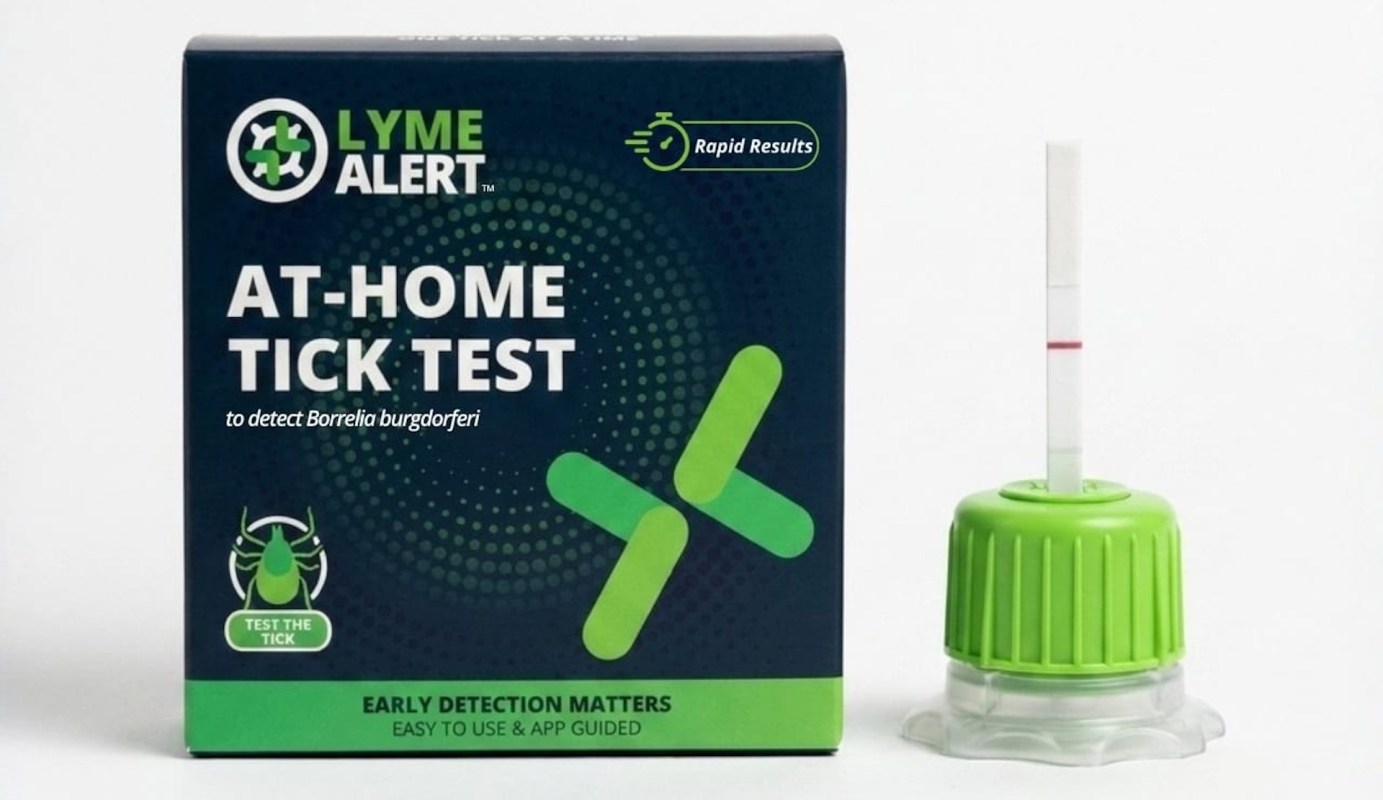
A new at-home test kit set to launch in the U.S. this August promises to tell people in about 15 minutes whether a removed tick carries the bacterium linked to Lyme disease, according to Smithsonian Magazine.
What's happening?
The Centers for Disease Control and Prevention has reported a spring increase in emergency room visits tied to tick-borne illnesses. More broadly, tick bites affect more than 31 million Americans each year, and Lyme disease remains the leading tick-borne diagnosis, with roughly 476,000 people treated annually.
Boston pediatric physician associate Erin Dawicki said the idea was driven by how many worried families called after finding ticks on their children.
"So, I thought, wouldn't it be cool if they could just test the tick at home, and then they know immediately if it's Lyme-infected?" Dawicki says.
At roughly $50, her company's new LymeAlert kit is designed to test a removed tick for Borrelia burgdorferi, the bacterium that causes Lyme disease. Dawicki said it works "similar to a pregnancy test or a Covid test, and takes about 15 minutes." An app can help interpret the strip and connect users to telehealth providers.
Why does it matter?
Because Lyme disease is easiest to treat early, the CDC advises a single 0.007-ounce (200-milligram) dose of doxycycline within 72 hours in certain high-risk situations, including when a tick appears to have been attached for 36 hours or more in areas with high Lyme rates.
TCD Picks » Quince Spotlight
💡These best-sellers from Quince deliver affordable, sustainable luxury for all




Caution remains part of the picture. "I think that [LymeAlert] is a tool that needs to be used in context with user understanding of the benefits and the limitations of that product," said Erika Machtinger, an entomologist at Pennsylvania State University.
"They're not actually determining: Does a person have Lyme disease?" said Brian Stevenson, a microbiologist at the University of Kentucky's College of Medicine. The CDC advises against testing ticks removed from people or animals because false negatives and false positives are possible.
What can I do?
Removing a tick quickly is important: use tweezers or a tick-removal tool as soon as you find one. Some diseases may be transmitted after a tick has been attached for 36 to 48 hours.
Once it's removed, watch for symptoms including a target-like rash, fever, chills, headache, fatigue, muscle or joint pain, swollen lymph nodes, or neck stiffness. If a tick was embedded or you live in a high-risk area, contacting a doctor promptly may matter more than waiting on any test result.
Prevention still matters. Wear long sleeves and pants in brushy areas, use tick repellents, check your body and pets after being outdoors, and keep yards maintained with regular mowing and brush removal.
An at-home kit may provide additional information, but it should not replace medical advice. As Stevenson noted, "If you have an embedded tick where there's a chance of infection, then go to your doctor and get a dose of antibiotics as a prophylactic, just to be on the safe side."

Get TCD's free newsletters for easy tips, smart advice, and a chance to earn $5,000 toward home upgrades. To see more stories like this one, change your Google preferences here.







