


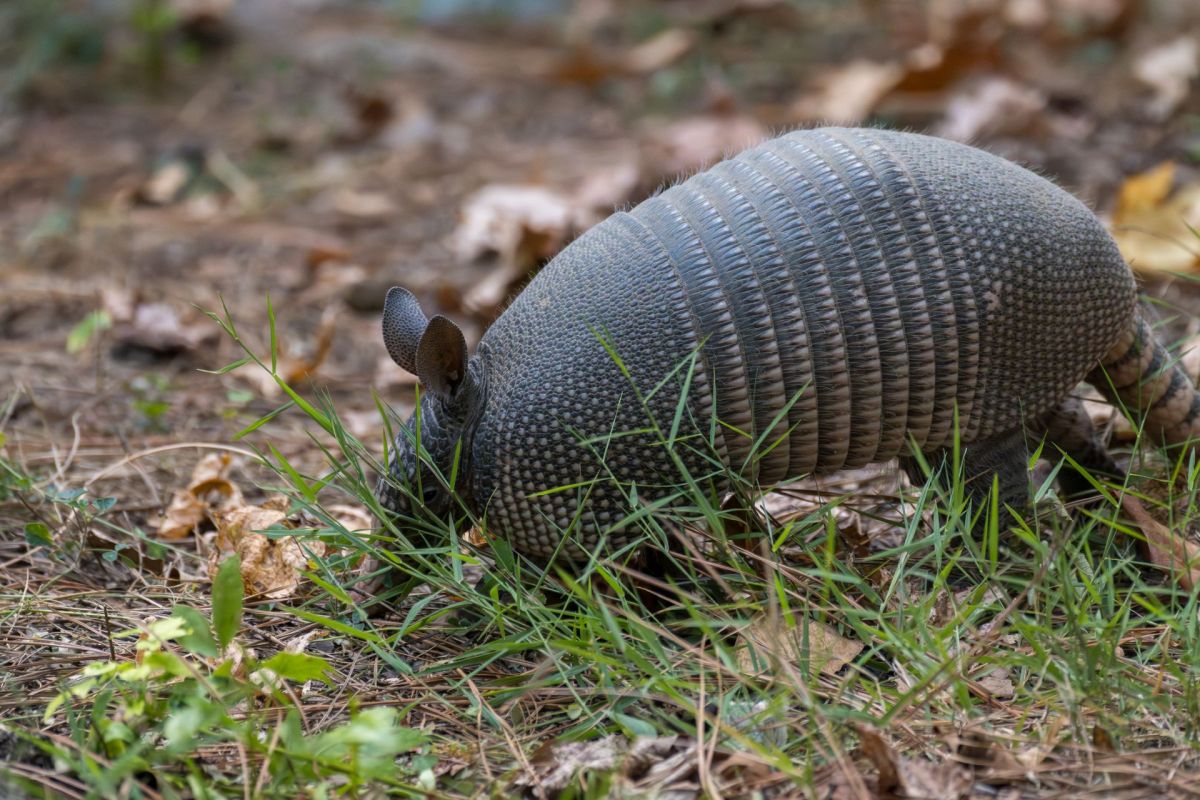
A spike in armadillo sightings across Florida is giving residents a closer look at one of the state's oddest mammals.
During the summer breeding season, those backyard encounters can also highlight a remarkable biological quirk, as the Tallahassee Democrat detailed.
What's happening?
An uptick in armadillo appearances around homes, communities, and wild spaces is a normal seasonal pattern in Florida, the paper said.
According to UF/IFAS scientists, summer activity rises during the nine-banded armadillo's breeding season, and the species is established in every county in the state.
Although it did not originate in Florida, UF/IFAS scientists say the animal is now a familiar sight, per the Democrat. Its range began in South America, Central America and Mexico, extended into Texas in the 1800s, and reached Florida by the mid-1900s.
Its armor is only one of several notable features. UF/IFAS says the Spanish name translates to "little armored one," but the animal also defies the common belief that it can curl into a ball. Instead, it can jump high, swim well, and boost its buoyancy by swallowing air.
TCD Picks » Quince Spotlight
💡These best-sellers from Quince deliver affordable, sustainable luxury for all




What most sets the species apart is how it reproduces, the Democrat noted. Among vertebrates, the nine-banded armadillo is uniquely known for routinely producing four genetically matching young from a single egg.
Why does it matter?
People often pay attention to armadillos after seeing fresh digging in a lawn or a burrow on their property. That might feel like a nuisance, yet scientists say those activities are part of an important ecological role.
"Armadillos spend much of their time digging for insects and other invertebrates which account for about 90% of their diet," Hance Ellington, assistant professor of wildlife ecology and conservation at the UF/IFAS Range Cattle Research and Education Center, told the Democrat.
The digging does a lot of good for both humans and other species alike.
"Their foraging helps suppress populations of common pests that damage landscapes, gardens and agricultural crops," Ellington said.
The benefits extend to other animals. Ellington further described armadillos as "ecosystem engineers" because other animals can use their burrows as shelter.
What can I do?
UF/IFAS recommends coexistence. The university's Ask IFAS Extension materials explain where armadillos live, what they eat, and how their behavior affects Florida ecosystems, per The Democrat.
For homeowners concerned about digging, one of the main recommendations is to reduce food sources. Because armadillos feed heavily on grubs, worms, beetles, ants, and other invertebrates, careful watering practices can make a yard less attractive to them, the paper noted.
A burrow, a patch of disturbed soil, or an armadillo crossing a yard does not necessarily signal a larger problem. It may simply mean a common Florida animal is following its normal seasonal patterns.
"Seeing more armadillos during the summer is normal," Ellington assured the Democrat. "By understanding their behavior and habitat needs, residents can better appreciate these unique animals."

Get TCD's free newsletters for easy tips, smart advice, and a chance to earn $5,000 toward home upgrades. To see more stories like this one, change your Google preferences here.






