


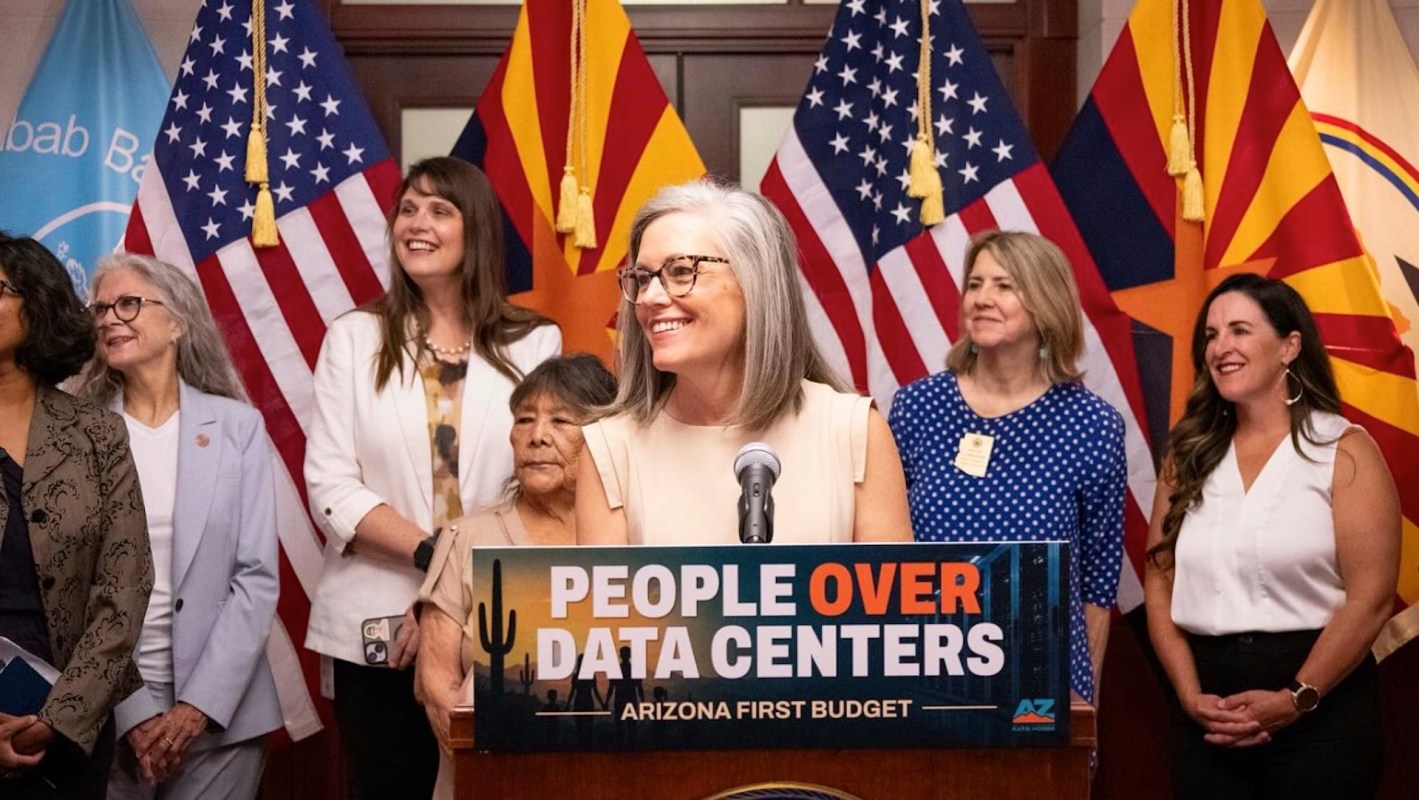
Arizona is putting one of its biggest tech-industry perks on hold after growing outrage over how quickly data centers are expanding across the state.
The three-year freeze reflects a broader debate over whether the economic promise tied to AI infrastructure is worth the added strain on water supplies and electric grids.
What happened?
Under Arizona's new budget, data center operators will be unable to use the state's sales tax break until 2029, a pause that represents the biggest change in the state's data center policy in more than a decade, according to the Arizona Capitol Times.
The 2026 legislative session devoted extensive attention to the issue. Data centers were discussed in at least 84 hearings, caucus meetings, and floor proceedings, while lawmakers introduced more than 50 energy bills, including six aimed at the state's data center tax incentives, after opposition in 2025 to proposed projects in Tucson, Chandler, and Marana.
Gov. Katie Hobbs said the tax break had already served its original purpose.
"Arizona ranks in the top 10 for data centers nationwide, with nearly 98 facilities currently operating, and 86 planned or under construction. … There is no question that Arizona's data center tax exemption has achieved what it sought to do," Hobbs said.
TCD Picks » Quince Spotlight
💡These best-sellers from Quince deliver affordable, sustainable luxury for all




For the past 13 years, operators have been able to seek exemptions from transaction privilege and use taxes for software purchases and technology upgrades.
Republicans wanted to keep that incentive, while Hobbs sought to eliminate it.
The budget deal resulted in a temporary moratorium.
Why does it matter?
Data centers are often promoted as engines of investment and job creation, but they can also consume enormous amounts of electricity and, in some cases, water for cooling.
In a dry and fast-growing state such as Arizona, that has made them a major flashpoint.
"I think that this pause in the exemption gives us a chance to really examine the policies," she said. "Nobody's talking about a moratorium on data centers themselves. There are places where they make sense, where they provide economic opportunity and where they're not sucking the groundwater and overtaxing the utilities."
Senate Minority Leader Priya Sundareshan said she worries that some of the expense of powering massive new facilities could fall on ordinary utility customers.
Arizona's debate is part of a broader national tension over how to meet rising digital demand without locking communities into higher energy costs or worsening local resource strain.
What's being done?
Hobbs also signed a bill that adds reporting requirements for utilities connecting data centers to the power grid, giving policymakers greater visibility into how these projects affect energy demand.
Arizona's Corporation Commission, not elected lawmakers, has constitutional authority over utility rates, so regulators largely determine large-load tariffs and the responsibility for new power infrastructure.
That commission has shown support for continued data center growth even as it discusses stronger protections for residential customers.
During an April workshop, Commissioner Kevin Thompson said, "I don't think it's realistic to bury our heads in the sand and simply say no to new data centers."
Sundareshan said she plans to continue backing legislation that would require large-load customers to pay energy, fuel, generation, and transmission costs.
"There are places where they make sense," Hobbs said, "where they provide economic opportunity and where they're not sucking the groundwater and overtaxing the utilities."
Sundareshan added, "I am not confident that data ratepayers are being protected from those increased costs."

Get TCD's free newsletters for easy tips, smart advice, and a chance to earn $5,000 toward home upgrades. To see more stories like this one, change your Google preferences here.






