


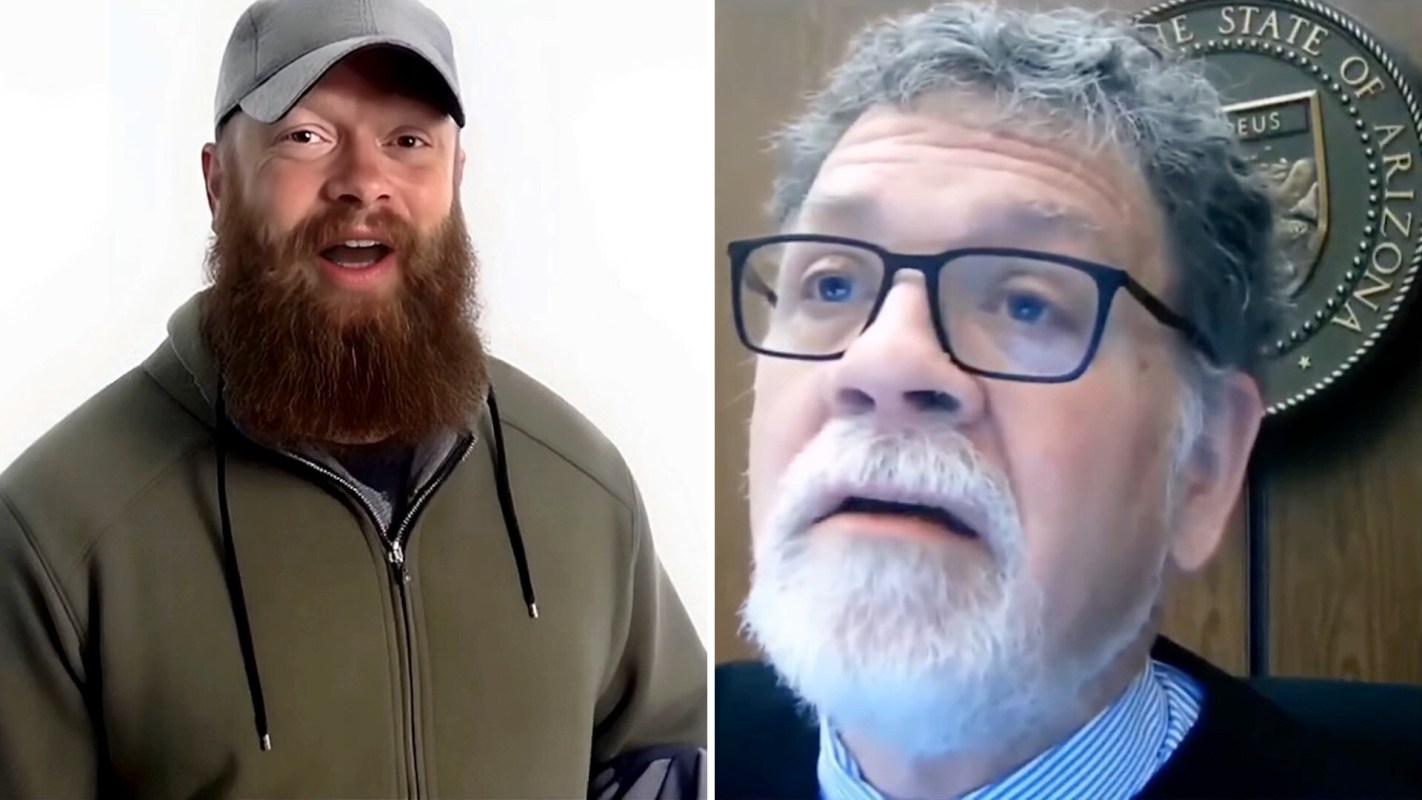
An Arizona appeals court has vacated the sentence in a fatal road-rage shooting case after finding it was unfair for the judge to consider an artificial intelligence-generated video in which the victim appeared to forgive the man who killed him.
Here's what to know
In May 2025, NBC News reported that Maricopa County Superior Court Judge Todd Lang sentenced Gabriel Paul Horcasitas to the maximum 10½-year term. Horcasitas, 54, had been convicted of manslaughter and endangerment in the Nov. 13, 2021, shooting death of Christopher Pelkey, 37.
Before handing down that punishment, the outlet reported Lang was shown a video made by Pelkey's sister, Stacey Wales, using her brother's likeness.
In the clip, the digital version of Pelkey said: "To Gabriel Horcasitas, the man who shot me: It is a shame we encountered each other that day in those circumstances."
The artificial version continued, "In another life, we probably could have been friends. I believe in forgiveness." The outlet noted Pelkey's family sought the maximum sentence, while Horcasitas' defense team asked for the lowest possible punishment.
In vacating the manslaughter sentence, the Arizona Court of Appeals said the video "clearly impacted the sentencing judge" and that its use made the hearing "fundamentally unfair." The judges sent the case back for resentencing.
TCD Picks » Quince Spotlight
💡These best-sellers from Quince deliver affordable, sustainable luxury for all




More background
The appellate court pointed to Lang's own statements at the hearing. As NBC News reported, he said he "loved" the AI presentation and viewed it as "genuine," but the appeals judges said the clip did not depict actual events and instead reflected Wales' "imaginings" of what Pelkey would have said.
The court concluded that the video moved beyond a surviving family member's description and into a fictional first-person statement placed in the mouth of someone who could no longer speak for himself.
What's being done?
Because the appeals court vacated Horcasitas' manslaughter sentence and remanded the case, a lower court will have to resentence him without relying on that same AI-generated video.
NBC News reported that Horcasitas argued on appeal that his due-process rights were violated when the sentencing judge considered and relied on the video. The state said the clip matched Pelkey's written statement of his values and beliefs and reflected what Wales thought he "would have said."
The ruling says synthetic first-person messages that "do not reflect actual events" can become unduly prejudicial when a judge is deciding how long a defendant should be imprisoned.
Kristen Reller, Horcasitas' lawyer, would not comment to the outlet because the case is still active, and a lawyer for Pelkey's family did not immediately respond to a request for comment.
"On this record, the judge's consideration of the AI video so prejudiced Horcasitas as to render the sentencing procedure fundamentally unfair," the panel wrote, per NBC News.
Where can I learn more?
Questions about AI in courtrooms and policymaking are surfacing elsewhere, too.
• In India, the Supreme Court warned a judge after citing fake AI-generated documents in a property dispute.
• The U.S. Supreme Court let stand a ruling that copyrighted AI-generated material lacks human authorship protection.
• A court handed Getty Images a pivotal ruling against an AI company in its lawsuit.

Get TCD's free newsletters for easy tips, smart advice, and a chance to earn $5,000 toward home upgrades. To see more stories like this one, change your Google preferences here.






