


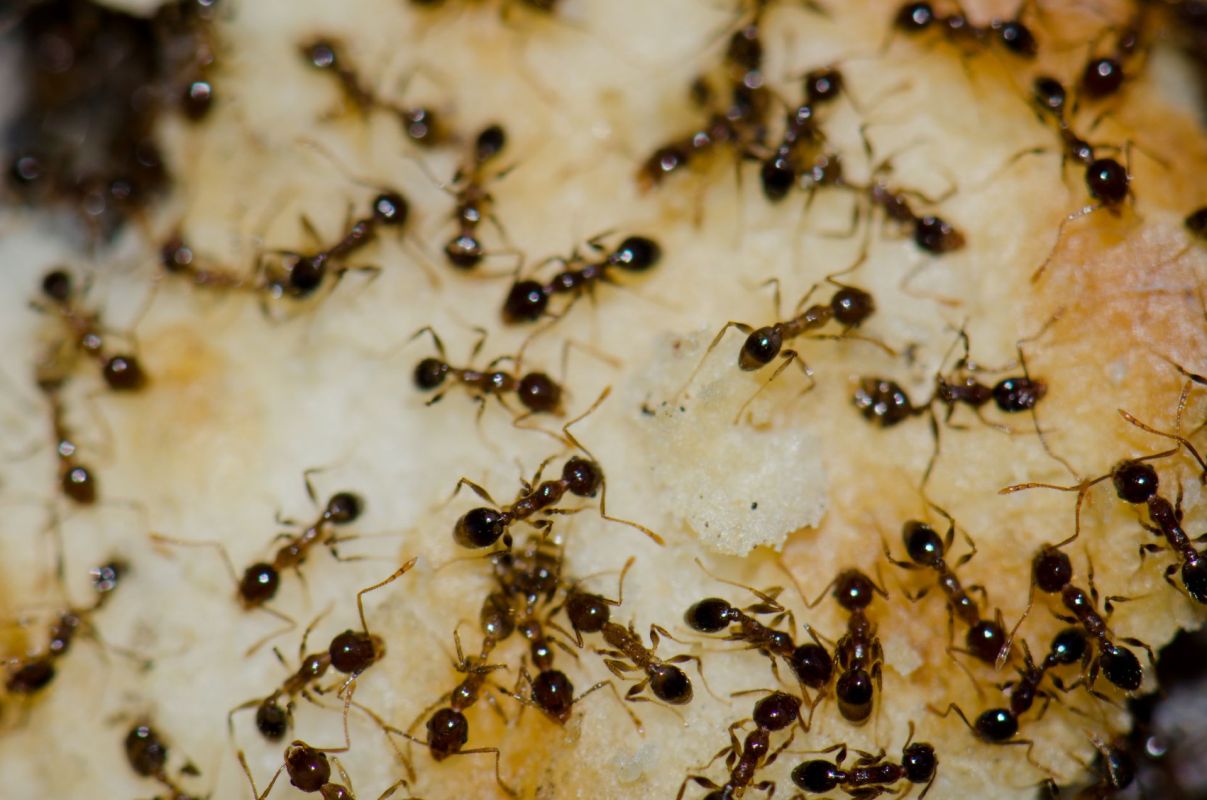
A major challenge for California growers is coming from an insect so small it is easy to miss: an invasive ant that shields some of the crop pests causing the most damage in citrus groves and vineyards, according to Earth.com.
Argentine ants don't attack fruit trees and grapevines themselves — but they help the harmful insects on those plants stay alive, increase in number, and move through farms more easily.
Here's what to know
Natural pest control becomes much less effective when Argentine ants are present.
The ants collect sugary honeydew from mealybugs, scale insects, aphids, and psyllids across coastal California, and repay those pests by driving off beneficial wasps and other predators.
That relationship can force growers toward more intensive pest management.
Researchers have tracked the impact for decades. A 1961 study cited by the University of California, Riverside biological control lab found that parasitoids laid up to 98.4% fewer eggs on ant-attended brown soft scale.
TCD Picks » Quince Spotlight
💡These best-sellers from Quince deliver affordable, sustainable luxury for all




The stakes are especially high for citrus growers.
Argentine ants kill Tamarixia radiata, the tiny wasp used to control the Asian citrus psyllid, which spreads huanglongbing, or citrus greening, Earth.com reported.
California first detected the disease in a single tree in 2012, and the Citrus Research Board says infected tree detections reached a 2023 high of 2,958.
In June, Citrus Research Board entomologist Ivan Milosavljevic reported that Argentine ants "aggressively protect more than 55% of ACP from natural enemies," according to Citrus Industry magazine.
He also noted that trees with ants have about three times as many psyllids and roughly half as much T. radiata parasitism.
More background
The ant was first recorded in the United States in Louisiana in 1891, likely as a stowaway in coffee shipments from Brazil, per Earth.com.
Known as Linepithema humile, it is native to the Paraná River region of Argentina, Brazil, Paraguay, and Uruguay, and California's earliest known population was identified in Ontario, San Bernardino County, in 1905.
Its social structure in California is another reason it is so hard to control.
A 2001 genetic study found that populations from Ukiah to just south of the Mexican border act like one vast colony network.
"Colonies are so closely related they even exchange workers," said researcher Andrew Suarez, per Earth.com.
Southern California's irrigated urban and agricultural environments help the ants flourish, and they often crowd out native ant species that are much larger.
Because they aren't battling one another, Argentine ants can put more energy into finding food and spreading farther.
When Argentine ants disrupt biological control in orchards and vineyards, growers are left with a more difficult and expensive fight against pests that threaten crops, farm income, and the stability of food systems connected to California agriculture.
What's being done?
Researchers say broad contact insecticide sprays are not the best solution.
While those sprays can quickly reduce ant numbers, the effect tends to be short-lived, and they can also kill the beneficial insects farmers are trying to protect.
Instead, scientists have focused on bait systems.
These stations use sugar water mixed with a very small dose of insecticide, which worker ants carry back to queens and larvae.
University of California, Riverside entomologist Mark Hoddle's team tested that method at six Southern California navel orange groves. According to Progressive Crop Consultant, ant numbers were cut in half in the first month and were down 88% over the next 11 months.
Researchers have also developed biodegradable hydrogel beads that absorb bait and break down within a few days.
In vineyards, University of California IPM guidelines recommend monitoring in spring, when mealybugs and scale first appear. Physical barriers, pruning, and mulch around trunks can also limit ants' access to plants.
The problem is likely to persist wherever landscapes altered by humans give the insects the conditions they need to thrive, as University of California, San Diego biologist Ted Case explained.
"They require water and cooler temperatures, which you get from our manipulation of the landscape," Case commented, per Earth.com.

Get TCD's free newsletters for easy tips, smart advice, and a chance to earn $5,000 toward home upgrades. To see more stories like this one, change your Google preferences here.






