


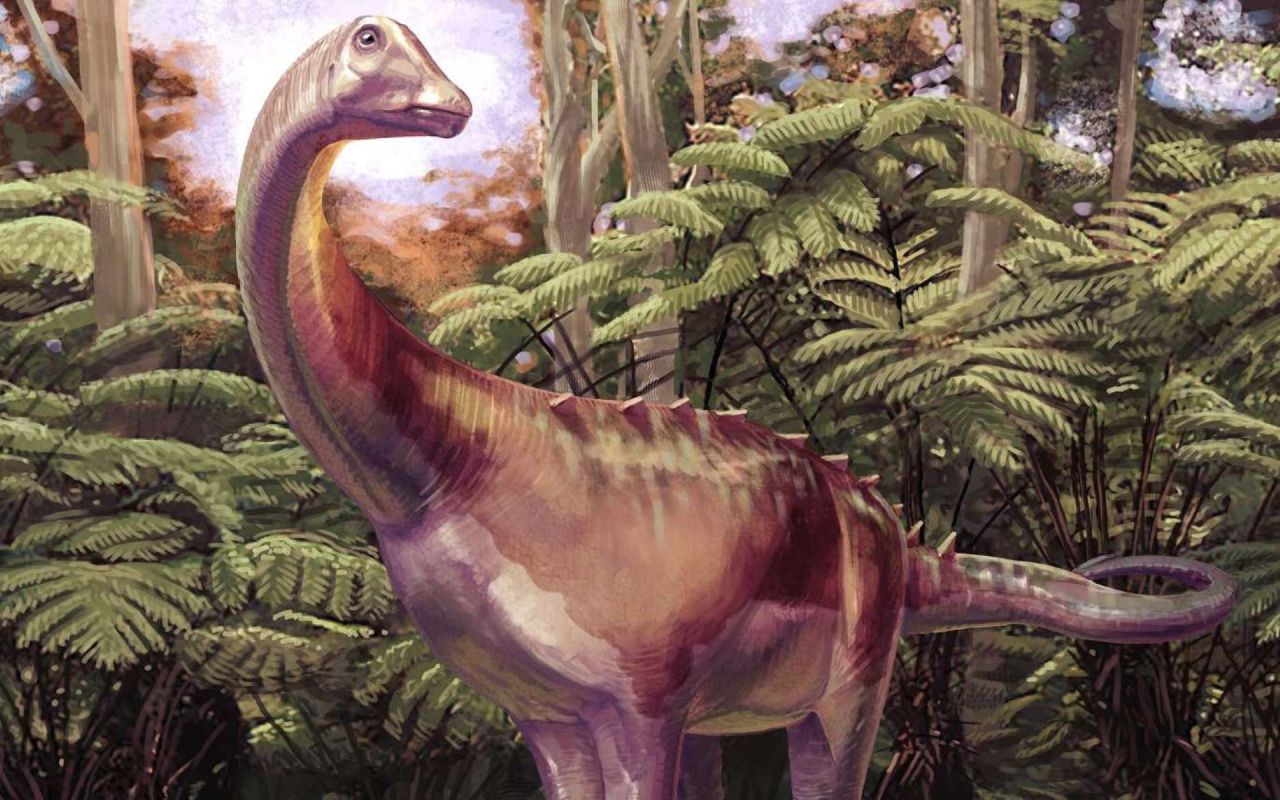
Scientists have now identified a bone gathered in Antarctica in 1985 as the continent's earliest recognized dinosaur fossil.
Only after nearly four decades in storage did researchers realize it belonged to a dinosaur.
What happened?
The specimen was collected on the Antarctic Peninsula by Dr. Mike Thomson of the British Antarctic Survey during work that focused on mapping rock layers, not searching for dinosaur remains, according to Phys.org.
Nearly 40 years after Thomson collected it, Dr. Mark Evans, who manages the collections for BAS, noticed the specimen and suspected it was a dinosaur tail vertebra. This suspicion was later confirmed.
Now, a recent paper, published in the peer-reviewed journal Acta Palaeontologica Polonica, describes the fossil as belonging to a titanosaurian sauropod from Antarctica's Late Cretaceous. The vertebra came from the Santa Marta Formation and dates to about 82 million years ago, when the continent looked very different from the frozen place people know now.
In the paper, the researchers wrote: "This discovery represents only the second sauropod body fossil known from Antarctica, although it was the first dinosaur bone to be collected from the continent."
TCD Picks » Quince Spotlight
💡These best-sellers from Quince deliver affordable, sustainable luxury for all




Although titanosaurs include some of the largest dinosaurs ever known, this animal was much smaller, roughly 20 to 23 feet long, possibly because it was a juvenile or a dwarf species, per Phys.org.
The marine rock around the fossil also suggests the animal likely ended up at sea after it died.
Why does it matter?
Because ice hides so much of the continent, Antarctica has a thinner dinosaur record than any other landmass, so even one bone can significantly shape scientists' understanding of how life spread across Gondwana.
The fossil also points back to Late Cretaceous Antarctica, where forests and large land animals existed even near the South Pole.
That setting can help researchers better understand how ecosystems respond to rising carbon dioxide and major environmental changes.

Get TCD's free newsletters for easy tips, smart advice, and a chance to earn $5,000 toward home upgrades. To see more stories like this one, change your Google preferences here.






