


Air bubbles preserved in Antarctic ice help scientists track thousands of years of atmospheric change.
Here's what to know
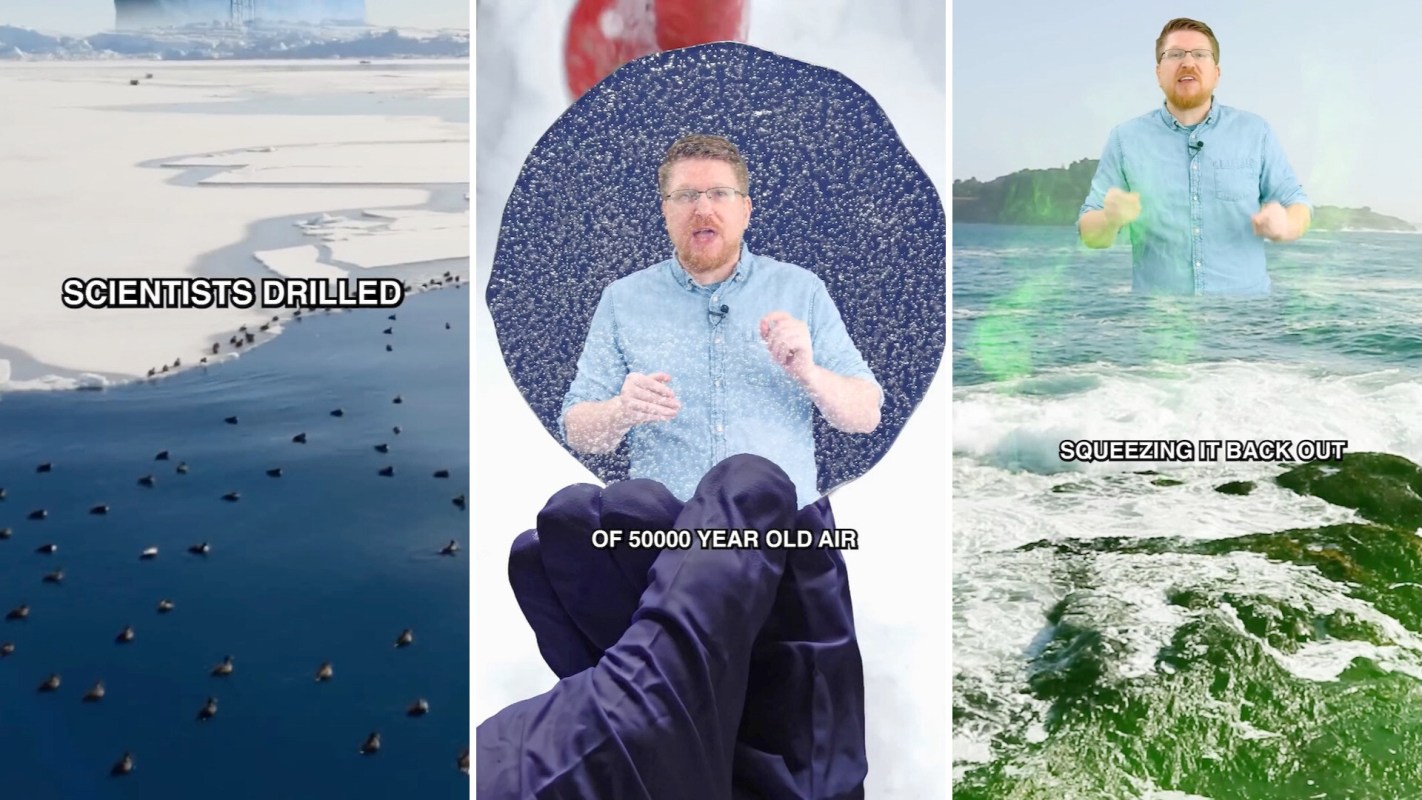
Researchers can compare rapid carbon dioxide buildup with ancient atmospheric conditions through preserved air samples. In a YouTube short, Justin Pack from @EcoBitsOfficial explains how researchers bored through Antarctic ice to retrieve tiny pockets of air dating back 50,000 years.
"It's basically Earth's atmosphere frozen in time," Pack added.
The fastest ancient increase was a rise in carbon dioxide of roughly 14 parts per million over 55 years.
"Sounds like a lot … Well, today we add the same amount in about five or six years," Pack explained. "At that pace, it would take around 4,000 years for 1% of our atmosphere to be CO2. That's 10 times faster than the worst spike we've ever seen."
"But the ice had one more secret," Pack added. He explained that instead of absorbing carbon, the Southern Ocean released more carbon during periods of stronger winds. Those periods coincided with ancient carbon dioxide spikes.
TCD Picks » Quince Spotlight
💡These best-sellers from Quince deliver affordable, sustainable luxury for all




Oceans take up roughly 25% of human carbon dioxide emissions, Pack explained. The ocean's role as a buffer against atmospheric pollution could weaken if warming brings the stronger Southern Ocean winds projected by climate models.
"So, we're pumping out more CO2 10 times faster than anything 50,000 years ago," Pack said. "And the sponge (oceans) cleaning up after us could start soaking up less, or worse, squeezing it back out like it did before."
"Luckily, we know this is happening, so there's at least a chance that we can do something to slow it down before it gets worse," Pack added.
Where can I learn more?
Research on polar ice and oceans adds context to the changes preserved in Antarctic air samples.
• Greenland and Antarctica have lost 11.3 trillion tons of ice, satellite records show.
• Antarctic sea ice reached its third-smallest winter peak in 48 years.
• An Antarctic voyage found climate models overstate Southern Ocean clouds but still underestimate heat.
• West Antarctica's Thwaites Glacier could raise seas 1.2 inches by 2100 without additional warming.
• Marine heat waves can make polar seas absorb 11% more carbon dioxide.

Get TCD's free newsletters for easy tips, smart advice, and a chance to earn $5,000 toward home upgrades. To see more stories like this one, change your Google preferences here.
Cool Picks






