


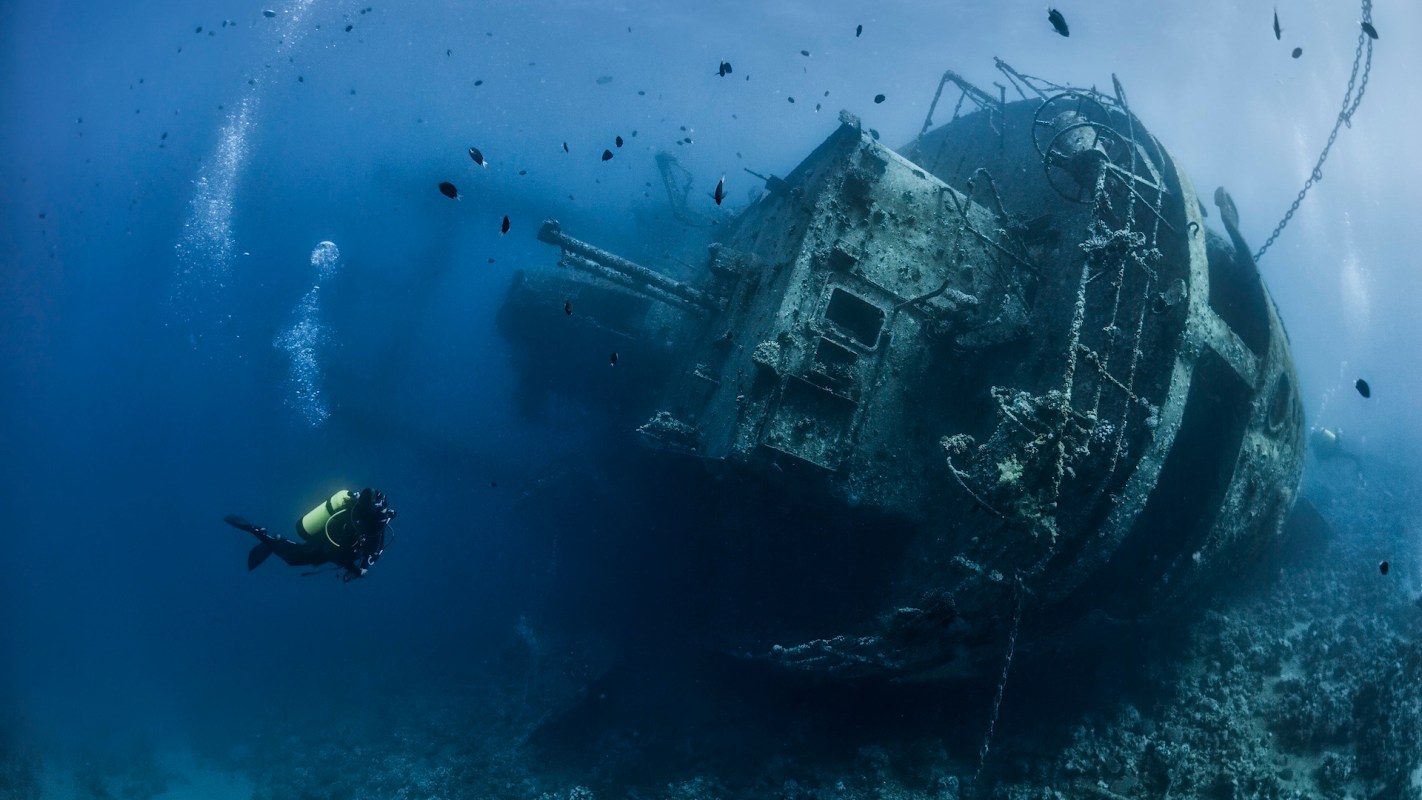
The Andrea Doria, one of the world's most famous shipwrecks, is slowly deteriorating on the seafloor off Massachusetts, taking with it a fading piece of maritime history.
According to an article by science writer and editor Laura Castañón in Popular Mechanics, a small cadre of expert divers is still visiting the site, trying to document and recover what is left before more of the wreck disappears.
What happened?
After sinking in heavy fog following a collision with the M/S Stockholm off the coast of Nantucket in 1956, the Italian ocean liner became, for decades, a destination for elite wreck divers.
However, as Castañón reported, its decline has accelerated to the point that some familiar sections of the wreck may not remain much longer. Ironically, that instability is part of what has kept drawing divers back to the site over the years.
"The Doria has this allure. She just keeps giving in a way that a lot of other shipwrecks don't," Atlantic Wreck Salvage manager Jennifer Sellitti shared with Castañón. AWS is a New Jersey-based company focused on salvaging historical marine wreckage.
For many divers, the artifacts offer a unique window into the past that is worth the risk. As Castañón noted, Life Magazine once described The Andrea Doria as a "floating guide to art," decorated with tapestries, paintings, ceramics, and outfitted with etched crystal dining tables.
TCD Picks » Quince Spotlight
💡These best-sellers from Quince deliver affordable, sustainable luxury for all




Why does it matter?
The Andrea Doria serves as a time capsule of midcentury travel, engineering, and immigration-era ocean crossings, and its disappearance would mean losing a tangible connection to the people who built it, crewed it, and sailed on it.
For coastal communities, historians, and museumgoers, preserved shipwreck artifacts can help keep shared history alive in ways books alone cannot.
The Andrea Doria also reflects a more difficult reality about preservation: History can be lost in places where access is expensive, risky, and limited to a small number of experts.
"It's a volatile environment," Sellitti told Castañón. "There are very few people who have the diving skills, the logistical capabilities to get out there and make these dives."
What's being done?
The main effort right now is a mix of selective recovery and careful documentation.
Veteran teams are making targeted dives to track changes, photograph areas that have recently been exposed, and bring back artifacts that could be lost if more of the hull gives way.
Once recovered, objects such as porcelain and other onboard remnants can be stabilized, studied, and, in some cases, displayed for the public, helping transform a fragile underwater site into a lasting educational resource.

Get TCD's free newsletters for easy tips, smart advice, and a chance to earn $5,000 toward home upgrades. To see more stories like this one, change your Google preferences here.






