


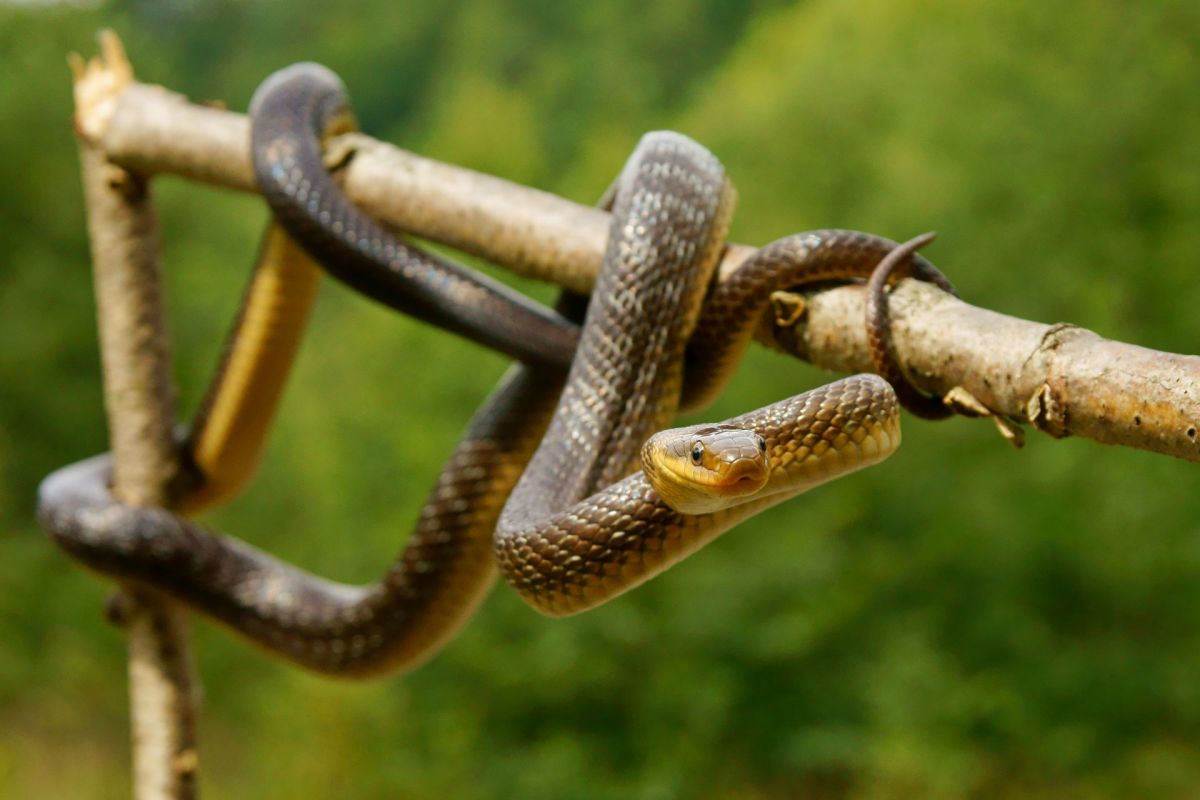
A desperate Roman mission to stop a plague may have helped create one of medicine's most enduring symbols: a snake wrapped around a staff.
What began as an ancient search for divine healing also became an early example of humans moving wildlife far beyond its native range — with consequences that have lasted for centuries, according to Countryfile.
What happened?
Plague was ravaging Rome in the third century BC, so a delegation of Roman elders traveled to Epidaurus in Greece. At the Sanctuary of Asclepius, they hoped a statue of the healing god might bring relief.
According to Countryfile, a snake boarded their ship instead.
That was reportedly treated as a powerful omen. After the animal left the vessel in Rome, a temple was built where it disembarked, the plague later subsided, and the harmless reptile became strongly linked with healing and medicine.
The species was later spread through Roman territories and placed at sanctuaries tied to healing and recovery. That human-assisted movement likely helped fix the snake's place as a lasting cultural symbol.
TCD Picks » Quince Spotlight
💡These best-sellers from Quince deliver affordable, sustainable luxury for all




That legacy still shows up in the Staff of Aesculapius, which serves as the mark of 80-plus health organizations around the world.
Why does it matter?
Human belief, disease response, and wildlife movement have long been closely connected.
Rodents make up most of the diet of Aesculapian snakes, or Zamenis longissimus. The species is harmless to humans and can grow to around two meters (6.6 feet), making it more ecologically useful than threatening to people.
Britain's connection to the species is also a human story. Although Aesculapian snakes may have reached the British Isles during the Roman era, the two groups there now are thought to have arrived much more recently.
One of those groups took hold in Colwyn Bay after escapees from the Welsh Mountain Zoo established a colony and began using lofts and wall cavities for shelter.
For almost half a century, another group has been reported in London, especially around Camden and Regent's Park. In both places, the snakes' survival has been shaped by human transport, urban environments, and wildlife's ability to adapt to the spaces people create.
What's being done?
For now, the snakes' future in Britain appears uncertain. Inbreeding depression is a major risk for these isolated groups unless new genetic variation is added.
Managing small wildlife populations often requires careful monitoring, awareness of habitat conditions, and informed decisions about whether intervention is necessary.
They are harmless to humans.
Human actions, whether through trade, religion, captivity, or accidental escape, can reshape where animals live for generations. Even when a species is harmless, those changes can leave behind fragile populations that depend on continued stewardship.
An ancient plague mission may have helped turn one snake into a global medical icon. But its long journey also points to a modern reality: When humans move animals, intentionally or not, the effects can echo for centuries.

Get TCD's free newsletters for easy tips, smart advice, and a chance to earn $5,000 toward home upgrades. To see more stories like this one, change your Google preferences here.






