


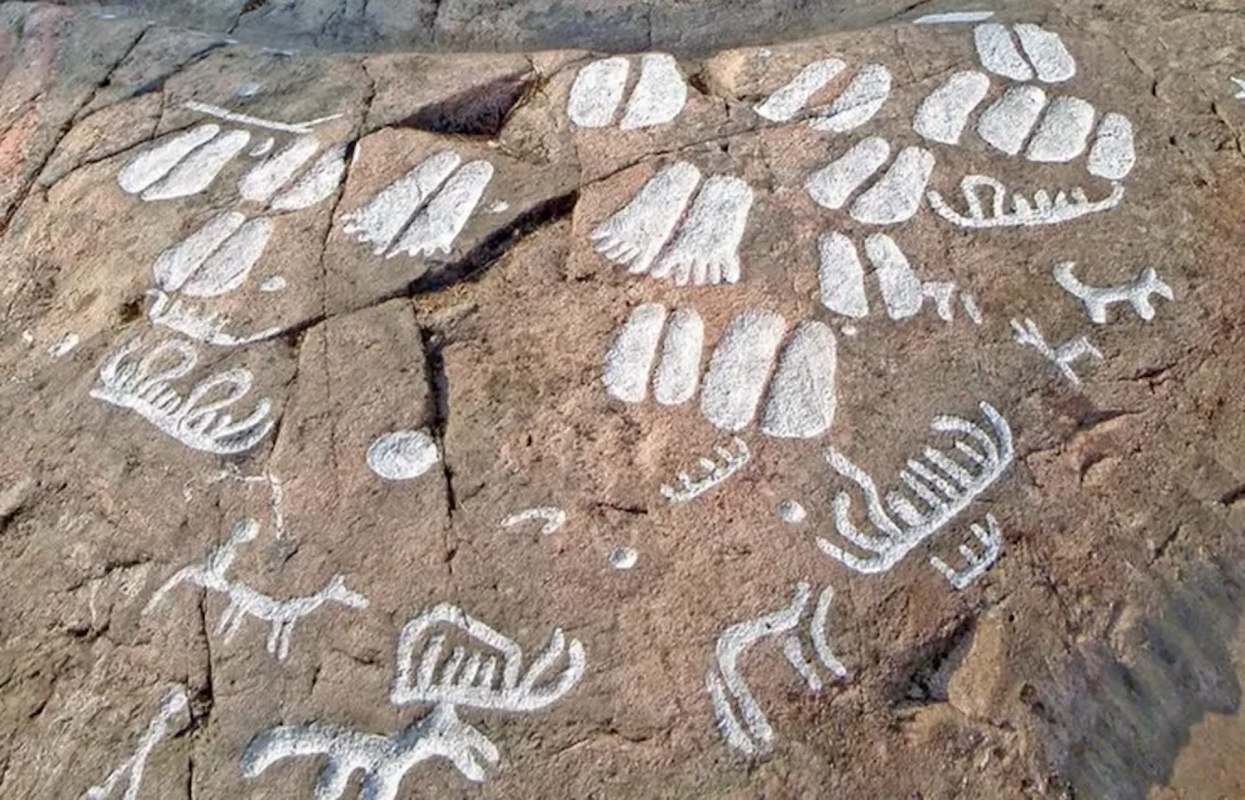
In southern Scandinavia during the Bronze Age, carved footprints on coastal rocks may have been part of how people marked personal bonds.
Researchers have said the engravings could have been used to formalize ties, such as friendships, alliances, and even marriages.
What happened?
In a study centered on the Mälaren region of east-central Sweden, Stockholm University archaeologist Fredrik Fahlander reviewed hundreds of these foot-shaped engravings, known as "podomorphs."
Published in the peer-reviewed Oxford Journal of Archaeology, his research argued that the engravings served a social function rather than just being "symbolic images" or "ritual representations." Instead, the footprints were used to cement relationships.
Across the Mälaren region, researchers have identified more than 7,000 rock art sites. Of the 611 locations with figurative carvings, just 140 contained podomorphs, with a total of 627 footprints, per Archaeology News.
Fahlander suggested one person may have carved a footprint first, with another adding a second one later, making the rock a lasting marker of their connection. Many of the carvings were also located near ancient shorelines and quartz veins.
TCD Picks » Quince Spotlight
💡These best-sellers from Quince deliver affordable, sustainable luxury for all




Why does it matter?
The findings, published in the Oxford Journal of Archaeology, could reshape how archaeologists understand life in Scandinavia. If the carvings truly marked agreements between people, they were not merely art.
They may have played a part in everyday social organization, helping communities establish trust, loyalty, and enduring connections in a durable, public way.
Today, people use rings, signatures, photos, and social media posts to mark important relationships; these footprints may have served a similar purpose in stone.
As landscapes shift over time, those carvings remain one of the clearest records of how earlier communities built and displayed their social ties.
Fahlander concluded his research by adding that the carvings show how "people not only [became] linked to a rock, but also to another human by pairing their prints."
He added that "a pair of podomorphs is not simply a symbolic manifestation of a union or relation."
"Because they were often positioned where they regularly got soaked by either water from waves or rainwater through natural run-off channels, it indicates that they were considered animate and operational to some extent," Fahlander said.

Get TCD's free newsletters for easy tips, smart advice, and a chance to earn $5,000 toward home upgrades. To see more stories like this one, change your Google preferences here.






