


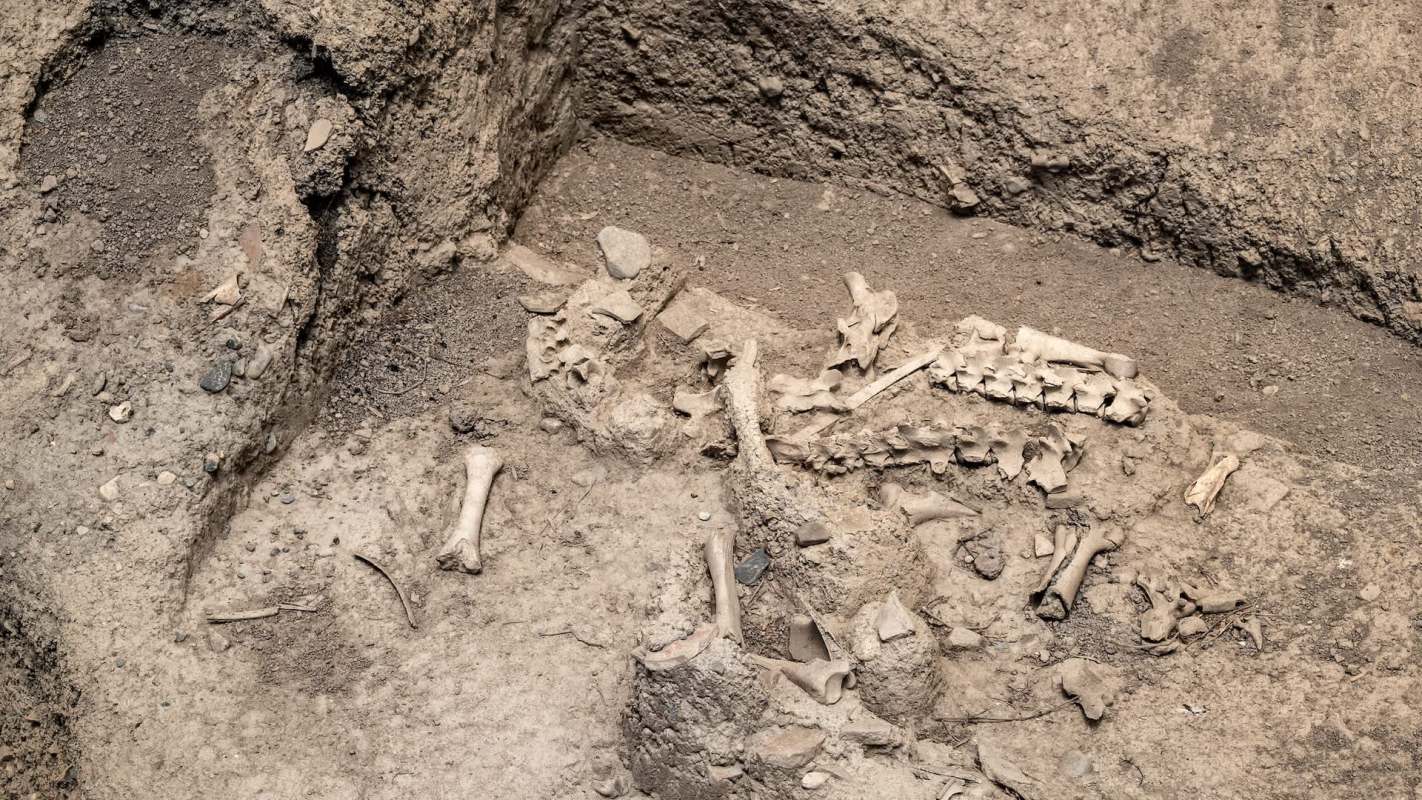
Archaeologists excavating a site in Egypt's Nile Delta uncovered part of a Greco-Roman cemetery — then found something far less expected beneath it: buried wild boars. The site appears to have been used repeatedly across thousands of years.
An Egyptian archaeological mission working at Tell Kom Aziza in Beheira Governorate uncovered the cemetery, the Ministry of Tourism and Antiquities said. According to Archaeology News, the excavation was carried out under the Supreme Council of Antiquities.
The ministry reported that the cemetery had been built over much older occupation layers. The site's stratigraphy suggests it was reused across the Old Kingdom, New Kingdom, Late Period, and then Greco-Roman eras.
The team identified several types of burials, including simple pits, mudbrick-lined graves, decorated plaster coffins, and barrel-shaped pottery coffins, all tied to the Ptolemaic period.
But one of the most unusual finds came from an earlier layer, as archaeologists uncovered fully buried wild boars, identified as Sus scrofa. Such a burial is considered extremely uncommon in ancient Egyptian funerary contexts; the ministry said pigs and boars carried negative associations in some religious traditions, including links to the god Seth.
Finds such as this can help archaeologists piece together how landscapes changed over time and how people reused the same places for settlement, work, and burial in different eras. Tell Kom Aziza is notable not just for its tombs but also for evidence of everyday life. Excavators found ceramic and stone vessels; bread-making molds; ovens; storage containers; stone tools; and large quantities of fish, bird, and mammal remains.
TCD Picks » Quince Spotlight
💡These best-sellers from Quince deliver affordable, sustainable luxury for all




The record offers a fuller picture of how ancient communities lived, what they ate, and how they organized domestic activity. The boar burials may be especially important for understanding human-animal relationships that do not fit neatly into expected religious or funerary patterns.
Archaeological teams are continuing to study the layers at Tell Kom Aziza to better understand how the site developed over time and what each occupation phase can reveal.
Officials said the boar burials may be linked less to a formal funerary ritual and more to economic or domestic activity at the site, though researchers stressed that more analysis is needed before they draw firm conclusions.
Because the cemetery sits above older settlement layers, archaeologists can compare burial practices with evidence from homes, food preparation, storage, and animal remains found below.
Officials say Tell Kom Aziza may rank among the Nile Delta's most promising archaeological sites, spanning multiple periods and with evidence stretching from the Old Kingdom to the Greco-Roman period.

Get TCD's free newsletters for easy tips, smart advice, and a chance to earn $5,000 toward home upgrades. To see more stories like this one, change your Google preferences here.






