


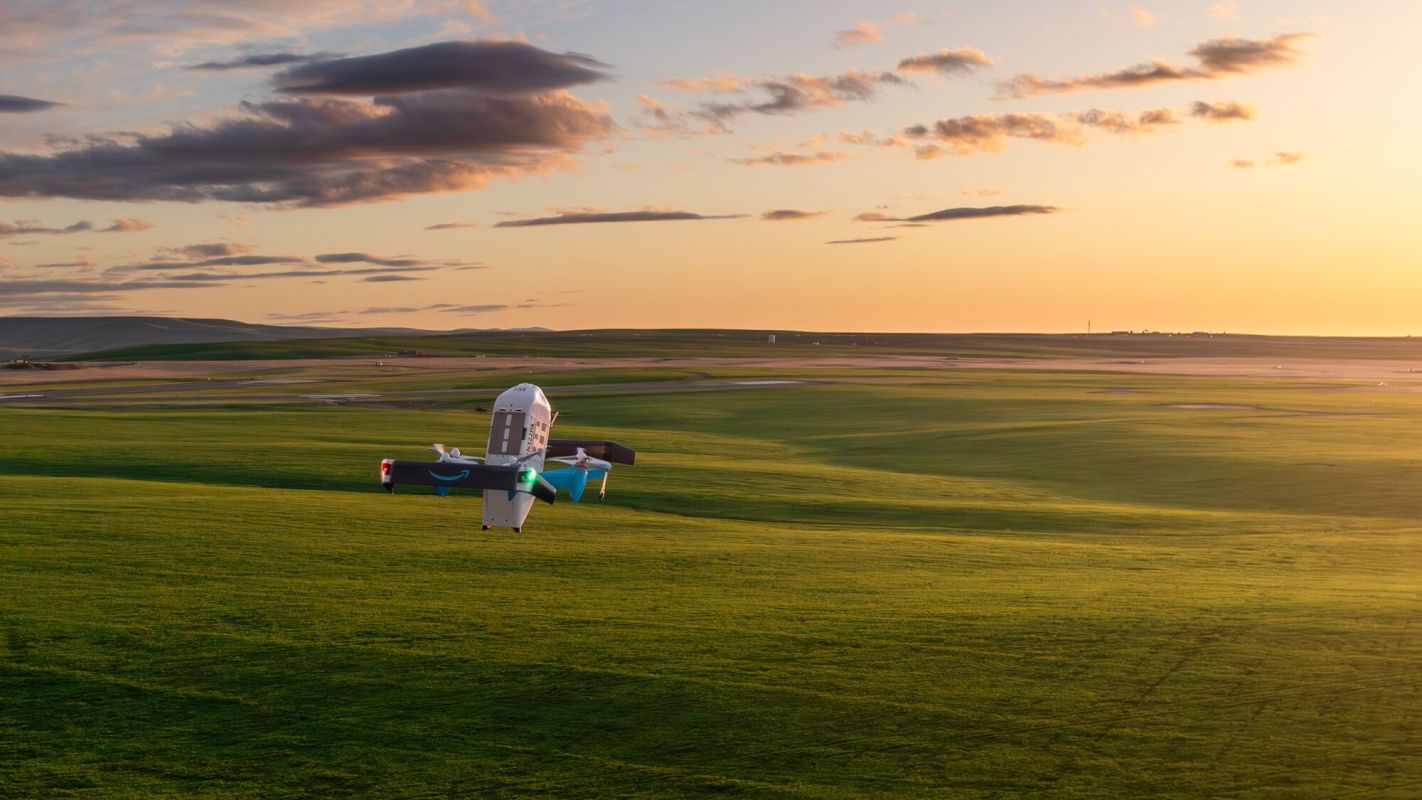
Amazon is pushing a future in which a forgotten charger or a last-minute medication order could reach customers by drone instead of a van.
Under that plan, the company says Prime Air could reach nearly 500 U.S. communities by the end of 2026.
Here's what to know
That goal would take the program outside the limited set of places from which it has launched.
As Mashable reported, the service is based at 11 launch sites spread across 10 metro areas in Arizona, Florida, Kansas, Louisiana, Michigan, Nebraska, and Texas. Amazon identifies Chicago, Syracuse, Cleveland, Atlanta, and Boise as the next metro areas slated for launches.
The nearly 500-community figure does not mean Amazon intends to construct a separate hub in each place. Its count includes every city and town within a launch site's service radius, and it says a single facility can cover roughly 175 square miles.
Even within qualifying ZIP codes, some homes still will not be eligible, and Amazon has not published a complete list of the places included in the expansion.
TCD Picks » Quince Spotlight
💡These best-sellers from Quince deliver affordable, sustainable luxury for all




For customers whose addresses are included, the drone option will appear during shopping and again at checkout. Amazon says delivery times can be as fast as 30 minutes for some eligible purchases, although the more typical wait is closer to an hour.
More background
The service is built for compact orders rather than bulky ones: packages must weigh 5 pounds or less and fit in a box roughly the size of a large shoebox.
Amazon says that items that meet those limits account for more than 60% of the products its customers buy most often. Those limits still leave room for many day-to-day purchases, including groceries, beauty products, medications, and consumer electronics.
According to Amazon, that may include products like Apple and Samsung phones, AirPods, and Ring doorbells.
In theory, fewer short errands and less van traffic for lightweight orders could cut a portion of local tailpipe pollution. At the same time, drone delivery brings a highly visible form of logistics into neighborhood airspace.
As the network grows, questions about noise, safety, and local rules are likely to become more important in the communities Amazon hopes to serve.
What's being done?
Amazon's drone-delivery effort dates back to Jeff Bezos's public unveiling of the concept in 2013, and Prime Air started making customer deliveries in 2022.
The company also says the service has completed hundreds of thousands of deliveries and is adding several thousand more each day.
Pricing depends on membership: Prime members pay nothing to have a drone deliver orders of $50 or more, and $2.99 for orders below that threshold, while shoppers without Prime pay $4.99.
The expansion does not mean every neighborhood will suddenly see drones overhead, but it does signal that Amazon wants airborne delivery to become a normal part of online shopping in many parts of the country.
Where can I learn more?
Amazon's drone expansion is part of an industry-wide shift toward faster small-package delivery with lightweight aircraft.
• Zipline is building tiny electric autonomous drones that could replace more delivery trucks.
• In the U.K., Royal Mail is using drones to pilot a new postal strategy.
• At Amazon's Vercelli lab, engineers are making each box smaller for leaner deliveries.
• Spexi is paying civilian pilots to build high-resolution Earth imagery with everyday drones.
Seen alongside those efforts, Amazon's expansion looks less like a one-off bet and more like part of a larger logistics test. That's one reason drone delivery is becoming harder for communities to ignore.

Get TCD's free newsletters for easy tips, smart advice, and a chance to earn $5,000 toward home upgrades. To see more stories like this one, change your Google preferences here.






