


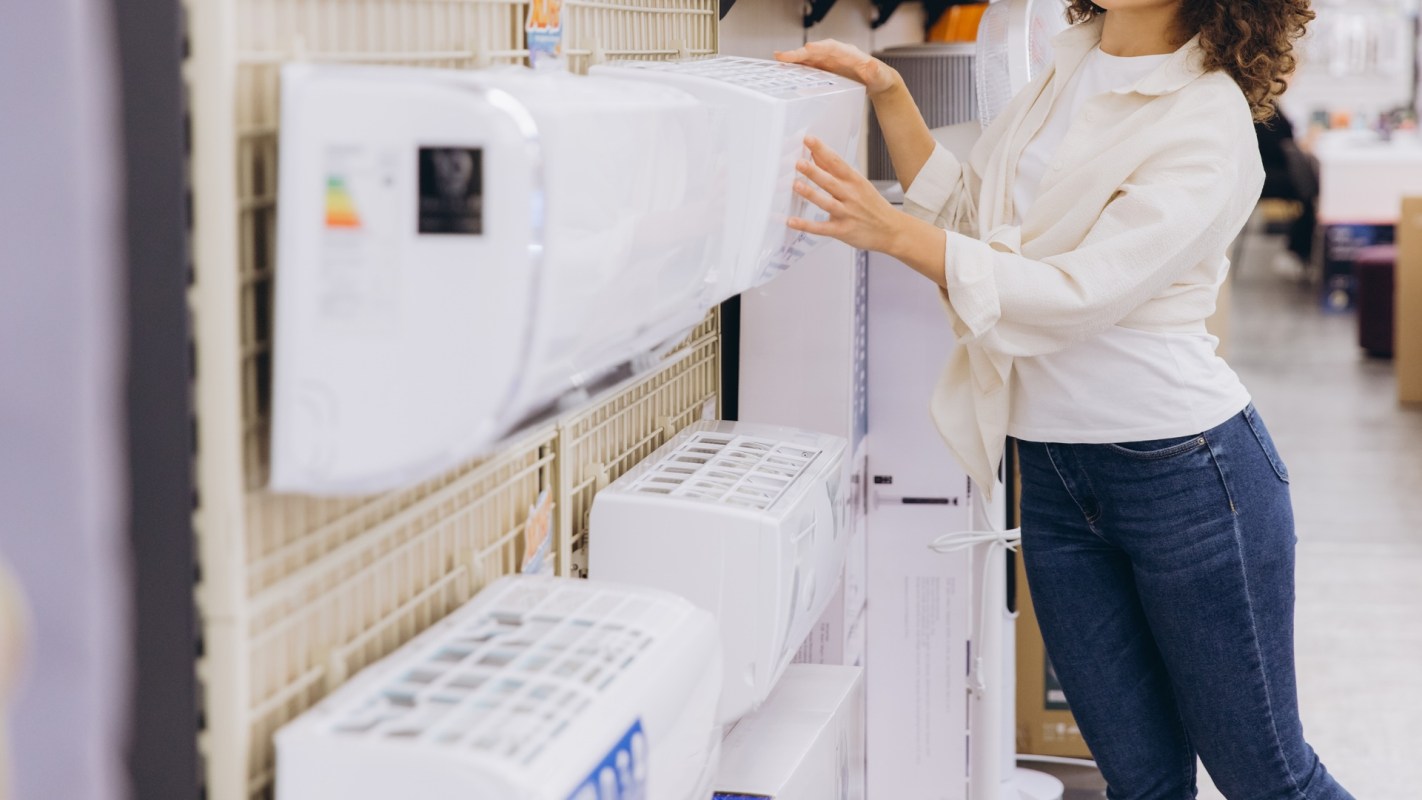
As temperatures climb worldwide, air conditioning is becoming less of a luxury and more of a necessity for billions of people.
That shift comes with a difficult reality. The world is on track to need far more cooling to protect people from heat, along with far more clean electricity to power it, or otherwise exacerbate the planet's overheating.
Here's what to know
The International Energy Agency projects that buildings worldwide may have 5.6 billion air conditioners by 2050, up from about 2.5 billion in 2026, showing how much cooling use may expand in a hotter world.
Much of that increase would come from places where AC ownership is still uncommon despite intense heat. As The Guardian reported, about 9% of households in Indonesia and 5% in India already have AC, compared with 90% of households in the U.S. and Japan.
The IEA's report, The Future of Cooling, also noted that only about 8% of the 2.8 billion people living in the world's hottest parts have air conditioning.
As extreme heat becomes more severe and frequent, the risks of not having AC will only grow.
Yet, as the IEA explained in The Future of Cooling, "The challenge of meeting cooling demand growth in an affordable and sustainable manner is exacerbated by its particular effect on peak demand… Increased supply of renewable power will be essential for meeting this demand… Electricity systems in the Baseline Scenario will have to install and maintain large amounts of expensive peak power generation capacity."
Cooling demand will keep rising regardless of policy debates. The key question is whether inefficient systems running on dirty power will meet that need, or whether efficient equipment paired with cleaner energy will protect both people and the planet.
Save $10,000 on solar panels without even sharing your phone number Want to go solar but not sure who to trust? EnergySage has your back with free and transparent quotes from fully vetted providers in your area. To get started, just answer a few questions about your home — no phone number required. Within a day or two, EnergySage will email you the best options for your needs, and their expert advisers can help you compare quotes and pick a winner. Solar panels can save you more than $50k over their 25-year lifespan, and EnergySage can help you save as much as $10k on installation. Which begs the question — isn't that worth an email or two? |

More background
Meeting rising cooling needs could put enormous pressure on power systems. As The Guardian reported, Harvard researchers estimated that cooling alone in India and Indonesia could account for as much as 75% of those countries' annual electricity use in 2050.
And cooling already has a substantial pollution footprint. Cooling-related energy use caused roughly 2.5 billion tons of pollution in 2022, or about 7% of global carbon pollution, per The Guardian. Without major efficiency gains and better passive cooling, the report said, that total could approach 8 billion tons by 2050.
In more and more places, home cooling is becoming an important part of protecting health, finances, and resilience during heat waves and rising energy costs.
If you're thinking about upgrading your HVAC system in your own home, Palmetto can help you understand your HVAC options and slash your energy bills with new, efficient HVAC systems and heat pumps. Palmetto's Comfort Plan network can help you find efficient heating and cooling solutions for your home and connect you with vetted installers.
But if you're not ready to spend up front, the company's Comfort Plan includes $0-down options that can lower your heating and cooling costs by up to 50%.
Where can I learn more?
Rising demand for air conditioning is forcing progress on two fronts: cooling systems that use less electricity and power grids that can deliver more of it cleanly. Each article looks at a different part of that shift.
• Scientists are reviving century-old cooling technology to sharply cut AC energy use.
• Engineers have built a complete rethinking of air conditioning that uses far less energy.
• For homeowners, heat pumps can cool homes cheaply while using less power.
Meeting the world's cooling needs doesn't have to drive up bills and emissions. The faster efficient equipment and clean power spread, the easier it will be to stay safe during extreme heat.

Get TCD's free newsletters for easy tips, smart advice, and a chance to earn $5,000 toward home upgrades. To see more stories like this one, change your Google preferences here.






