


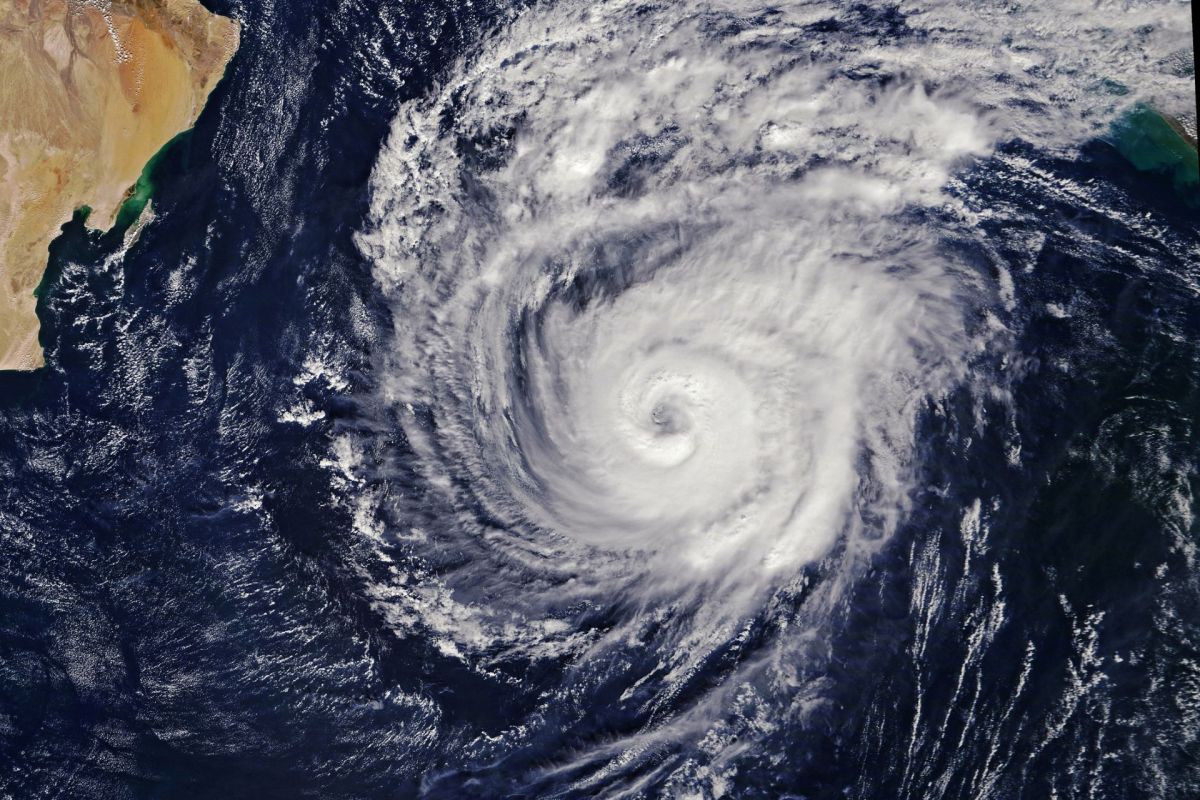
Artificial intelligence has reshaped weather forecasting at a remarkable speed, but predicting how strong a hurricane will become, and how fast, is still one of the toughest parts of the job for AI.
When a storm rapidly gains strength, the time people have to prepare can vanish quickly, as The Conversation explained.
Here's what to know
Gains in AI forecasting have come from three core ingredients: long-running weather records, stronger AI systems, and much more computing power. Those advances are helping global AI forecasts compete with some of the best physics-based weather models.
Forecasting hurricane intensity is a different kind of problem. Because it plays out on a regional scale, AI has more trouble learning these smaller, faster-changing extremes, which depend on finer atmospheric details.
A storm that intensifies quickly can become catastrophic in hours. The Conversation highlighted Hurricane Polo, which strengthened off Mexico's Pacific coast and reached 180 mph winds, and Hurricane Michael, which grew into a Category 5 storm before striking Florida in 2018.
More background
A central challenge is the lack of data. AI needs very large amounts of high-quality information to find reliable patterns, but scientists still lack a complete three-dimensional hurricane record detailed enough for that training.
TCD Picks » Quince Spotlight
💡These best-sellers from Quince deliver affordable, sustainable luxury for all




Scientists also use weather-model simulations because they provide a far more detailed view of how the atmosphere behaves. But simulations are still approximations, so they bring their own uncertainties and can miss smaller-scale processes.
Small differences in a storm's initial conditions can also grow over time, adding an element of chaos that makes hurricane intensity especially hard to predict more than a few days ahead.
What can be done?
The Conversation argued that even as researchers continue to improve hurricane forecasting, larger neural networks and faster chips will not be enough on their own. Progress will also require a deeper understanding of hurricane behavior and of how chaos influences changes in intensity.
That limitation helps define how accurate hurricane-intensity forecasts can be and suggests future forecasting and evaluation systems should focus on probability ranges for storm strength instead of a single number.
Where can I learn more?
These stories dig into the same forecasting challenges from different angles. They cover explosive hurricane intensification, Google's forecasting system, broader AI studies, threatened satellite inputs, and track uncertainty during dangerous storms.
• Near Acapulco, forecasts failed to keep up as Hurricane Otis exploded before landfall.
• At Google DeepMind, AI forecasts rivaled experts while human forecasters remained crucial.
• At the University of Geneva, AI struggled with extremes despite wider forecasting gains.
• As a key satellite system neared shutdown, critical hurricane forecast data faced disruption.
• After striking Cuba, the storm carried above-average uncertainty about its next move.

Get TCD's free newsletters for easy tips, smart advice, and a chance to earn $5,000 toward home upgrades. To see more stories like this one, change your Google preferences here.






