


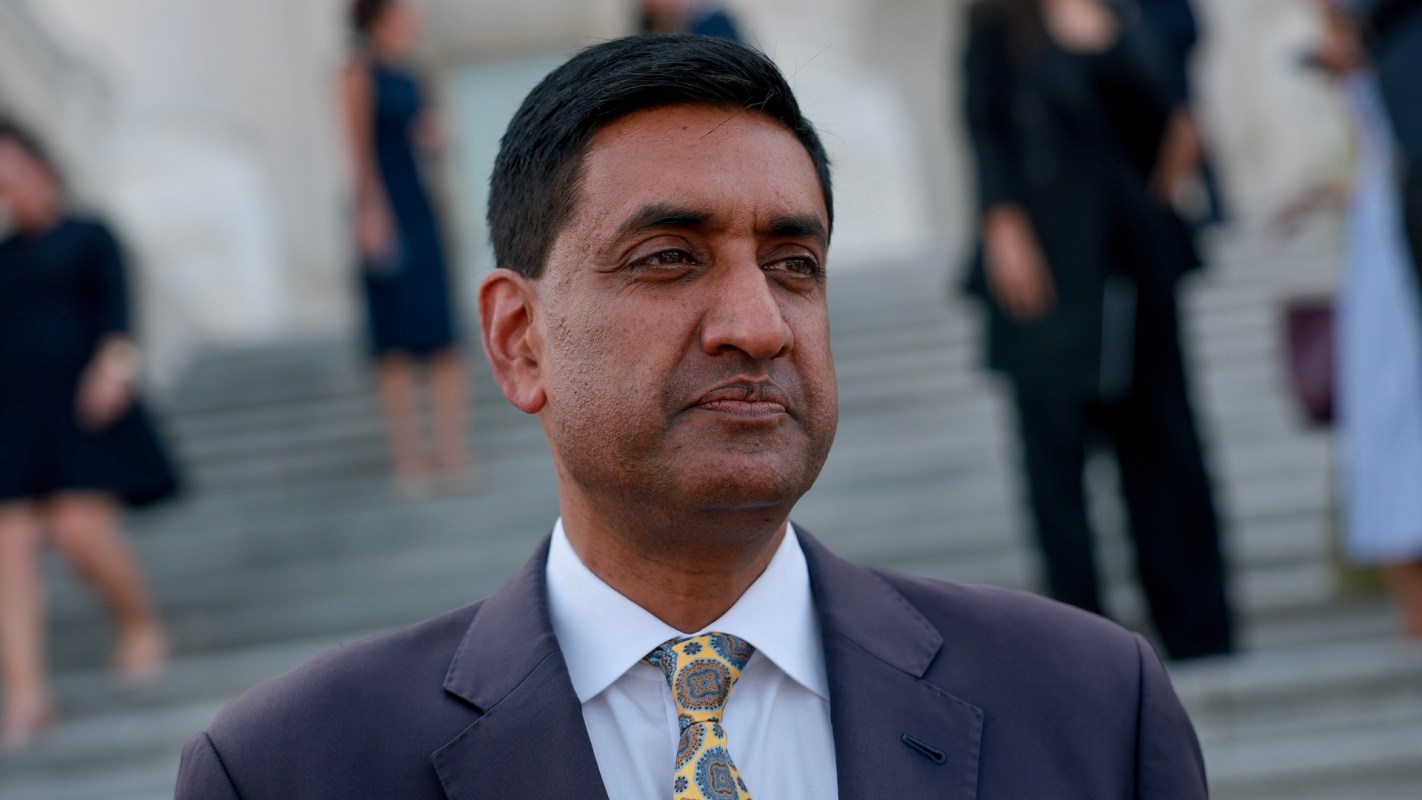
U.S. Rep. Ro Khanna is urging Washington to treat artificial intelligence less like a fast-moving product launch and more like a technology with potentially civilization-level consequences.
On CBS News' "Face the Nation," Khanna used an appearance with host Margaret Brennan to press for a new federal body devoted to AI oversight, reflecting how concerns about the technology are becoming a more central policy issue.
Here's what to know
Rejecting the idea that AI should be approached mainly as a high-stakes contest between countries, Khanna also proposed creating "an AI agency like the" Food and Drug Administration to supervise the technology's development, as The Hill reported.
Khanna, a California-based Democrat who gained notoriety for working with Republican Thomas Massie to start the release of the Epstein files last year, dismissed the notion that the subject is too technical for elected officials and regulators to grasp.
"Give me a break. We have regulated very complex things," he told Brennan, adding that AI should be governed "like we regulate nuclear energy, electricity, aviation; have independent technical experts make sure AI is safe."
Brennan noted that Khanna had written to AI companies including Chinese ones like DeepSeek and Alibaba, urging them to slow further advances until guardrails are in place. His remarks also come as lawmakers in both parties face increasing pressure to set rules for AI after a former Anthropic researcher warned that the technology might pose an existential danger to humanity, The Hill noted.
TCD Picks » Quince Spotlight
💡These best-sellers from Quince deliver affordable, sustainable luxury for all




Khanna conveyed how severe he believes the risk could be.
"Winning an AI war is like winning a nuclear war," he declared in the segment. "It is catastrophic for civilization."
More background
The debate over AI regulation extends far beyond Silicon Valley. Systems that can generate code, analyze data, make recommendations, or operate autonomously are increasingly being integrated into workplaces, schools, healthcare, finance, and public services.
Khanna said the core threats are accidental loss of control and deliberate abuse: "Look, there are two dangers to AI — either the loss of control or misuse. And the Chinese firms have taken no actions on either of them."
He said the U.S. should seek an "international agreement" with Chinese President Xi Jinping that would set standards and include monitoring and data-center checks, treating AI oversight more like a global security matter than ordinary tech policy, as The Hill reported.
What's being done?
The model Khanna is proposing would put AI systems under specialized review, with independent technical experts assessing safety issues before harmful systems spread too widely or too quickly.
He also advocated a dual-track response of domestic regulation paired with international coordination.
Whether Congress moves quickly remains an open question, per The Hill.
On how such a deal would work, Khanna said any agreement would need the kind of verification used in arms control.
"Now, obviously, you can't just trust the Chinese, but like any agreement, like an arms control agreement, as [former President] Reagan said, you need to trust and verify, and the world has done this before," he concluded on "Face the Nation."
Where can I learn more?
Khanna isn't the only one worried about the direction that AI is headed.
• At Anthropic, talks with the Pentagon tested AI guardrails for military use against American values.
• Safety advocates urged Washington and Beijing to pause frontier AI research before rivalry deepens.
• Across the industry, analysts warned of a very significant jump in risky AI trends.

Get TCD's free newsletters for easy tips, smart advice, and a chance to earn $5,000 toward home upgrades. To see more stories like this one, change your Google preferences here.






