


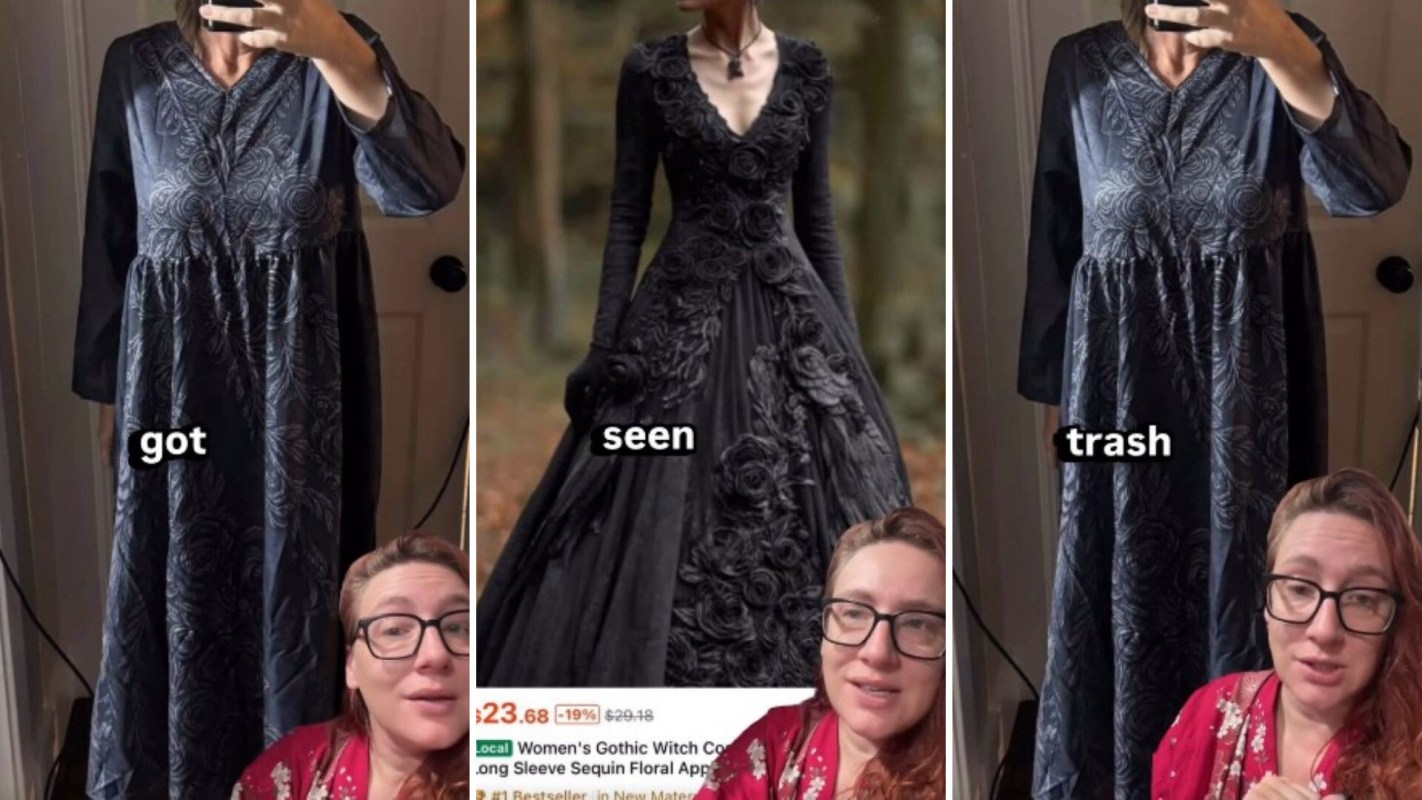
A $24 dress order became a cautionary tale of how product images generated by artificial intelligence can mislead shoppers with a bait-and-switch.
The creator behind the warning said the harm goes beyond one person's wasted money, because pieces like this can also become another headache for thrift stores.
Here's what to know
In a TikTok video, sustainable fashion creator Maggie Weber (@RefashionedHippie) compared the listing photo of an ornate, whimsical dress with the much lower-quality garment that was actually delivered.
Pointing to the listing image, she described it as "clearly AI" and added, "There's no way this dress was arriving for $24." The original dress had impressive details like 3D flowers built out of fabric. The actual dress was decidedly 2D and bland.
Weber's main advice was to use review photos as a gatekeeping step before buying. Those images are the clearest way to see what real customers actually received instead of trusting a polished listing and ending up with something flimsy, poorly made, or otherwise unlike the ad.
For Weber, there was no question the buyer simply ate the $24. In her view, the dress was so bad that "no one's going to want it" and was "not worth donating to a thrift store."
TCD Picks » Quince Spotlight
💡These best-sellers from Quince deliver affordable, sustainable luxury for all




More background
She also framed the bad purchase as a disposal problem that can continue after the buyer is done with it. Rather than becoming something a secondhand shop can resell, very cheap clothing can mean more sorting for thrift stores and may even turn into waste they have to pay to remove.
Viewers said they are already seeing more low-quality items in resale spaces.
One commenter reacted, "Well said! Been thrifting since before it was cool and the garbage from SHEIN, Temu, Amazon etc is so garbage it's ruining the thrifting experience."
As presented in the video and comments, the same item can create trouble at both ends. A shopper is left with a wasted purchase, and the rejected garment can then add more unwanted clutter to secondhand shelves. It can make everything more expensive if it means wasted time and labor for the store.
There is also further waste involved, as commenters noted.
"Not to mention the countless materials wasted to make it just for it to end up in a landfill," a TikTok user added.
What can be done?
Commenters said the price alone should have raised suspicion.
"I think that this is proof that people are not using their critical thinking skills," they suggested. "Not a chance a dress like that would cost $24."
Weber's most immediate tip for avoiding getting dupes was to pass on listings that couldn't be substantiated.
"So if you are ordering from sites like this, please make sure you don't order anything that does not have pictures in the reviews," she implored. "So that you can see what you will actually be getting."
Where can I learn more?
Questions about fake-looking fashion photos and low-quality garments go well beyond one $24 dress.
• In Malaysia, secondhand shops are drowning in low-quality polyester as fast fashion swamps donations.
• At Goodwill, bootleg Off-White-style sneakers ended up with a price tag that shocked shoppers.
• AI-generated models in Mango ads drew backlash over fashion's growing unreality.

Get TCD's free newsletters for easy tips, smart advice, and a chance to earn $5,000 toward home upgrades. To see more stories like this one, change your Google preferences here.






