


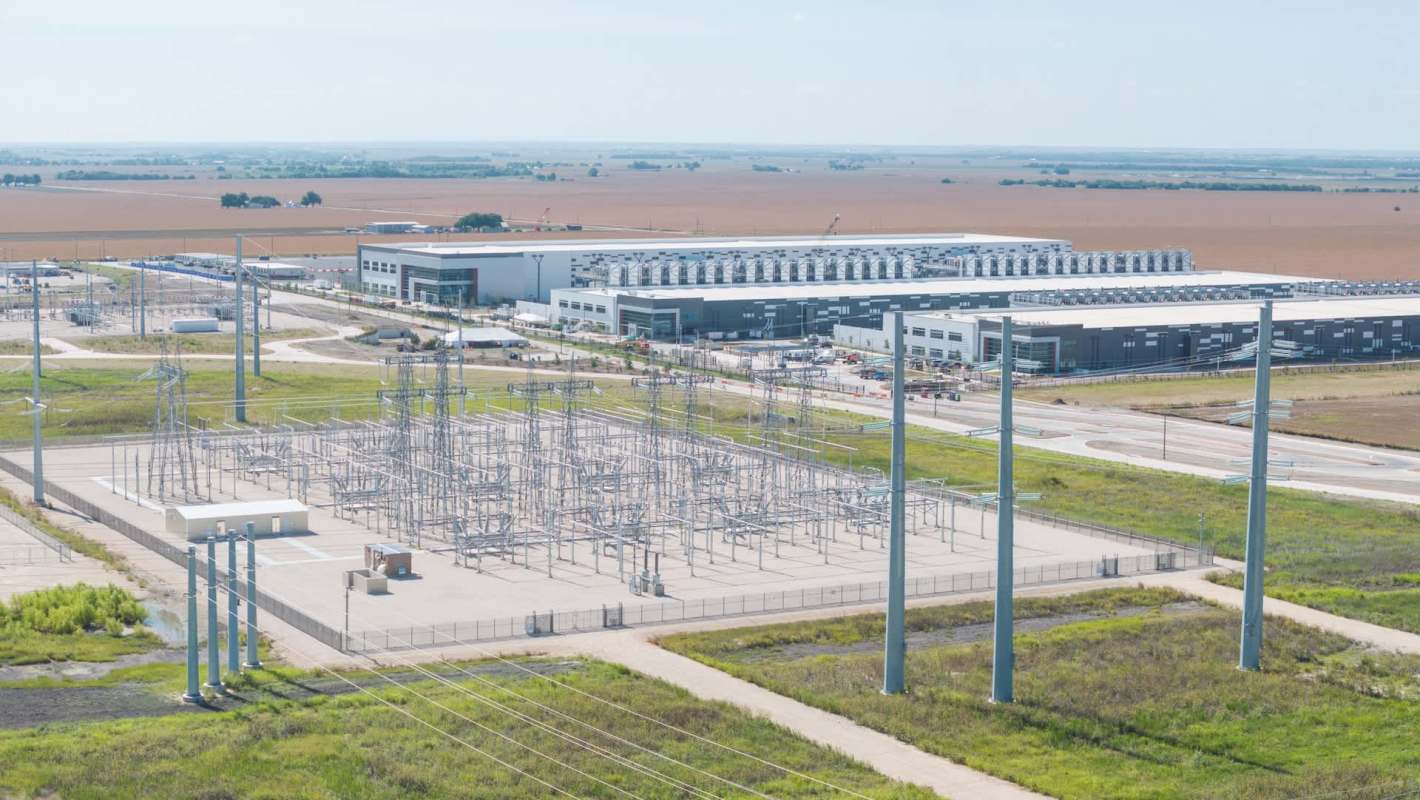
New AI data centers are emerging as a flashpoint in rural Texas politics, with conservatives and liberals alike saying communities are being asked to absorb major projects before they have had an opportunity to fully express their concerns.
That anger recently surfaced at a crowded hotel gathering in Bastrop.
What's happening?
According to the Austin American-Statesman, the meeting brought together residents, local officials, and state politicians seeking stronger resistance to the area's fast-growing data center pipeline.
It came after a developer organized town halls about its $1.4 billion Cedar Creek data center project, which has intensified worries about water use, electricity demand, and industrial expansion.
The Statesman reported that Texas has overtaken Virginia as the world's largest data center market and could add more than 700 facilities over the next decade. In Bastrop County, the outlet said, at least three projects are planned or already under construction as part of a wider Interstate 35 buildout stretching from Temple to San Antonio.
The Statesman reported that one of the largest nearby projects is EdgeConneX's 200-acre campus, built for 96 megawatts. The project received a 75% property tax abatement for its first 10 years and is expected to produce about 50 permanent jobs while bringing in $5-7 million in county tax revenue.
TCD Picks » Quince Spotlight
💡These best-sellers from Quince deliver affordable, sustainable luxury for all




Even so, many residents opposed to the project say they only learned about it after key decisions had already been made.
"We chose Cedar Creek to build our homes. We have families. My six kids are supposed to be growing up in this area, next to a data center," Mary Santana told the Statesman.
Why does it matter?
The dispute reflects a broader tension surrounding artificial intelligence.
AI-powered tools can improve weather forecasting, manage traffic, detect equipment failures, and even optimize clean energy systems by balancing power inputs from solar and wind. However, the data centers that support those tools can also require enormous amounts of electricity and water, fueling concerns about rising utility bills, strained local resources, security risks, and unintended social consequences.
Because Texas counties generally lack zoning and development powers, communities often have limited authority when it comes to large industrial projects.
At the Bastrop meeting, Texas Agriculture Commissioner Sid Miller argued, as the Statesman reported, that leaders in the Republican party had pushed too aggressively to bring data centers to the state. The paper noted state Rep. Vikki Goodwin, the Democratic nominee for lieutenant governor, was at the meeting as well.
"Our governor is part of my party, but I have to tell you, he's the one that brought them here," Miller said, per the outlet. "He enticed them here. He wanted to have more data centers than any other state. He's got his wish."
What's being done?
Local governments across Texas are testing the tools available to them.
According to the Statesman, that has included pauses, oversight measures, and rule changes. Hill County adopted a moratorium but dropped it after a developer sued. Hays County imposed a six-month halt on new data center approvals and created an oversight board for major water consumers. Austin approved limits for high-volume water users, while Taylor and Lockhart are considering zoning revisions or pauses of their own.
The Statesman reported that Gov. Greg Abbott, who previously praised Texas as "the epicenter of AI development," has more recently supported blocking additional rural data centers and urged operators to protect the state's natural resources.
For many residents, the fight is increasingly playing out in county commissioners courts, city council meetings, and utility gatherings, where tax abatements as well as water plans and infrastructure improvements are up for debate.
"We are often sold the myth that we are divided people, that we do not share much in common," Bastrop County resident and attorney Nick Lealos said. "I find, as I look out in this crowd, that to be completely farcical. … There is more unity in this room than division."

Get TCD's free newsletters for easy tips, smart advice, and a chance to earn $5,000 toward home upgrades. To see more stories like this one, change your Google preferences here.






