


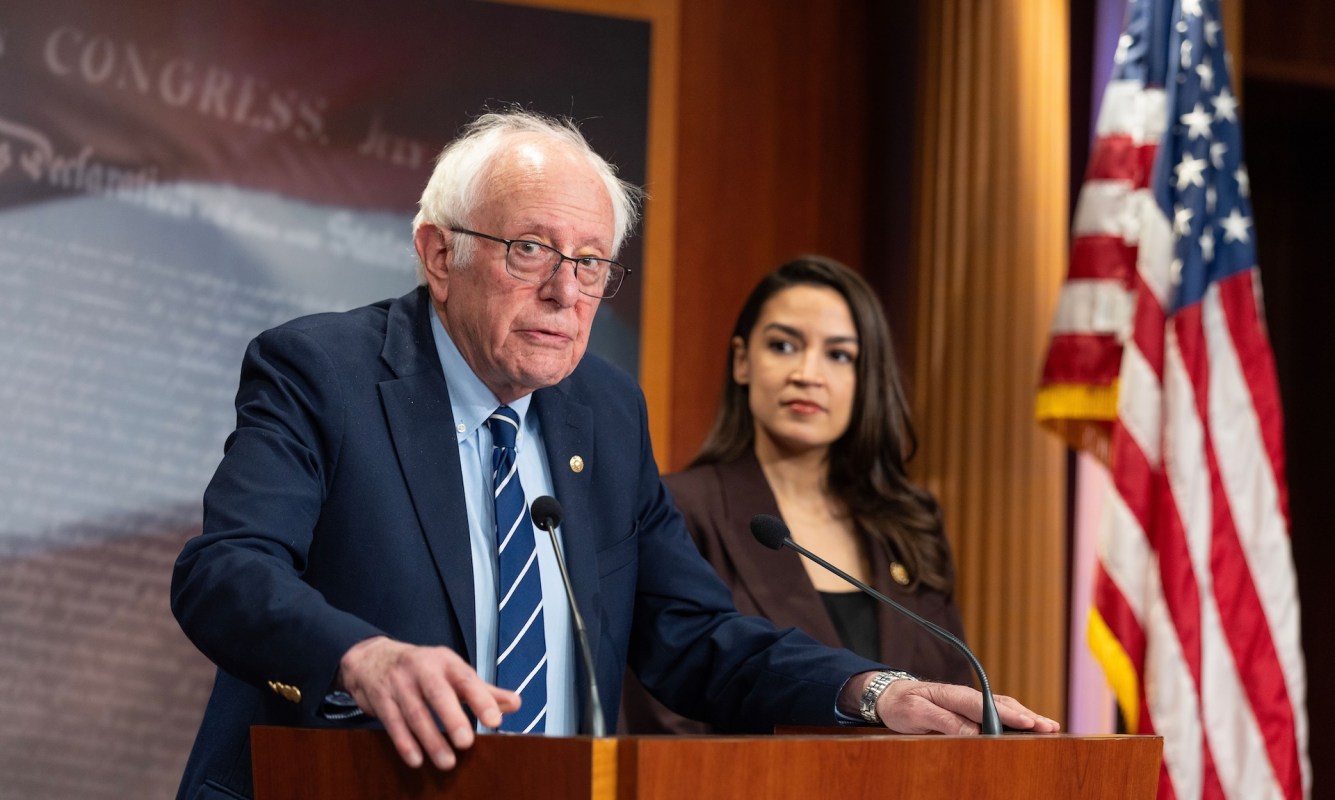
Senator Bernie Sanders and Representative Alexandria Ocasio-Cortez are pushing one of the most aggressive federal responses yet to the AI boom: a nationwide pause on the construction of certain new AI data centers.
The proposal puts a spotlight on a fast-growing conflict between tech expansion and the people living near the massive facilities that power it.
What's happening?
Through the Artificial Intelligence Data Center Moratorium Act, Sanders and Ocasio-Cortez are seeking a temporary federal halt on the construction or significant expansion of certain AI-oriented data centers while national rules are developed.
As Data Center Dynamics reported, the measure covers facilities used to train or operate AI models at scale if they draw more than 20 megawatts, use liquid cooling, and contain racks rated at 20 kilowatts or more.
Before any covered project could move forward, the bill would impose several conditions.
Developers would need to demonstrate that a facility would not increase consumer utility bills or planet-warming pollution, and projects would require local approval.
TCD Picks » Quince Spotlight
💡These best-sellers from Quince deliver affordable, sustainable luxury for all




The proposal also would bar government subsidies and require union jobs.
The push arrives as AI infrastructure grows quickly nationwide and resistance grows alongside it.
The lawmakers sponsoring the bill said more than 100 local communities already have data center moratoriums in place, and 12 states are pursuing statewide moratorium proposals as well.
Why does it matter?
For many communities, this debate is not really about abstract AI policy — it is about electricity bills, water use, noise, wastewater, and whether residents get a meaningful say over industrial development in their neighborhoods.
A federal pause could help prevent a scenario in which households subsidize energy-hungry AI growth through higher power costs or strained grids.
It could also slow projects that lock in more climate pollution, especially if utilities turn to fossil fuels to meet surging demand.
At the same time, critics are likely to argue that a moratorium could delay investment, slow AI-related job growth, and weaken U.S. competitiveness.
A middle-ground approach would combine tougher efficiency standards, community benefit agreements, and consumer-rate protections rather than impose a blanket freeze.
What's being done?
The moratorium would remain in place until federal law creates a process for reviewing and approving AI products before release, along with rules intended to prevent job losses and spread the economic benefits more broadly.
The bill would also instruct the Energy Department to issue quarterly public reports to Congress on the effects of data centers, including water consumption, electricity demand and costs, pollution, wastewater discharges, and noise near the facilities.
The bill adds to a shift already underway at the local and state levels.
"AI and robotics are creating the most sweeping technological revolution in the history of humanity," Sanders said, per Data Center Dynamics.
"Bottom line: We cannot sit back and allow a handful of billionaire Big Tech oligarchs to make decisions that will reshape our economy, our democracy, and the future of humanity."

Get TCD's free newsletters for easy tips, smart advice, and a chance to earn $5,000 toward home upgrades. To see more stories like this one, change your Google preferences here.






