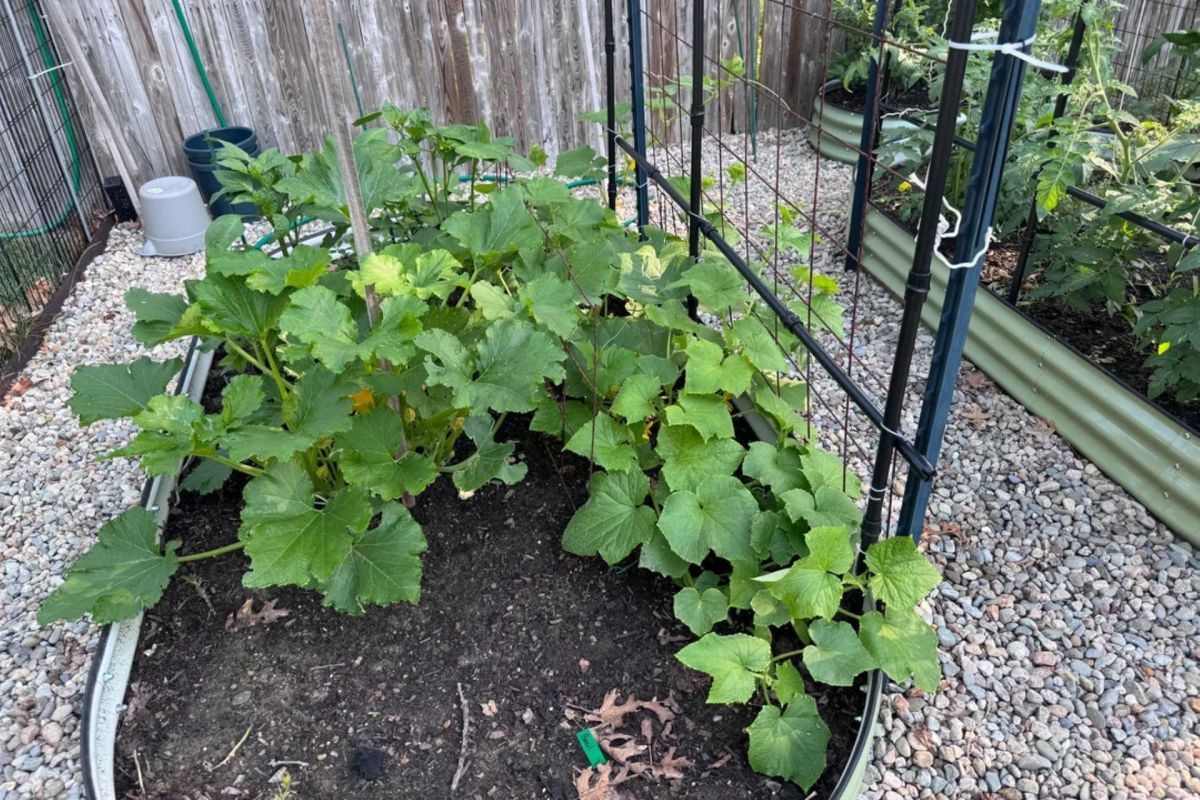
A mistaken treatment in a home garden set off a lively online argument after a zucchini grower discovered that a relative had used the wrong spray on the plants.
What happened?
The gardener said the zucchini plants were blooming but had not produced any fruit when the mix-up happened. On Reddit, the poster said a family member trying to address mildew on the leaves sprayed from the wrong bottle, and the leaves were rinsed off roughly 15 minutes later.
The original poster explained, "I am not mad at her, she has a slight dementia and eye issue and she still likes to help with the garden," but still asked whether it would be "best to pull the veggies out and start all over."
That quickly set off a divided discussion over pesticide safety, particularly because one commenter said the rose product may have contained tebuconazole along with insecticides such as imidacloprid, a neonicotinoid, or tau-fluvalinate. One commenter urged, "Read the label. It will tell you what the active ingredients are, and whether it's safe for food plants."
Others focused on timing and plant development. Some commenters noted that the label appears to permit edibles after a 14-day wait, while others argued that a one-time accidental spray, especially one rinsed off quickly and applied before fruiting, was unlikely to ruin the crop.
Why does it matter?
Several commenters warned that if imidacloprid was involved, the flowers could pose a risk to bees and other beneficial insects. One commenter wrote, "It will kill bees and other insects coming to collect nectar and pollen. OP, remove all the flowers."
TCD Picks » EDF Spotlight
💡EDF's Vital Signs newsletter delivers stories about game-changing solutions close to home and around the world




Another added that the chemical can be "very, very persistent," raising concerns not just about this season's harvest but also about lingering effects in the soil.
At the same time, other gardeners said that the response was too extreme. One commenter wrote, "I think most people here are major overreacting," while another argued that with no fruit yet, it was "highly unlikely" the pesticide would make its way into the edible portion so quickly.
The exchange underscored how confusing pesticide labels and crop-use rules can be for home gardeners. While these products are often marketed as simple solutions for mildew and garden pests, the discussion showed how quickly questions about food safety and pollinator health can surface when the wrong chemical ends up on edible plants.
What can I do?
Check the product label for active ingredients, approved uses on edible crops, and any pre-harvest interval. If pollinators are visiting treated plants, many commenters suggested removing blooms as a precaution.
Reducing reliance on chemical-heavy lawn and garden upkeep can save money and time on maintenance while lowering water bills. Even a partial lawn replacement with native plants, clover, buffalo grass, or xeriscaping can make a yard more resilient and lower-maintenance.

Get TCD's free newsletters for easy tips, smart advice, and a chance to earn $5,000 toward home upgrades. To see more stories like this one, change your Google preferences here.