


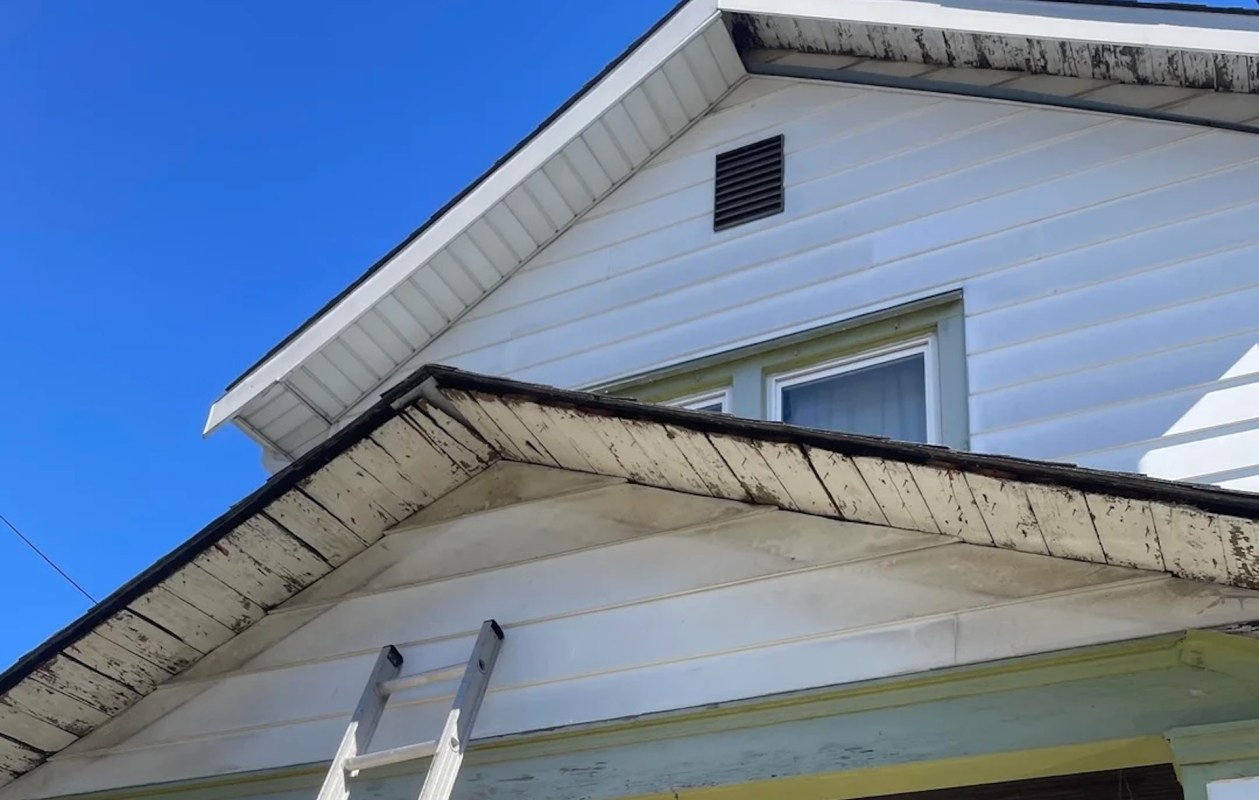
What seemed like an easy repair to a wind-damaged soffit on an older house turned into something much stranger when a homeowner opened up the exterior and found what looked like roof shingles nailed over scrap wood. The surprise also came with a city deadline to finish the work.
Here's what to know
The homeowner described the situation in a post on Reddit's r/centuryhomes. After strong winds tore soffit from a porch gable and part of the second floor, they said the damage exposed unexpected material underneath.
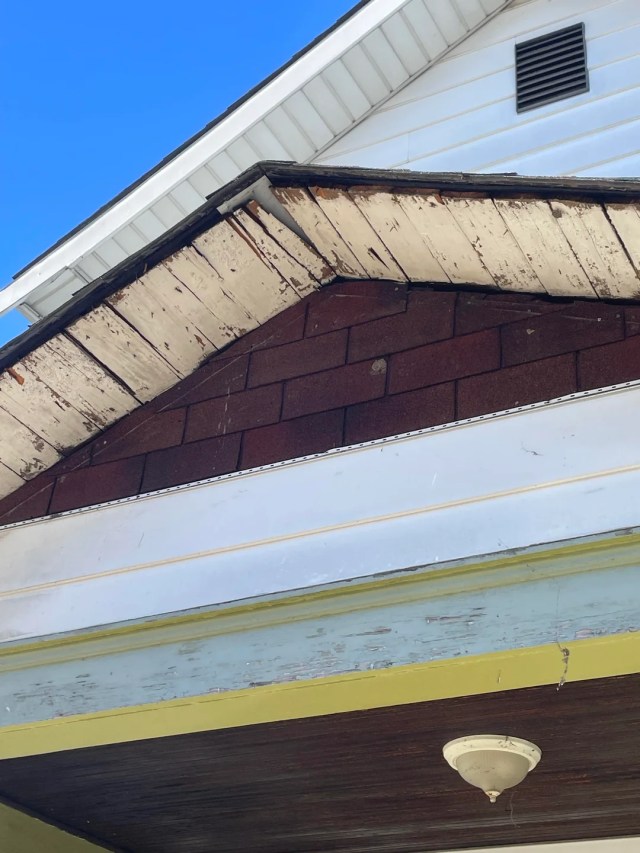
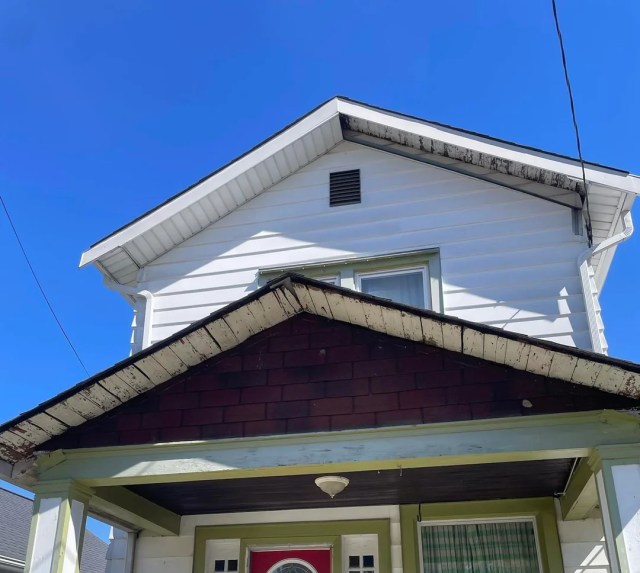
"Was not prepared to find roof shingles hammered over scrap wood, lol," they wrote. They added that "the city enforcement office was very kind and pushed our deadline to fix this until January."
Readers in the thread said the material was likely insulbrick, an asphalt shingle siding used as a cheaper exterior option. One commenter said it was especially common in the mid-1900s, while another said it was developed in the 1920s and widely used in the 1930s as a "modernization."
That suggests the outer layer may have been added after the house was first built. One commenter who said they run a grant program for this type of restoration wrote, "90% of the time the original siding is under the insulbrick and in great condition. All we have to do is patch nail holes and give it the paint job it should have gotten 100 years ago."
If that turns out to be the case, the homeowner may be able to avoid a full replacement and instead focus on more limited repairs, prep work, and paint.
TCD Picks » Quince Spotlight
💡These best-sellers from Quince deliver affordable, sustainable luxury for all




More background
Layered siding was a recurring theme in the thread. What looks like vinyl or aluminum on the outside can conceal several generations of materials underneath, including asphalt siding, gypsum backers, or wood.
If the original clapboards are still intact, restoring them can help preserve the home's historic character.
The discussion also included warnings from homeowners who found much bigger issues after opening their walls. One commenter said their 1890s home contained vinyl, poly insulation, insulbrick, and original cedar clapboards, and that poorly flashed areas had allowed water to get behind the siding.
Wildlife problems came up too. Another commenter said that after removing asphalt siding, they found old insulation holes that bats had used to get inside, which led to bat-proofing work.
Where can I learn more?
These stories cover more on the kinds of exterior problems homeowners run into and how they manage them.
• In Florida, one couple's white roof experiment raised warnings about painting asphalt shingles.
• In the Hamptons, architects built storm-resilient structural boxes for an oceanfront home.
• A homeowner discovered nightmare plant growth climbing siding and threatening serious exterior damage.

Get TCD's free newsletters for easy tips, smart advice, and a chance to earn $5,000 toward home upgrades. To see more stories like this one, change your Google preferences here.






