


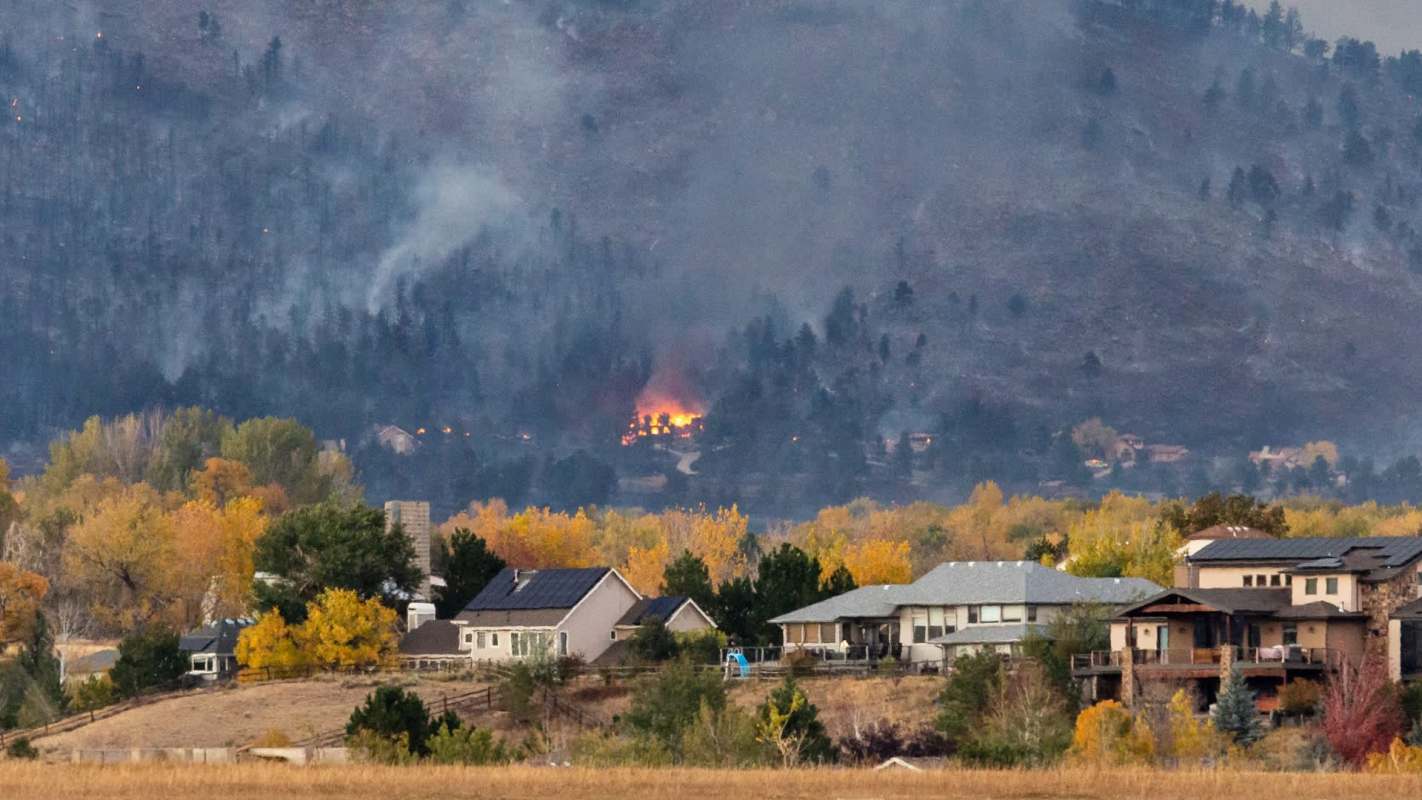
Building a new house to better resist wildfire in Colorado may add less to the price than buyers and builders expect, according to the University of Colorado Boulder's Cooperative Institute for Research in Environmental Sciences, or CIRES.
A new report found that meeting the state's wildfire code typically increases a new home's cost by 0.6% to 10.8%, depending on the county and design choices.
Here's what to know
In Boulder, Jefferson, El Paso, Summit, Grand, Delta, La Plata, and Las Animas counties, researchers evaluated new single-family homes using five construction approaches, from pre-code methods to stricter wildfire-resilience standards.
The analysis found that the added cost of building for wildfire resistance was often relatively modest. One key finding was that wildfire code requirements affect only a small share of a home's total construction budget.
The foundation, framing, flooring, and insulation account for 85% to 90% of costs, while the code mostly applied to exterior elements such as roofing, siding, vents, windows, doors, decks, and landscaping.
The study also found that decks accounted for a large share of the price increase between lower and higher protection levels. When deck costs were excluded, the difference between those protection levels shrank from 10.2 percentage points to 1.2 percentage points.
TCD Picks » Quince Spotlight
💡These best-sellers from Quince deliver affordable, sustainable luxury for all




"Colorado needs more affordable housing, and the homes we build today will shape our communities' wildfire risk for decades," Virginia Iglesias, a CIRES scientist and director of Earth Lab, said. "This study informs the discussion by quantifying the costs of wildfire-resilient construction, helping builders, homeowners, and policymakers understand how greater protection can fit within housing budgets."
More background
Colorado's 2020 and 2021 fire seasons showed that severe wildfire risk extends beyond remote towns.
The 2020 East Troublesome Fire destroyed hundreds of homes in Grand County, and in 2021, the Marshall Fire tore through Boulder County suburbs within hours, destroying more than 1,000 structures.
In grasslands and densely populated areas, wind can carry embers far from a blaze, putting homes at risk before flames arrive.
"Projections suggest that without meaningful mitigation, the probability of home loss to wildfire in Colorado could increase fivefold by mid-century under moderate warming and development scenarios," CIRES noted.
That growing danger is rippling through the state's insurance market, with some homeowners experiencing steep premium increases and others facing policy non-renewals in high-risk areas.
The cost of building or buying in fire-prone places is becoming more and more contingent not only on land and labor but also on survivability and insurability.
What's being done?
At the policy level, the state enacted the Colorado Wildfire Resiliency Code in 2022 and revised it in 2025.
The code sets minimum wildfire-resistant requirements for newly built homes in designated wildland-urban interface areas, where development meets vegetation.
The requirements are split into two broad types.
One centers on defenses against wind-blown embers, which can ignite homes far from a fire, and the other adds protection from radiant heat and flame contact when nearby vegetation or buildings burn close to a home.
By attaching county-level numbers to trade-offs, the study gives local officials, builders, and homebuyers a basis for deciding how to meet code requirements while keeping homes attainable in areas facing both housing pressure and growing wildfire exposure.
"Education, access to lower-cost compliant materials, and contractor familiarity with those options can translate that understanding into affordable, resilient homes," Iglesias said.

Get TCD's free newsletters for easy tips, smart advice, and a chance to earn $5,000 toward home upgrades. To see more stories like this one, change your Google preferences here.






