


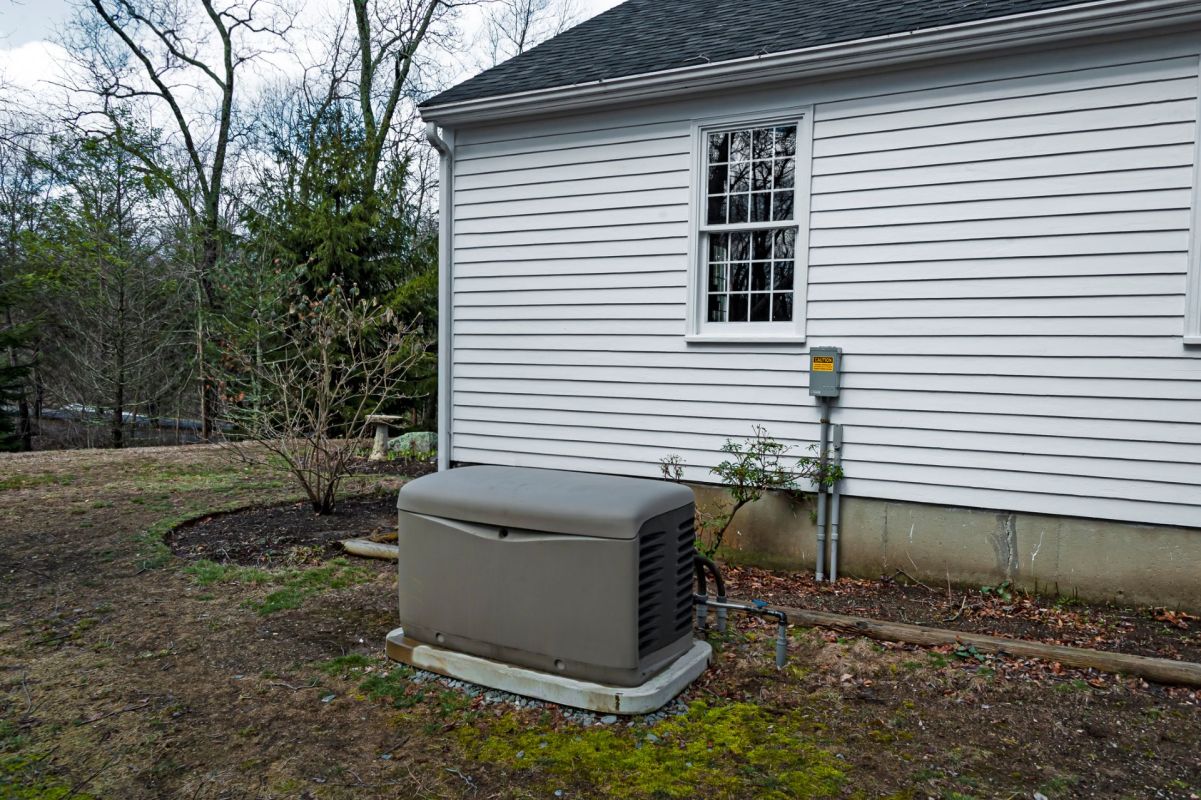
Since an April 2025 storm left some Western Pennsylvania families without electricity for extended periods, backup power has become a much more immediate household concern for many in the area.
Here's what to know
People who spoke with WTAE said storm-related outages are becoming harder to ignore.
Claire Salvatore from North Hills recalled, "I could see all the lightning, and the wind was like — I had to get back inside. And our lights flickered off and on."
Jennifer Capets from Squirrel Hill said, "It's awful. It really is. It's getting ridiculous. We live in the city."
RC Watt, owner of a whole-home generator business in Westmoreland County, said his company has been seeing much heavier demand as power failures become more frequent. "I would say that it's quadrupled," Watt said.
Asked what is driving the increase in outages, Watt pointed to an aging electrical grid and less routine tree trimming around power lines. He added, "I think the reality is that the cost of solving the problem after it occurs is less expensive than preventing the problem from occurring."
TCD Picks » Quince Spotlight
💡These best-sellers from Quince deliver affordable, sustainable luxury for all




In other words, Watt is saying electric companies are taking the cheap route and only making improvements once infrastructure fails and needs repairing anyway.
Among backup options, Paul Hope, deputy editor at Consumer Reports, told WTAE that a whole-home standby generator offers the smoothest experience because it can restore electricity within seconds.
Consumer Reports considers those permanent systems the "gold standard," especially for remote households, homes with frequent or multi-day outages, and people who rely on powered medical equipment.
Hope said buyers should expect to pay, "For a small to mid-size whole-home generator that is going to let you power all the essentials — maybe not at once, but certainly all the essentials — you should expect to pay anywhere from $5,000 to $10,000 for the all-in price, including installation. In some places, it might be even a little bit more than that," while Watt said his company's systems typically start above $10,000.
More background
Not every household needs, or can afford, a full standby system.
Hope said a lower-output generator can still keep essential items running, including lights and a refrigerator, even if it cannot power every major appliance at once. That can make a meaningful difference during outages that last longer than a few hours, when food storage and basic lighting quickly become pressing concerns.
A portable gas generator is usually the cheaper entry point, with prices commonly ranging from $500 to $1,500.
Hope said the safer setup is to have an electrician install a transfer switch for selected circuits, though that can push the cost to about $2,000. Without it, homeowners are left using extension cords, and hardwired equipment such as furnaces cannot operate.
Fuel use and safety also matter.
Some larger portable generators can use up to a gallon of gasoline per hour. Hope also said they belong outdoors, at least 20 feet from the house, with exhaust aimed away from the home and nearby neighbors.
What can be done?
Hope said the first step is deciding what your household truly cannot go without during a power outage.
That might include a refrigerator, a well pump, medical equipment, internet equipment, or heat in the winter. From there, homeowners can better judge whether a portable battery power station, portable generator, or whole-home system is the best fit.
For lighter backup needs, a portable battery power station may be enough. Those units are quieter, produce no exhaust, and may keep phones, internet gear, and some plug-in devices running for several hours.
They are not a replacement for a whole-home system, but they can cover the basics for households focused on communication and short-term backup.
When the need is larger, Hope and Watt said the equipment should match the home's actual power demands.
"A portable generator is certainly large enough to power things like window air conditioners, space heaters, depending on the season, refrigerator, lights, and really important things, too," Hope said. "You're going to be able to charge your phones, and backup battery packs and other things you would want during an emergency."
Watt said the final price of a whole-home setup depends on a household's power needs and whether it needs gas-meter or electrical-service upgrades.
For homeowners tempted to wait, Watt said, "There's never a good time to lose power."
Where can I learn more?
These stories look at why more homeowners are thinking about backup power.
• Generac is expanding whole-home backup options as longer outages push homeowners to prepare.
• After repeated outages, one family weighed a generator for fridges, AC, and winter heat.
• Across the US, an aging power grid faces longer, more erratic storm seasons.
• NERC warned that elevated summer outage risk is persisting in several states.
• After Hurricane Beryl, experts warned backup generators can poison families through carbon monoxide.

Get TCD's free newsletters for easy tips, smart advice, and a chance to earn $5,000 toward home upgrades. To see more stories like this one, change your Google preferences here.






