


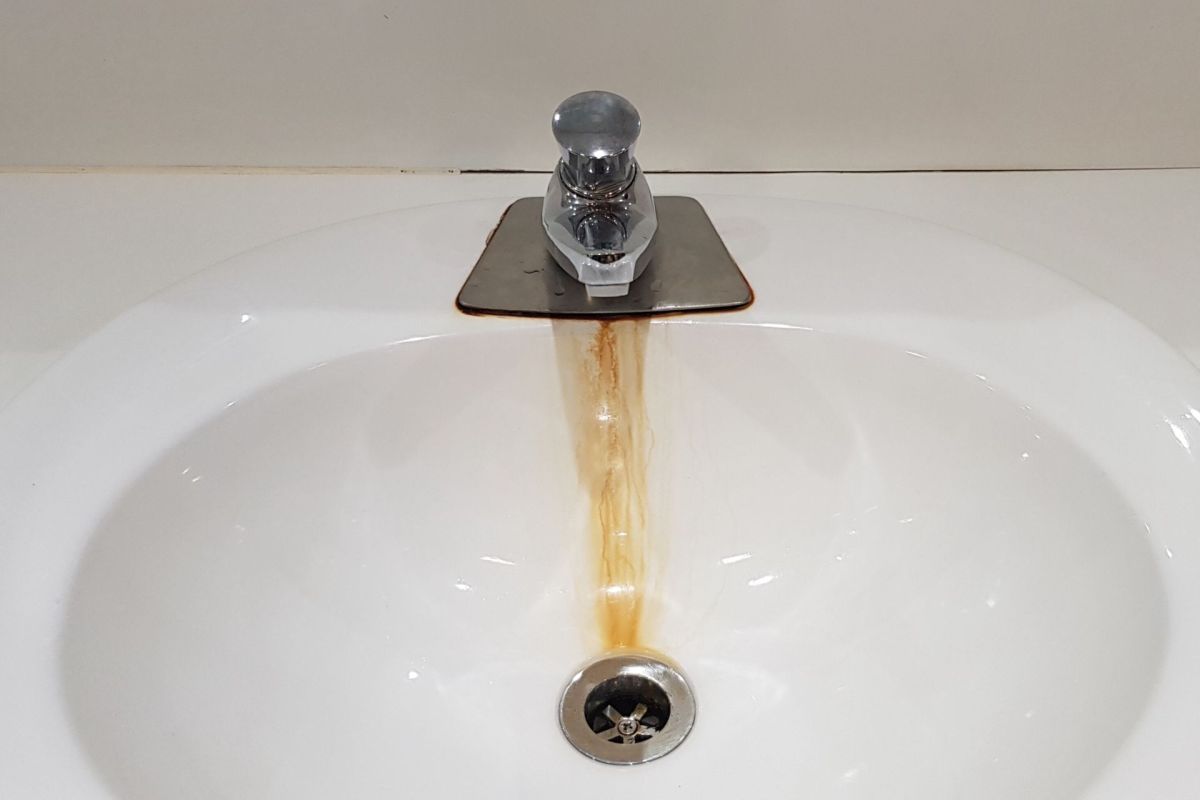
For homeowners who rely on well water, orange stains left behind are alarming. They can quickly turn into a much bigger, more expensive headache.
Here's what to know
The homeowner, posting on Reddit, was considering a DIY well-water setup after hesitating over a local company's $4,000 proposal for a system with an eight-year warranty.
The plan this original poster outlined would treat the main line with sediment and iron filtration before a softener, while using a separate reverse-osmosis unit for drinking and cooking water.
OP wrote, "I really could not bring myself to spend that much, especially since I didn't know if it was even worth that much. Right now I'm looking online for a few to buy myself, and sort of have a plan."
With options priced from about $225 to more than $1,100, the OP asked commenters whether the treatment order they had in mind made sense.
The strongest response was that the first thing to buy should not be a filter at all. As one commenter put it, "Need an independent test. Otherwise you are buying equipment blindly." Another user wrote, "Agreed. A test is the first step you should take. Best $250 you'll spend."
TCD Picks » Quince Spotlight
💡These best-sellers from Quince deliver affordable, sustainable luxury for all




Commenters also said the stain color suggested iron, but that alone was not enough to decide on equipment. As the top comment explained, "Orange stains [means] iron. There are two types: ferric (iron oxide) and ferrous (dissolved)... Make sure you know what you have in your water." Because standard filters do not remove dissolved iron, they said some wells may need a dedicated iron filter.
More background
A private well effectively makes your home's water system its own utility, and guessing wrong can get expensive.
The wrong equipment can leave homeowners spending hundreds or even thousands of dollars while still dealing with staining, scale, or an odd taste, plus unknown health concerns.
Views on cost were more mixed. One commenter said $4,000 for an iron filter plus a softener with eight-year coverage "isn't automatically a ripoff, that's in the range once you add labor," while others said professionally installed well-water systems in their areas can cost much more. Another homeowner in the thread said their own do-it-yourself system also ended up near $4,000 after adding a whole-house filter, a water neutralizer, and an RO unit.
Still, one commenter wrote, "DIY does save real money, you just become the warranty."
Where can I learn more?
For a closer look at why water testing comes first, these stories cover private-well contamination and neighborhoods where discolored and contaminated water pointed to more serious problems.
• Rural homeowners were stunned when test results from private wells raised alarms about PFAS contamination.
• In Chicago, 38,000 home water tests showed children still face troubling lead exposure risks.
• In Austin's Colony, Texas, discolored tap water masked lead and arsenic for years.

Get TCD's free newsletters for easy tips, smart advice, and a chance to earn $5,000 toward home upgrades. To see more stories like this one, change your Google preferences here.






