


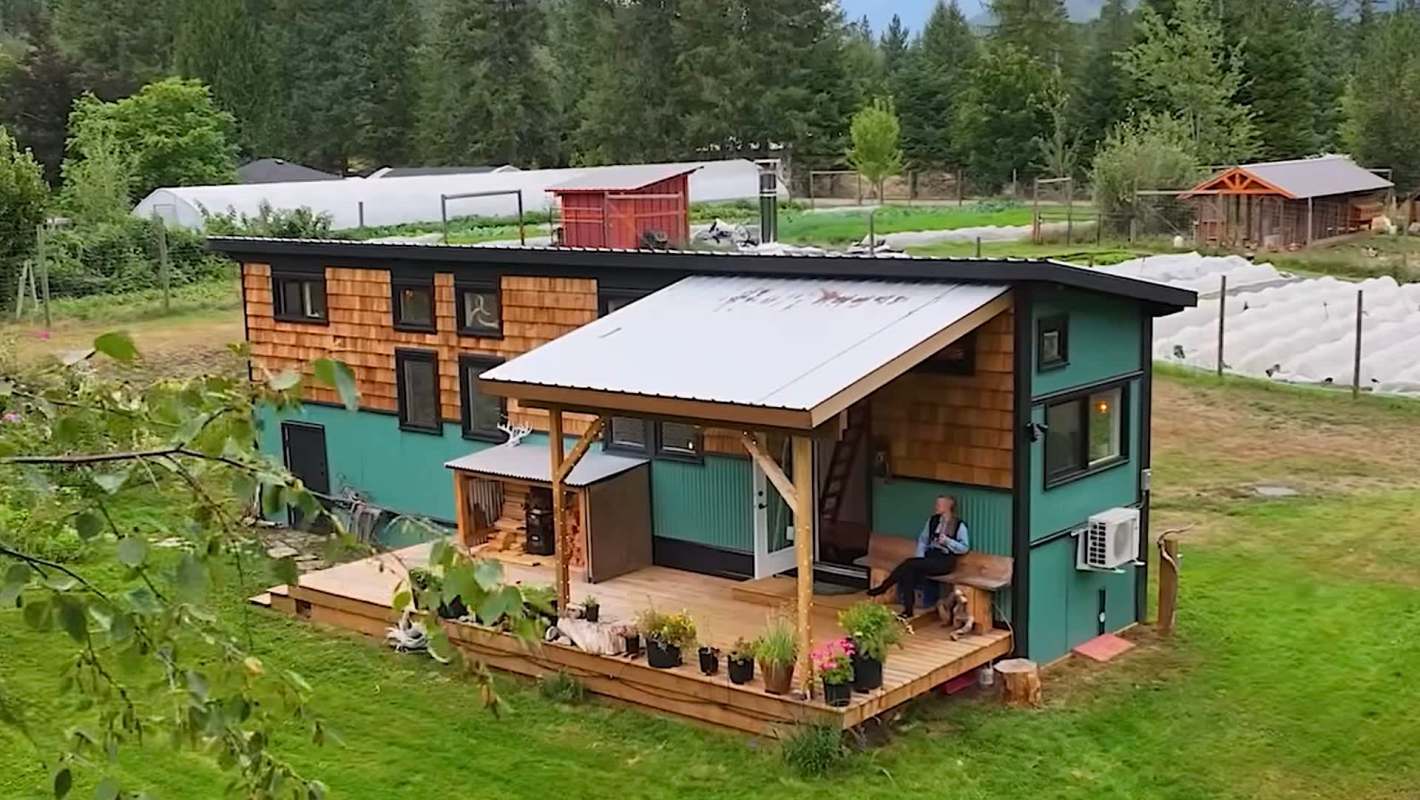
A waterfront tiny house in British Columbia is drawing attention for doing something many small homes don't: embracing abundance instead of stripping everything back.
Though compact, the custom-built home has a strongly personal identity, organized around color, plants, books, records, and locally crafted details.
Here's what to know
In a home tour video, the YouTube channel Living Big In A Tiny House (@LivingBig) showcased owner Kelci's custom-built home on an organic regenerative farm in British Columbia.
Its most distinctive feature may be its design: the natural-timber interior emphasizes warmth and personality, and the layout makes space for cooking, reading, bathing, and listening to records rather than following the pared-down look often tied to tiny living.
Kelci describes her style as "maximalist gnomecore," purposefully going for forest and mushroom vibes with thoughtful details rather than glaringly cheesy ones.
Seen that way, the house argues that small-space living need not feel sterile or standardized when storage is well planned and the design leaves room for comfort and self-expression.
TCD Picks » Quince Spotlight
💡These best-sellers from Quince deliver affordable, sustainable luxury for all




More background
Tiny homes continue to appeal to many people because they can mean lower housing costs, reduced utility bills, and less maintenance than a conventional house.
For some, a smaller home can also bring more financial flexibility and less time spent managing unused space.
At the same time, this particular setup is clearly aspirational. A custom build beside the water on a regenerative farm is not a typical entry point for most home shoppers, and tiny living is not automatically cheaper once you factor in land, infrastructure, and specialized construction.
What can be done?
Design choices can matter as much as square footage.
Smart storage, multifunctional furniture, and clear priorities can make a smaller home feel far more livable.
That does not mean everyone should pursue a custom tiny house. Renting a smaller apartment, simplifying a room-by-room layout, or borrowing compact-space ideas for an existing home can offer similar benefits without requiring a major lifestyle shift.
For one person, that might mean reducing housing costs. For another, it could mean creating a cozier space that is easier to clean, heat, and maintain.
Kelci's home appears tailored to her routines and interests rather than built around a trend.
Instead of feeling empty or ultra-minimal, Kelci's tiny home matches the phrase she uses for it: "maximalist gnomecore."
Where can I learn more?
Kelci's home shows how small spaces can still feel really personal. These articles look at other sides of compact living, from prefab builds designed for off-grid comfort to the heating and energy decisions that make a setup work day-to-day.
• A home manufacturer is building sleek prefab tiny homes that recycle water and generate energy.
• One off-grid homeowner found a stunning greenhouse that cuts heating efforts by about 40%.
• An off-grid family says money-saving energy solutions begin with batteries and a heating stove.

Get TCD's free newsletters for easy tips, smart advice, and a chance to earn $5,000 toward home upgrades. To see more stories like this one, change your Google preferences here.






