


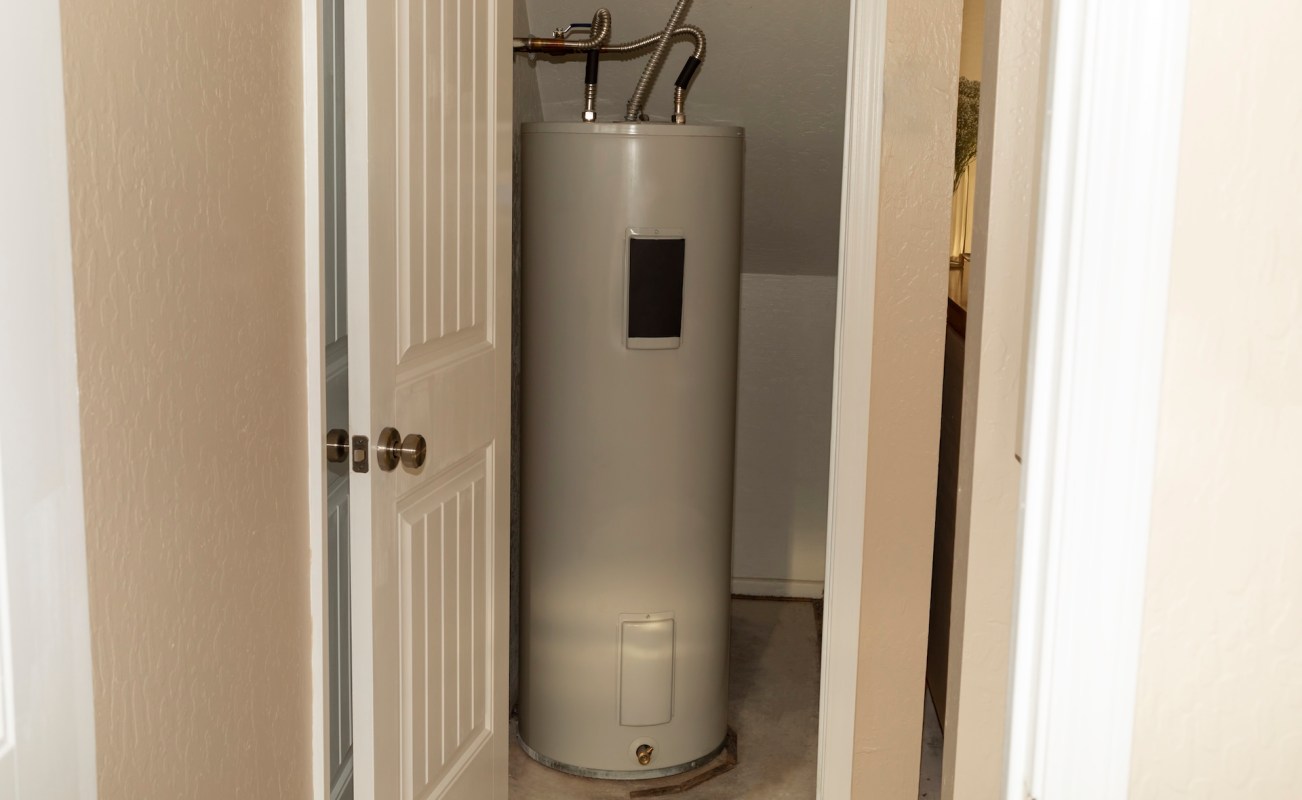
One Reddit poster with a 40-gallon tank from 2003 was considering a proactive replacement after getting some conflicting advice.
Because the heater still works but sits in an upstairs closet, the discussion on the r/Plumbing subreddit focused less on efficiency and more on how expensive it could be to wait for a leak.
Here's what to know
According to a Reddit post in r/Plumbing, the homeowner noticed while cleaning that the water heater in their upstairs closet was made in 2003. They said, "It runs well and water is [scalding]," but added that replacement estimates were "high quotes."
The original poster and their husband were not on the same page about timing. The OP said he wanted to keep the current heater running and "save for a tankless next year," while they were worried because "everyone has been telling me the bottom tank can explode."
Upgrading a 23-year-old water heater to a heat pump model can save some homeowners up to $550 a year on energy bills, which is another avenue that could pay off the original poster.
Many replies pushed back on the explosion concern.
"In 50+ years in the trade I've never seen a tank fail in a catastrophic way," a commenter wrote. "I've seen explosions due to safety devices being bypassed, I've seen tanks freeze and break in vacation homes, but in everyday life they just start leaking."
More background
The heater's placement kept the issue pressing. In an upstairs closet, even a slow leak could damage ceilings, drywall, carpet, or flooring below, so commenters said the location made the risk more serious even if a dramatic rupture seemed unlikely.
Crushed by your bills? See instant solar savings from vetted installers in just a few clicks With energy prices through the roof, there's never been a better time to go solar — and EasyHome can help you find the best prices from the best installers in your area. EasyHome takes the guesswork and headaches out of energy upgrades by showing you estimated savings from a network of vetted local partners. To get started, just enter your ZIP and share a few details about your home — seeing your estimate is really that easy. |

One commenter asked whether the heater sat in a pan with piping to a drain, saying that setup "greatly reduces the risk of a flood if it starts leaking." The OP confirmed, "It has a metal drain pan." Even with a pan, though, commenters did not treat the tank's age as a nonissue.
The thread also turned to scheduling headaches and price. One commenter warned that "emergency water heater replacement is expensive," especially if the unit fails when plumbers are already booked up. Another homeowner said their own heater is in a basement utility room near a drain and has leak detection that alerts their phone.
What can be done?
Commenters said to watch for a leak.
"Don't let the idea that yours will burst open and flood the house worry you," a user suggested. "Get a leak detector and keep an eye on it."
For homeowners who decide not to wait for that moment, Cala offers smart heat pump water heaters as an alternative to another standard tank. Cala's customizable smart heat pump water heaters can help homeowners lower energy bills by heating water only when needed.
That kind of planned replacement also helps households avoid the emergency-pricing problem described in the thread. If an aging unit is already in a vulnerable spot like an upstairs closet, comparing options such as Cala before a leak starts may be the less expensive and less stressful move.

Get TCD's free newsletters for easy tips, smart advice, and a chance to earn $5,000 toward home upgrades. To see more stories like this one, change your Google preferences here.






