


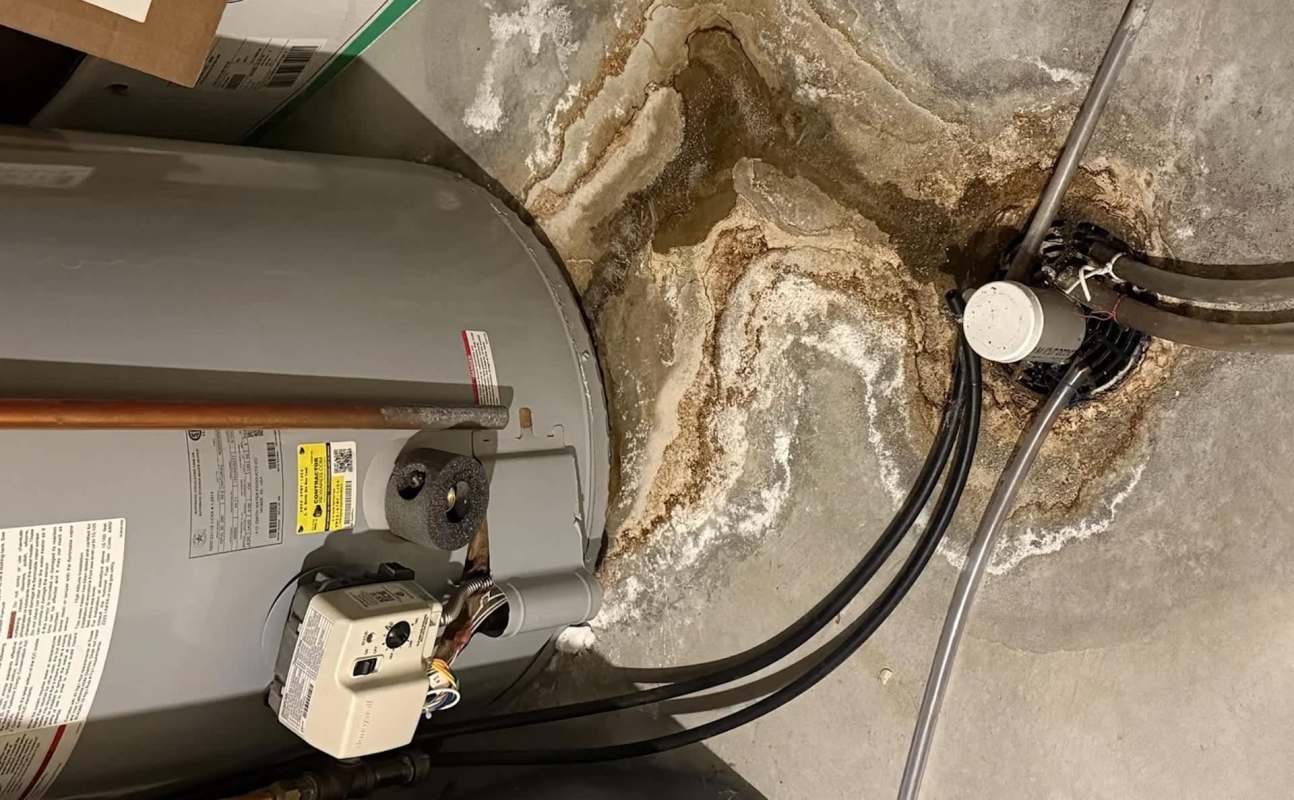
In the Reddit post, the new homeowner said the water heater was still making hot water and that they had not found any obvious active dripping. While replacement can be an unwelcome expense, it can also be a chance to upgrade to a heat pump water heater.
Here's what to know
The OP said, "I noticed wet-looking areas and heavy white/brown mineral deposits on the concrete around my gas water heater."
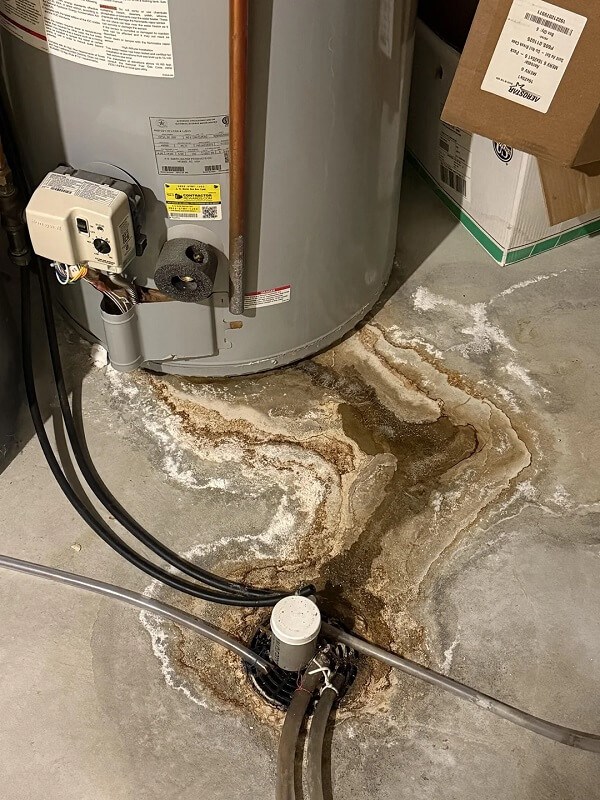
They also said a darker, newer-looking patch seemed to run from beneath the unit toward a nearby sump pit, making the source of the moisture harder to pin down.
One user said, "Replace it yesterday."
Another added, "That's how they fail.... Done."
The comments also noted that moisture around a heater does not always mean the tank itself has rusted through. A leaking relief valve, for example, could be tied to a waterlogged expansion tank or to the absence of one where it should be installed. And if the water is actually coming from the inlet or outlet pipes, the temperature and pressure relief valve, or the drain valve, users said the problem may be repairable.
More background
The OP noted that the heater could still produce "super hot" water even if corrosion or a slow leak was getting worse in or around the tank.
Dried white and brown residue usually suggests water has been escaping for some time before evaporating. That can mean hidden wear, a higher risk of sudden rupture, and potential water damage nearby.
Save $10,000 on solar panels without even sharing your phone number Want to go solar but not sure who to trust? EnergySage has your back with free and transparent quotes from fully vetted providers in your area. To get started, just answer a few questions about your home — no phone number required. Within a day or two, EnergySage will email you the best options for your needs, and their expert advisers can help you compare quotes and pick a winner. Solar panels can save you more than $50k over their 25-year lifespan, and EnergySage can help you save as much as $10k on installation. Which begs the question — isn't that worth an email or two? |

One user said installation is "about as much as the cost of the new heater," meaning a replacement often costs far more than the unit's sticker price. Emergency service can push that number even higher, especially if a leak turns into a flood.
What can be done?
Before a minor leak becomes a bigger problem, it is smart to know where the home's main water shut-off is and to make sure the shutoff valves still work. To narrow down the source, check the two pipes on top of the heater, along with the relief valve and the drain valve near the bottom.
If the tank itself is leaking, replacement is usually the realistic path. That is where a more efficient option may pay off over time. Cala makes customizable smart heat pump water heaters that help homeowners decrease their energy bills by heating water exactly when it's needed. Instead of heating water the same way all day, these systems are designed to match household demand more precisely. That can reduce wasted energy while still keeping hot water ready for showers, laundry, and dishes. For homeowners already facing a replacement decision, Cala points to how a stressful repair can become a longer-term money-saving upgrade.
Where can I learn more?
While a leaking water heater is never a good sign, it can also be a chance to upgrade to one that saves you money.
• Homeowners can keep a water heater running longer with a few basic maintenance steps.
• Replacing an aging tank with a heat pump water heater can cut bills over time.
• One homeowner found showers go weak after switching to tankless hot water at home.

Get TCD's free newsletters for easy tips, smart advice, and a chance to earn $5,000 toward home upgrades. To see more stories like this one, change your Google preferences here.






