


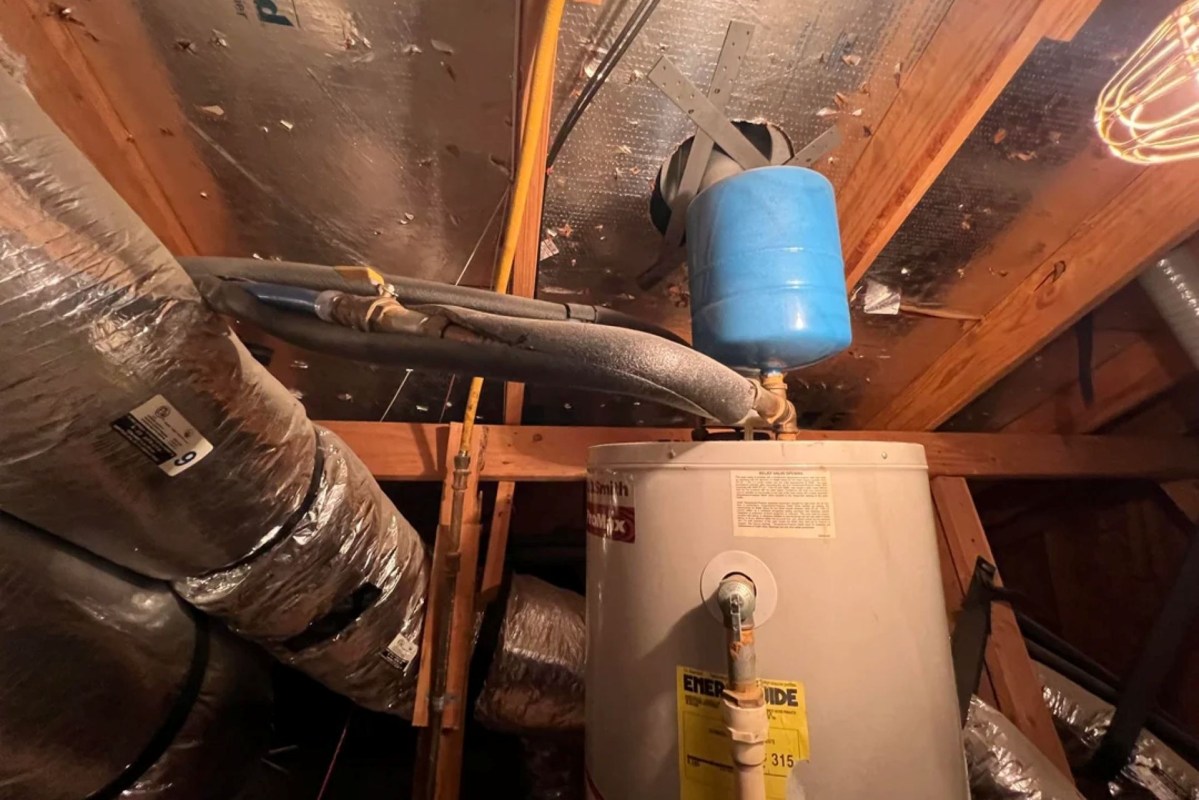
After years of regular upkeep, a routine maintenance job turned into a warning sign for one Texas homeowner with an older water heater. After a flush, the 50-gallon tank began leaking, prompting concern about corrosion, remaining lifespan, and the added risk of having the unit installed in a second-floor attic.
If replacement proves necessary, there is usually a major financial decision that follows. Switching to a heat pump water heater can significantly cut the electricity used for hot water compared with a standard electric model.
What happened?
On a Reddit post, the homeowner wrote, "As i finished flushing yesterday a small leak started and fixed it with plumber's tape and brass garden hose." They also added, "Have never changed the anode rod, just found out about replacing it."
The homeowner, who lives in central Texas, said the 50-gallon heater had been flushed about 12 times since 2009. During the most recent drain, a leak appeared, and they also saw orange discoloration around the water heater.
While flushing can help remove sediment from a tank, it does not prevent every form of wear. Over time, water heaters can corrode internally, especially if the anode rod, the sacrificial metal rod meant to protect the tank, is never replaced.
Discoloration near fittings can sometimes come from old moisture, mineral deposits, or surface rust. But once a tank starts leaking, many homeowners have to weigh whether a repair is worth it.
Why does it matter?
A leaking water heater is always a problem, but one installed in an attic can be very unsettling. If a tank or connection fails, water can damage insulation, ceilings, walls, and anything located below it.
There is also the cost issue. Older water heaters are often less efficient than newer models, which means households may be spending more each month just to keep hot water flowing. If a unit is already nearing the end of its useful life, repairs can amount to money spent on a temporary fix that delays a more economical upgrade.
Save $10,000 on solar panels without even sharing your phone number Want to go solar but not sure who to trust? EnergySage has your back with free and transparent quotes from fully vetted providers in your area. To get started, just answer a few questions about your home — no phone number required. Within a day or two, EnergySage will email you the best options for your needs, and their expert advisers can help you compare quotes and pick a winner. Solar panels can save you more than $50k over their 25-year lifespan, and EnergySage can help you save as much as $10k on installation. Which begs the question — isn't that worth an email or two? |

This kind of problem can start with something minor, a stain, a drip, or a rust-colored fitting, before becoming a far more urgent expense. Catching corrosion early can help people avoid both rising utility costs and an unexpected plumbing emergency.
What can I do?
If you notice rust, staining, or an active leak around your water heater, it is a good idea to have it inspected as soon as possible. A plumber can determine whether the issue is limited to a valve or hose connection, or whether the tank itself is starting to fail.
Homeowners with traditional tank systems can also ask about the condition of the anode rod, which is one of the most important parts for slowing corrosion. Replacing it at the right time can help extend the life of the tank, though it may have limited value once leaking has already begun.
For people who do need a replacement, Cala offers smart heat pump water heaters designed around household demand. Its customizable smart heat pump water heaters help homeowners decrease their energy bills by heating water exactly when it's needed. That means less wasted energy spent keeping water hot around the clock, while still covering everyday needs such as showers, dishes, and laundry.
Because heat pump water heaters are generally far more efficient than standard electric resistance models, they can offer long-term savings. Homeowners comparing replacement options may want to look at Cala alongside more traditional tanks.
One commenter noted, "15 years is older than id try changing an original anode rod out on. Id recommend replacing the heater"

Get TCD's free newsletters for easy tips, smart advice, and a chance to earn $5,000 toward home upgrades. To see more stories like this one, change your Google preferences here.






