


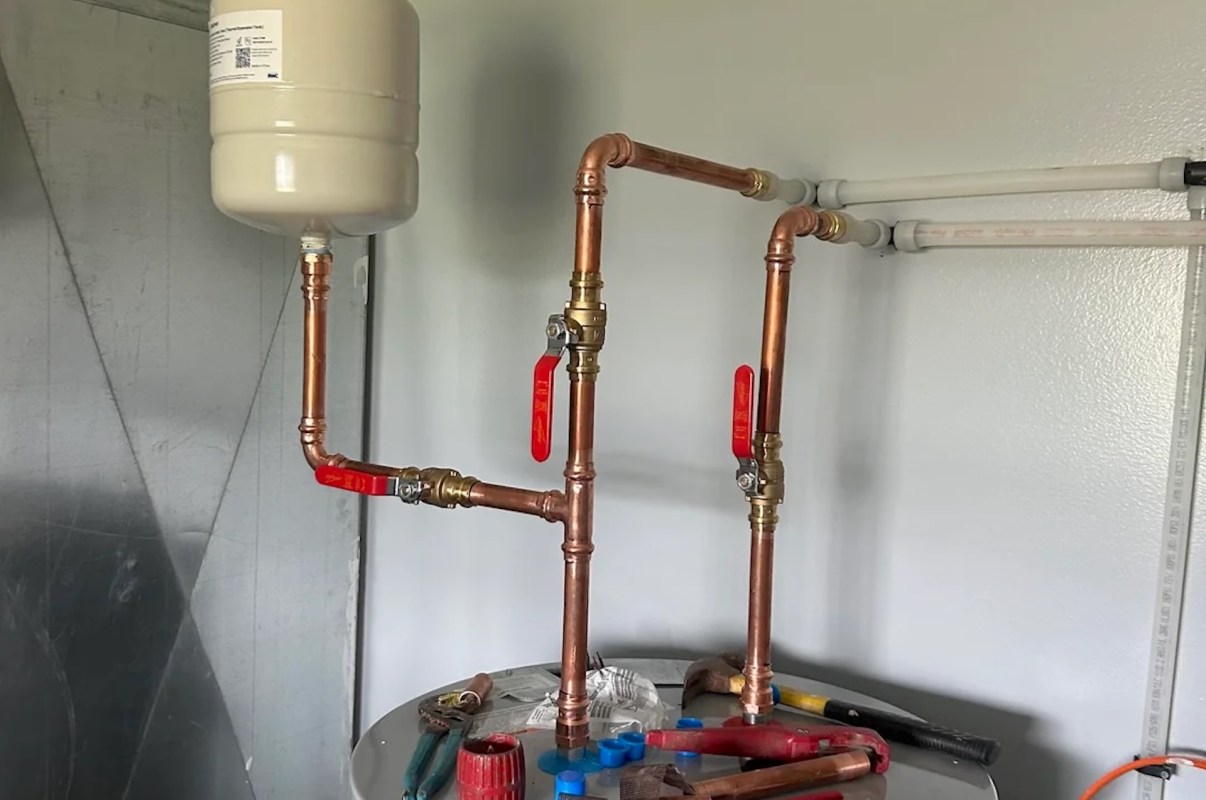
After a homeowner posted photos of a DIY water heater installation job and invited plumbers to judge it, the reaction was harsh.
Commenters focused less on neatness than on what they saw as a support issue that could also create safety risks.
Here's what to know
Photos of the installation were shared on Reddit's r/Plumbing community, and plumbers were asked for their assessment. The original poster asked, "How does this water heater install look? First one done by myself."
Immediately, plumbers streamed into the comments section to add their thoughts, which were overwhelmingly negative. The top criticism was that the "Expansion tank is not supported."
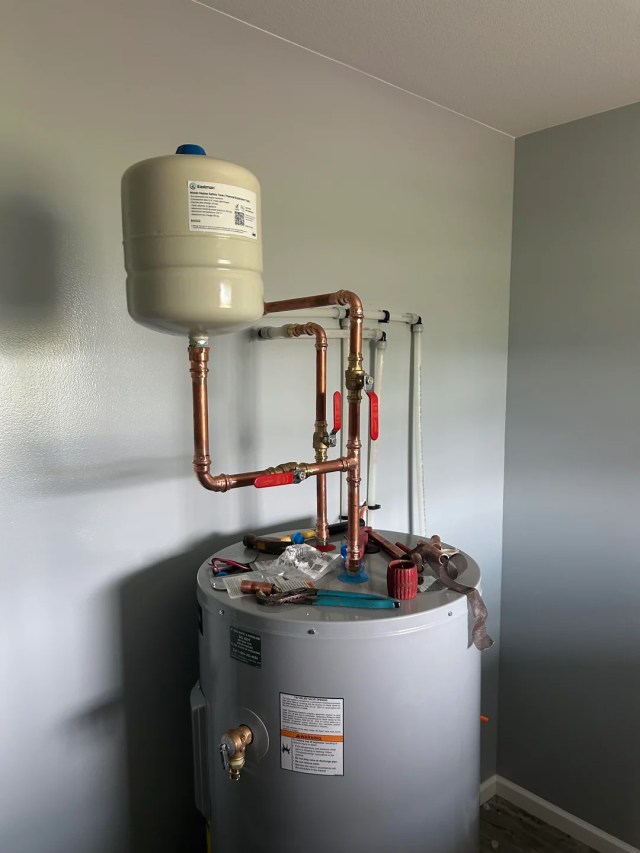
The expansion tank setup drew more complaints beyond that, though. In particular, commenters objected to a ball valve on that line, with one person saying, "And that ball valve for the expansion tank is not allowed to be there." Another reply called it "such a redundant and expensive valve."
One user said the extra valve solved little while making the installation pricier and more complicated, writing, "Shut the inlet valve off, drain a little water from a nearby sink, then you could service the expansion tank without a need for a valve. Plus solder ain't cheap, that valve ain't cheap, and you just introduced at least 3 new failure points that didn't need to be there in the 1st place."
There was also criticism of the relief-valve connection. As one commenter put it, "I also hope they're trolling with that 3/4 male x 1/2" propress reducer on the relief valve."
More background
Expansion tanks are meant to absorb pressure changes in a plumbing system, and commenters were concerned that this one appeared to be left unsupported. If a tank hangs without proper support, its weight and vibration can place ongoing strain on the surrounding piping and fittings.
Save $10,000 on solar panels without even sharing your phone number Want to go solar but not sure who to trust? EnergySage has your back with free and transparent quotes from fully vetted providers in your area. To get started, just answer a few questions about your home — no phone number required. Within a day or two, EnergySage will email you the best options for your needs, and their expert advisers can help you compare quotes and pick a winner. Solar panels can save you more than $50k over their 25-year lifespan, and EnergySage can help you save as much as $10k on installation. Which begs the question — isn't that worth an email or two? |

A water heater is one of the largest energy users in many homes, and upgrading to a heat pump water heater can often save households money on utility bills compared to a standard electric model, while also reducing the risk of paying for preventable mistakes later on.
Companies such as Cala are offering smart heat pump water heaters that aim to cut energy use while giving households more control over when water is heated. Its customizable smart heat pump water heaters help homeowners reduce their energy bills by heating water only when needed.
That approach can be especially useful for families with predictable peak-use times, since the system is designed to avoid wasting energy by heating a full tank at the wrong time. For shoppers seeking a more efficient upgrade rather than another conventional tank, Cala is one example of how newer water heaters pair lower bills with smarter performance.

Get TCD's free newsletters for easy tips, smart advice, and a chance to earn $5,000 toward home upgrades. To see more stories like this one, change your Google preferences here.







