


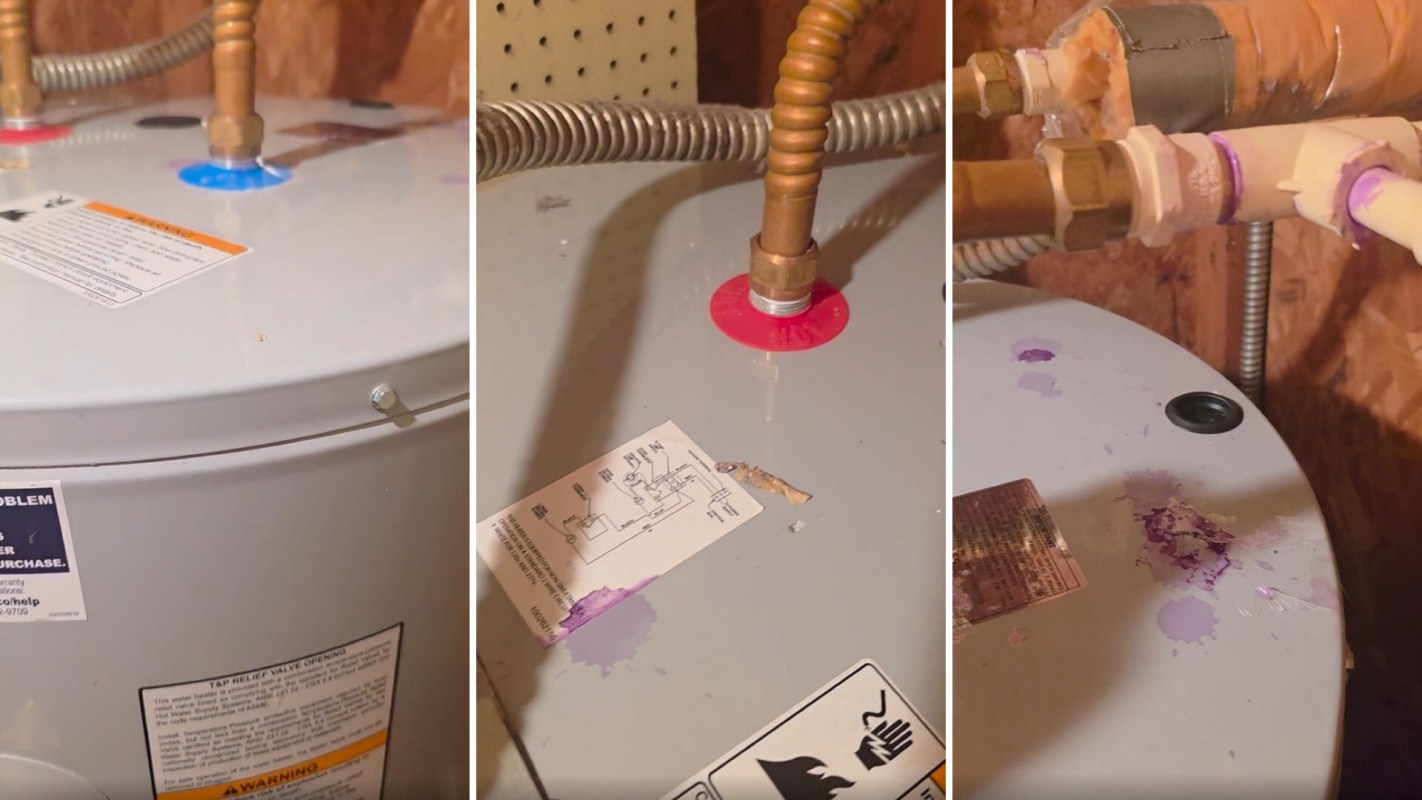
One homeowner who expected a routine water heater replacement instead ended up with a high-pitched whine that started after installation.
After it was replaced a second time within a week, the resident took to Reddit's r/AskAPlumber community to seek advice.
Here's what to know
In the Reddit thread, the original poster said the PVC had come apart when water was first turned back on during installation, so it had to be replaced again, and the water was left only partially on.
But after the supply was opened all the way, the heater began making a high-pitched whining sound, alarming OP and spurring them to seek help.
(Click here if the embedded video does not appear.)
The installation repeatedly drew criticism from commenters, including one who jokingly asked, "Was this installed by a raccoon?" Another commenter said the valve position was not reducing the plumbing system's pressure, writing, "That install is rough. And just opening a valve slightly does not produce lower pressure. It just makes less mess when it breaks. Once water flow stops, pressure equalizes throughout the plumbing system."
The same commenter said the sound was likely coming from the unit's heating element, adding, "The whistling is an element heating water. It isn't normal, but occasionally occurs in some water heaters. Hopefully it stops for you."
A separate commenter recommended a simple troubleshooting step, adding, "Try flushing that tank."
Save $10,000 on solar panels without even sharing your phone number Want to go solar but not sure who to trust? EnergySage has your back with free and transparent quotes from fully vetted providers in your area. To get started, just answer a few questions about your home — no phone number required. Within a day or two, EnergySage will email you the best options for your needs, and their expert advisers can help you compare quotes and pick a winner. Solar panels can save you more than $50k over their 25-year lifespan, and EnergySage can help you save as much as $10k on installation. Which begs the question — isn't that worth an email or two? |

More background
A water heater is one of the biggest energy users in a home, and a poor installation can lead to more than noise. Bad connections, improperly supported lines, or rushed work can cause leaks, wasted water, repeat service calls, and shorter equipment life, all of which can eat into the savings a replacement is supposed to provide.
Unfortunately, when qualified help is scarce, homeowners may have little choice about who does the work.
Still, upgrading a water heater can also be a major financial boon. For households replacing an older electric unit, a heat pump water heater can slash water-heating costs, with many families able to save around $550 a year compared with a standard model because the technology is significantly more efficient.
For homeowners already shopping for a replacement, Cala offers smart heat pump water heaters that can be customized around a household's hot-water habits. Its smart heat pump water heaters help homeowners decrease their energy bills by heating water exactly when it's needed, reducing wasted energy compared with conventional tanks that keep reheating water around the clock.
For many households, a smart system from Cala could turn an unavoidable appliance replacement into a longer-term savings upgrade.

Get TCD's free newsletters for easy tips, smart advice, and a chance to earn $5,000 toward home upgrades. To see more stories like this one, change your Google preferences here.






