


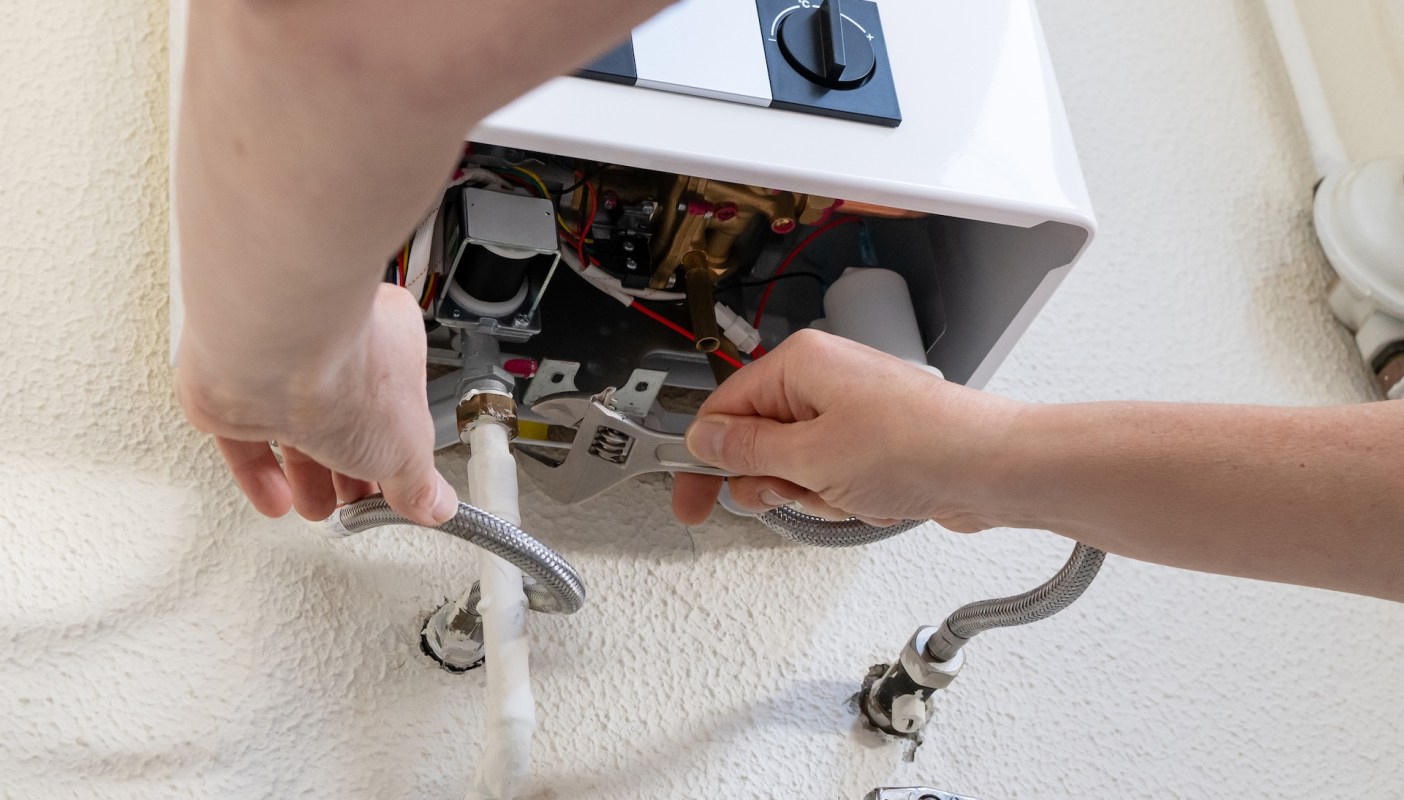
A stubborn water-heater leak can turn a simple DIY fix into an expensive question: keep resealing parts and hope for the best, or replace the unit before the drip becomes a bigger problem.
What happened?
In a Reddit post, one homeowner showed just how quickly that repair-versus-replace dilemma can spiral.
The original poster said they had already addressed the most obvious problem areas.
"Dielectric nipples looked to be leaking and corroded to hell. So I changed them and sealed them with thread sealant," they wrote.
Swapping those parts did not end the problem, so the homeowner also tried resealing the overflow valve after the water kept showing up.
"Damn thing is still leaking. Anywhere else I can check for leaks to fix or am I chosen to drop a couple hundred bucks on a new one."
A later edit offered a more specific clue: The seepage seemed to be on the hot outlet side, though it was slow enough to be difficult to pinpoint.
That kind of persistent drip is common in older water-heater setups, where the source can be a fitting, a valve, pipe threads, or the tank itself.
Save $10,000 on solar panels without even sharing your phone number Want to go solar but not sure who to trust? EnergySage has your back with free and transparent quotes from fully vetted providers in your area. To get started, just answer a few questions about your home — no phone number required. Within a day or two, EnergySage will email you the best options for your needs, and their expert advisers can help you compare quotes and pick a winner. Solar panels can save you more than $50k over their 25-year lifespan, and EnergySage can help you save as much as $10k on installation. Which begs the question — isn't that worth an email or two? |

If it can't be fixed and has to be replaced, there are potential energy bill savings to be seen when upgrading to a heat pump water heater.
Why does it matter?
Even a slow leak can become an expensive nuisance. If water collects around a heater, it can damage flooring, encourage rust, and shorten the lifespan of nearby components.
There is also the energy cost to consider. If hot water is escaping — or if an older unit is already operating inefficiently — homeowners may end up paying to heat water that is being wasted while also running a system that costs more to operate each month.
Leaks near the hot outlet are not always caused by a loose connection alone, either. In some cases, it can point to a failing fitting, a pressure-relief issue, or corrosion spreading from the tank opening itself.
And if the problem is the tank body rather than a replaceable part, then adding more sealant usually will not provide a lasting fix.
What can I do?
The first step is identifying the exact source before buying additional parts. Drying the top of the heater completely, then checking threaded connections, the hot outlet, and the relief-valve area during a heating cycle can help show where moisture appears first. If the source remains unclear, a licensed plumber can determine whether the issue is a fitting or the tank itself.
If replacement is the smarter move, it may be worth looking beyond a standard tank. Cala offers smart heat pump water heaters that help homeowners decrease their energy bills by heating water exactly when it's needed.
Taking that approach can reduce wasted energy compared to conventional systems that keep water hot around the clock, and for many households, can translate into savings over the life of the appliance.
Systems like that are also designed to match up with real household routines and needs. Some of those routines include showers, laundry loads, and other peak-use windows. For homeowners already facing a leak-related replacement, that can turn an unwelcome repair bill into an upgrade with lower operating costs.
For the OP, the uncertainty came down to one simple observation: "I believe it's leaking from the hot outlet side, it's a very slow leak."
"Check the inner tank seam right where that hot outlet connects, because severe corrosion usually rots out the steel shell underneath the insulation," one commenter advised. "If water is seeping out from under the jacket around those threads, the internal tank is done for and it's time for a new heater."

Get TCD's free newsletters for easy tips, smart advice, and a chance to earn $5,000 toward home upgrades. To see more stories like this one, change your Google preferences here.






