


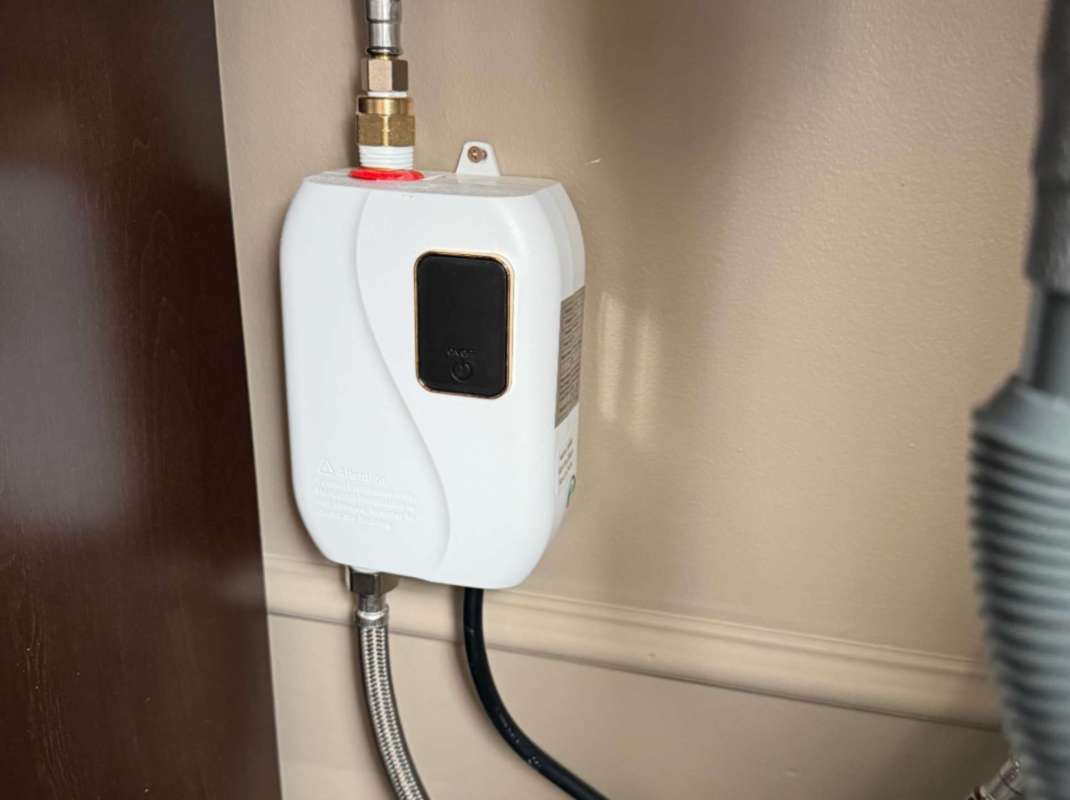
A studio owner trying to meet a hot-water requirement for a business ran into a much bigger question when a 3,000-watt water heater kicked on and the lights in the room, and even the hallway, suddenly dimmed.
Here's what to know
The question surfaced in a Reddit thread on r/AskElectricians, where the original poster wrote,
"I made a DIY sink and my cold water works fine, but when I turn on the hot water and this thing kicks into gear, the lights in my room and in the hallway dim all the way down … I have a state board inspection tomorrow, can I at least use it/have it on for tomorrow or is it an immediate risk/danger? I am in a really old building so i believe the electric is all pretty old."
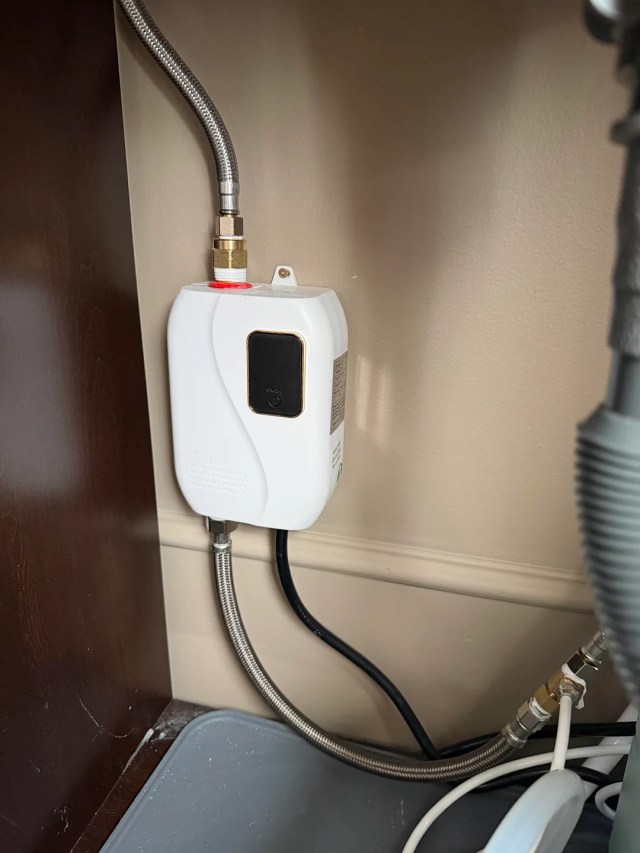
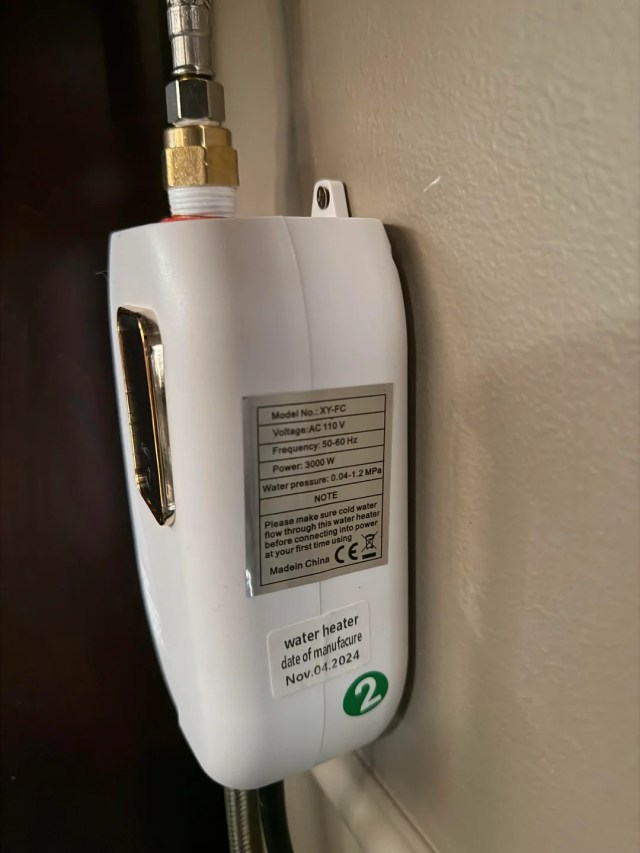
Several replies focused on the heater's electrical demand rather than the sink itself.
"What is that wired into? 3,000w is about 25A, not something you can run on a standard circuit," one commenter wrote.
Another added that the unit "requires a dedicated high amperage circuit."
At the same time, commenters said dimming lights do not automatically mean an emergency is unfolding.
"They dim because the water heater suddenly draws a bunch of current. That alone isn't a cause for concern," one person explained.
Another asked, "Do [they] stay dim the whole time it's running? If so you might have an issue."
Save $10,000 on solar panels without even sharing your phone number Want to go solar but not sure who to trust? EnergySage has your back with free and transparent quotes from fully vetted providers in your area. To get started, just answer a few questions about your home — no phone number required. Within a day or two, EnergySage will email you the best options for your needs, and their expert advisers can help you compare quotes and pick a winner. Solar panels can save you more than $50k over their 25-year lifespan, and EnergySage can help you save as much as $10k on installation. Which begs the question — isn't that worth an email or two? |

More background
The core problem is the load: a 3,000-watt heater running on 120 volts uses about 25 amps. That is beyond what most ordinary 15-amp or 20-amp outlet circuits are built to provide.
In an older building, issues like shared circuits, voltage drop, or wiring that is not sized for the job can make that strain more obvious when a large load turns on. Commenters said the real safety question comes down to how the heater was installed and whether it has the right breaker, wire size, and dedicated circuit.
For people considering a longer-term replacement, Cala makes customizable smart heat pump water heaters. The company's systems help homeowners decrease their energy bills by heating water exactly when it's needed. That kind of targeted heating differs from a small resistance unit that can suddenly put a heavy load on one circuit.
Upgrading to a heat pump water heater can also offer a financial upside beyond safety and performance. Compared with a standard electric resistance model, a heat pump water heater can save some households around $550 a year on utility bills, making it one of the more meaningful energy-saving appliance swaps available.
What can be done?
Before plugging a heater like this into a standard outlet, commenters said it makes sense to confirm the unit's wattage and voltage requirements. If it truly needs roughly 25 amps, they said it should be connected to a dedicated circuit that an electrician has verified can handle the demand safely.
For a studio sink or another low-demand setup, commenters pointed to a different option: a small tank-style point-of-use heater rather than a tankless resistance model. One person recommended that approach because it can draw less power, and another said a tank model "can be plugged into a regular outlet."
Homeowners planning a full upgrade may also want to consider smart heat pump options built around efficiency as well as hot-water demand. Systems such as Cala can reduce wasted energy while better matching when hot water is actually needed.
Where can I learn more?
For a closer look at the same mix of water-heater safety questions and energy-cost tradeoffs, these articles follow homeowners and renters dealing with high bills, considering heat pump upgrades, and worrying about failing equipment.
• In Arizona, a homeowner weighed a heat pump upgrade after relentless utility bills.
• In Boston, renters traced an enormous power drain back to a water heater.
• A rattled renter feared a possible water heater explosion after alarming signs at home.
• One renter pushed a landlord toward a money-saving heat pump after shocking bills.
• Homeowners told a carpenter monthly bills fell fast after switching water-heater technology.

Get TCD's free newsletters for easy tips, smart advice, and a chance to earn $5,000 toward home upgrades. To see more stories like this one, change your Google preferences here.






