


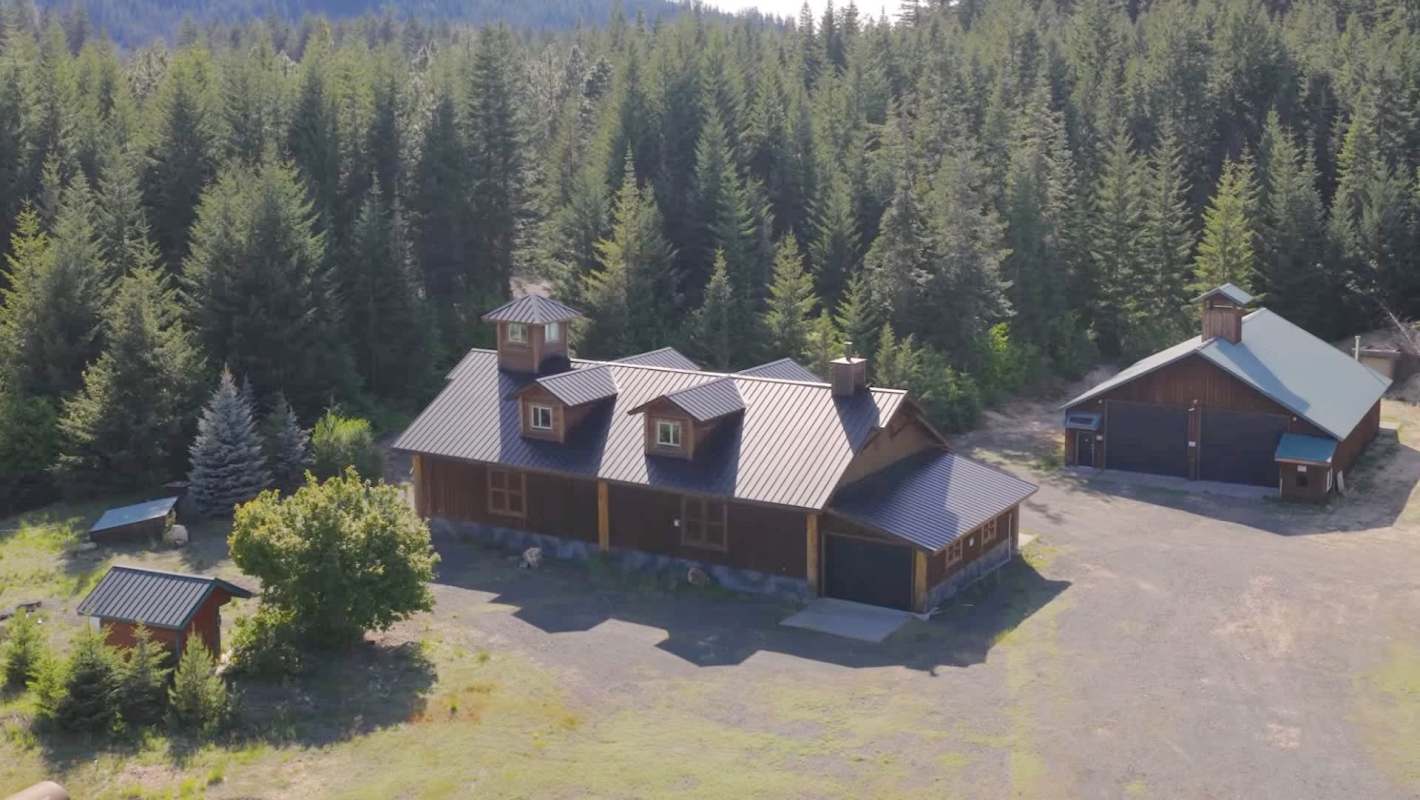
After purchasing an abandoned off-grid ranch in Washington, a pair of homesteaders gave viewers a look at what it takes to bring a remote property back to life.
In a video tour, The Muse Ranch (@TheMuseRanch) showed off the 60-acre homestead with an unusual and extensive setup. The property includes a main cabin, a barndominium, multiple shops, solar power and battery equipment, water systems, and an 80-foot watchtower concealed in the trees.
Here's what to know
The property had not been used for five years before its new owners took over. "It's not just 60 acres off-grid. It is a compound," the creator said.
Set in the mountains of Washington, the site borders a national forest on three sides, according to the video description. The land includes a main shop, generator room, buried container-style root cellar, snowmobile garage, second shop, meat freezer, pavilion, and "sky cabin."
The creator explained that the battery system was "totally fried," the water system had not been used in years, and that many other parts of the property needed repairs before they could be used.
"I am so glad you have some experienced help, dude!" one person wrote.
TCD Picks » Quince Spotlight
💡These best-sellers from Quince deliver affordable, sustainable luxury for all




More background
Off-grid homes can offer advantages, including low utility costs, resilience during outages, and the chance to make use of existing land and structures. At the same time, they often require major upfront investments and constant maintenance.
The project focuses on reusing what is already there. Instead of demolishing things, the owners are exploring ways to restore cabins, workshops, storage areas, and energy infrastructure. Adaptive reuse can reduce waste and preserve materials that might otherwise be thrown away.
Self-sufficiency is gaining traction as more homeowners think about backup power, food storage, and emergency preparedness.
What can be done?
Resilience upgrades can make a home less expensive to operate and easier to manage during disruptions. They can include better insulation, installing a backup battery, improving water storage, weatherproofing a garage or shed, and repurposing an underused space.
The ranch owners are taking a phased approach, focusing on critical systems first and leaving more aspirational plans, including events, rentals, and expanded homesteading, for later.
"We're going to try to bring it back to life, turn it into a functioning homestead and ranch," the creator said.
Where can I learn more?
If this got you thinking about off-grid living, these articles dig into the day-to-day realities of managing your own power and water.
• In the Rocky Mountains, a family of five shows how 1,000 watts of solar can run an off-grid home.
• After two years off-grid, one homeowner keeps solar energy working through winter despite common doubts.
• Amish entrepreneurs found solar energy keeps their business running when grid power was never an option.
• One off-grid homeowner shows snow-covered solar panels still generate power in cold weather.

Get TCD's free newsletters for easy tips, smart advice, and a chance to earn $5,000 toward home upgrades. To see more stories like this one, change your Google preferences here.






